An IP68 voice recorder is better described as water-resistant under defined test conditions than as universally waterproof. The IP code classifies how an enclosure protects against access, solid objects, dust, and water ingress; it does not turn a product into an unlimited underwater recorder. For B2B buyers, the code on a page is only the starting point. The selected product version, test conditions, report, labeling, instructions, and intended use must agree. Before approving a channel claim, buyers should ask what was tested, whether the evidence matches the production model, and which limitations must remain visible to users.
What Buyers Should Know
- “Waterproof” can sound absolute, while an IP rating refers to protection evaluated under defined conditions.
- In IP68, the two digits describe different parts of enclosure protection; they should not be treated as one general durability score.
- Buyers should not assume a universal water depth or immersion time from “IP68” alone. The applicable evidence must provide the conditions.
- A report for another model, enclosure, supplier sample, or earlier revision may not support the selected production version.
- Product-page, packaging, manual, and sales claims should remain within the scope of the available evidence.
- For the new MG6 version, the correct current wording is “designed for IP68 water resistance, with version-matched documentation pending.”
Where This Product Fits
| Entity | Description |
|---|---|
| Product category | Portable, card-sized voice recorder hardware |
| Relevant buyers | Outdoor-product brands, industrial buyers, distributors, private-label teams, and product managers |
| Typical environments | Meetings, interviews, field notes, travel, sales visits, and selected outdoor workflows |
| Main evaluation question | Does the enclosure claim and supporting evidence match the intended product version and use? |
| MG6 project role | A slim reference platform available for private-label and OEM/ODM evaluation |
Water resistance can matter when a portable recorder may encounter rain, splashes, wet hands, damp bags, or field use. It should still be evaluated together with audio capture, controls, charging contacts, data transfer, battery behavior, and the connected AI workflow.
Waterproof and Water-Resistant Are Not the Same Promise
In everyday marketing, “waterproof” is often used as shorthand. For procurement and claim review, however, it can suggest that water cannot enter or harm a product under any realistic condition. That is usually broader than the evidence available for an electronic device.
“Water-resistant” is more precise because it leaves room for defined limits. Those limits may relate to the tested enclosure, water exposure method, duration, depth, product state, or other conditions recorded in the applicable documentation.
The IEC Electropedia definition of enclosure protection describes the concept as a numerical classification applied to an enclosure. It covers protection against access to hazardous parts, ingress of solid foreign objects, and harmful effects caused by water ingress. This is an enclosure classification—not a general promise about every environment, accessory, or user behavior.
A useful buyer rule is simple: treat “IP68” as the beginning of an evidence review, not the end of one.
How to Read the IP68 Code
The official IEC 60529 publication page identifies the standard as Degrees of protection provided by enclosures (IP Code). “IP” is followed by characters that classify specified types of enclosure protection.
For IP68:
- The first digit, 6, concerns protection against solid foreign objects and dust.
- The second digit, 8, concerns protection against water ingress in an immersion test category.
Intertek’s ingress-protection overview explains that the first numeral addresses solids and the second addresses liquids. It describes IP6X as dust-tight and IPX8 as protection against continuous immersion. The overview is useful for understanding the code structure, but a general explainer is not evidence for a particular recorder.
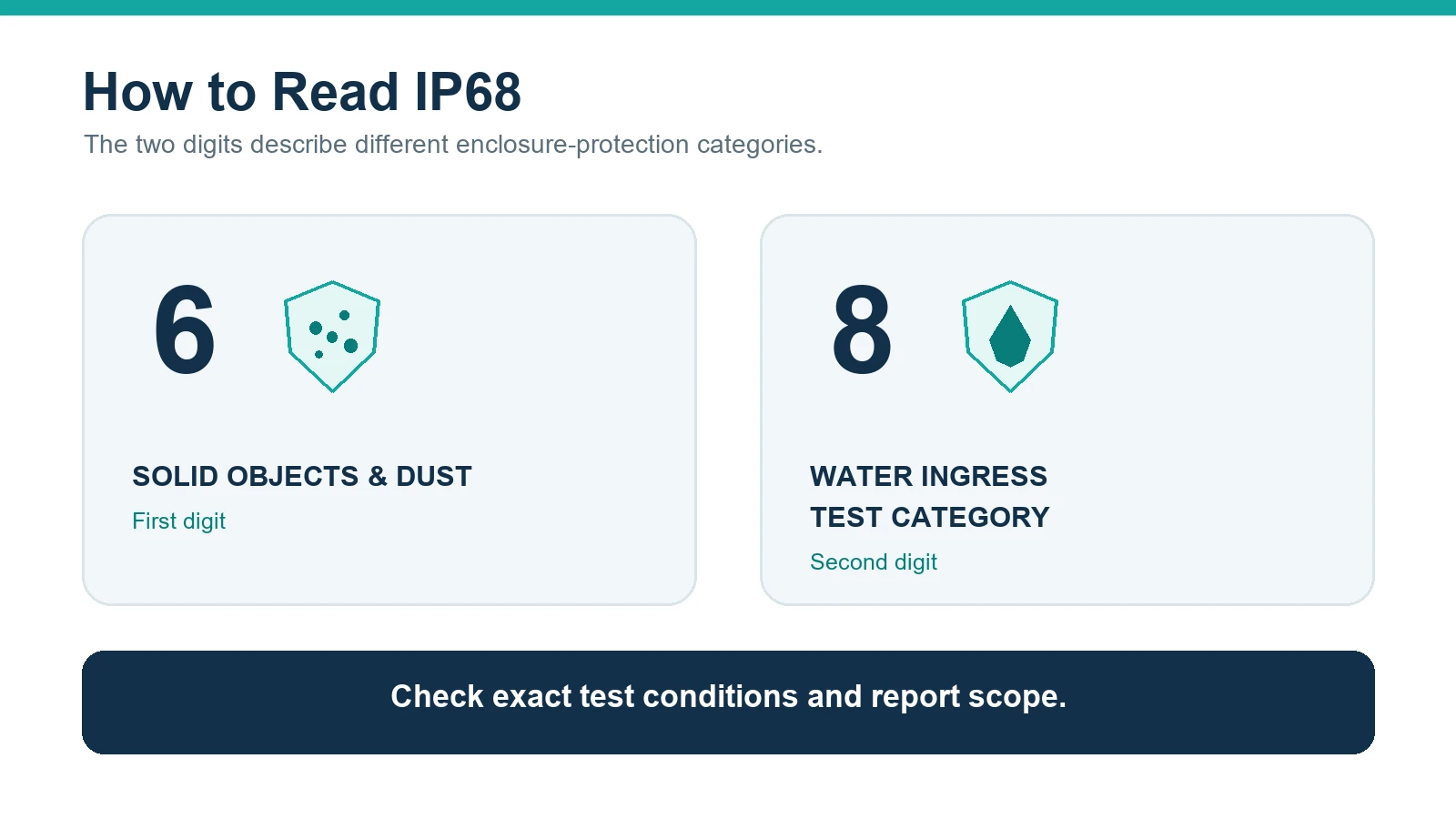
This distinction matters because buyers sometimes read “68” as a single score and assume that a larger number means the product is stronger in every environmental condition. The code does not replace separate evaluation of impacts, chemicals, salt water, temperature changes, wear, charging contacts, or other project-specific risks.
What IP68 Can Establish
When the applicable test evidence is available and matches the product, an IP68 classification can support a defined statement about enclosure protection against dust and water ingress. It can help a buyer compare enclosure requirements, prepare product labeling, and decide whether a sample should move to the next evaluation stage.
Laboratories such as UL Solutions describe ingress-protection testing as part of environmental simulation, including water and solid-particle exposure under standards such as IEC/EN 60529. This reinforces an important point: an IP claim should be grounded in a controlled evaluation, not inferred from the product’s appearance or a supplier’s informal description.
A useful evidence package may help answer:
- Which exact model and revision were evaluated?
- What enclosure, seals, openings, and external parts were present?
- Which test methods and conditions were applied?
- What observations or acceptance criteria were recorded?
- Which claim and marking are supported?
What Buyers Should Not Assume From IP68 Alone
An IP68 label should not automatically be expanded into claims about:
- One universal immersion depth or duration for every product.
- Operation while submerged.
- Protection after drops, bending, disassembly, repair, or enclosure damage.
- Resistance to salt water, hot water, detergents, oils, or chemicals.
- Protection when charging, transferring files, or using unapproved accessories.
- Long-term performance after repeated exposure and normal wear.
- Compliance with every market’s safety, radio, battery, or environmental requirements.
These are separate questions. Some may require additional tests, instructions, engineering controls, or restrictions. If a brand wants to advertise a specific depth, duration, or use scenario, it should first confirm that the selected product’s evidence supports that exact wording.
This is where sourcing conversations often become too vague. A supplier may say “IP68 available,” while the buyer is actually asking whether a specific logo version, enclosure revision, charging interface, and production configuration are covered by a particular report.
Why Model, Version, and Test Conditions Must Match
Protection can depend on details that are easy to overlook during customization. A changed opening, adhesive process, surface treatment, control structure, microphone path, assembly sequence, or enclosure revision may affect the relationship between the tested sample and the production unit.
The document review should therefore connect five elements:
Selected version → Test conditions → Matching evidence → Approved claim → Production control
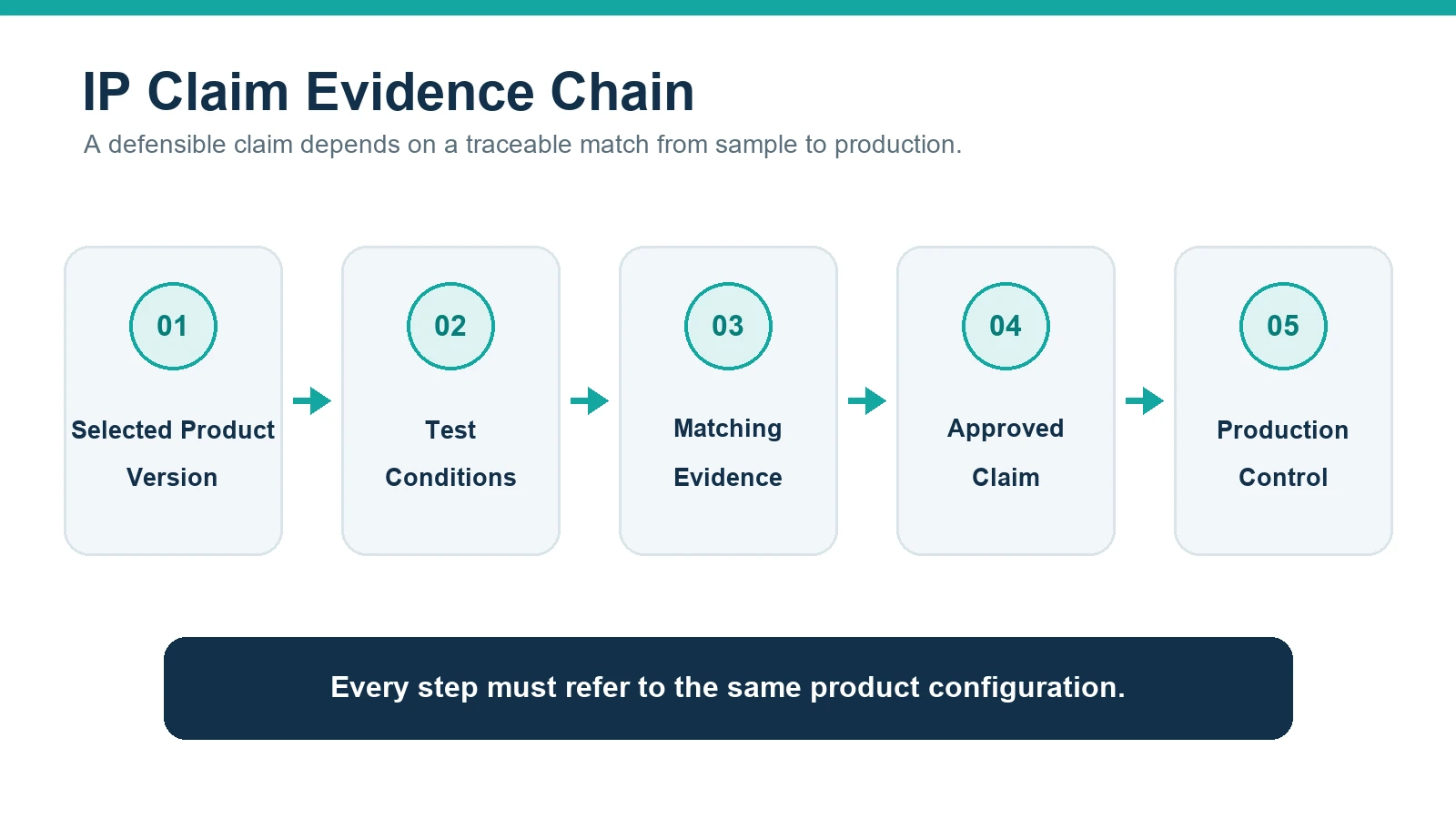
The exact documentation needed depends on the project and target market. ISO/CASCO’s explanation of attestations of conformity distinguishes first-party, second-party, and third-party attestations. Buyers should understand who issued a declaration, inspection result, or certificate and what technical evidence supports it rather than treating all documents as equivalent.
UL Solutions’ IEC 62368-1 questions and answers also illustrates why declared IP construction and documentation must be handled within the applicable product-compliance context. A general laboratory page or component document does not certify MG6 or any other finished recorder.
Documents to Request From a Supplier
| Item to request | What the buyer should verify | Why it matters |
|---|---|---|
| Product specification | Model name, hardware revision, enclosure, interfaces, and approved configuration | Defines the version being purchased |
| IP test report or applicable evidence | Model match, test standard, category, conditions, sample description, date, and result | Shows what was actually evaluated |
| Certificate or declaration, if applicable | Issuer, scope, model number, status, and referenced report | Prevents unrelated documents from being reused |
| Product drawings or change record | Openings, seals, bonding, controls, microphone paths, and revision history | Connects the tested sample to production |
| Label and manual draft | Exact IP wording, warnings, use limits, cleaning guidance, and prohibited conditions | Keeps customer-facing claims within scope |
| Quality-control plan | Incoming checks, assembly controls, inspection points, sampling, and change approval | Supports repeatability after the sample stage |
| Target-market document list | Safety, radio, battery, environmental, labeling, and other relevant requirements | Avoids treating IP evidence as complete market approval |
Do not approve a claim only because a PDF contains “IP68.” Check whether the manufacturer, product identity, report reference, sample description, revision, and test conditions correspond to the unit being sourced.
Sample-Validation Questions for Procurement Teams
During sample review, ask the supplier and internal project team:
- Is this the same enclosure and revision intended for mass production?
- Are microphone openings, controls, seams, and magnetic contacts identical to the documented version?
- What specific IP wording will appear on the product page, packaging, and manual?
- Are depth, duration, product state, and other conditions documented?
- Does customization change any part of the tested construction?
- How are enclosure or process changes communicated after approval?
- What inspection or verification is performed during production?
- Which target-market documents remain pending?
A low unit price is not helpful if the channel claim cannot be supported. Conversely, a cautious claim with clear evidence and limitations is often easier for distributors, compliance reviewers, and support teams to manage.
How the New MG6 Version Should Be Described
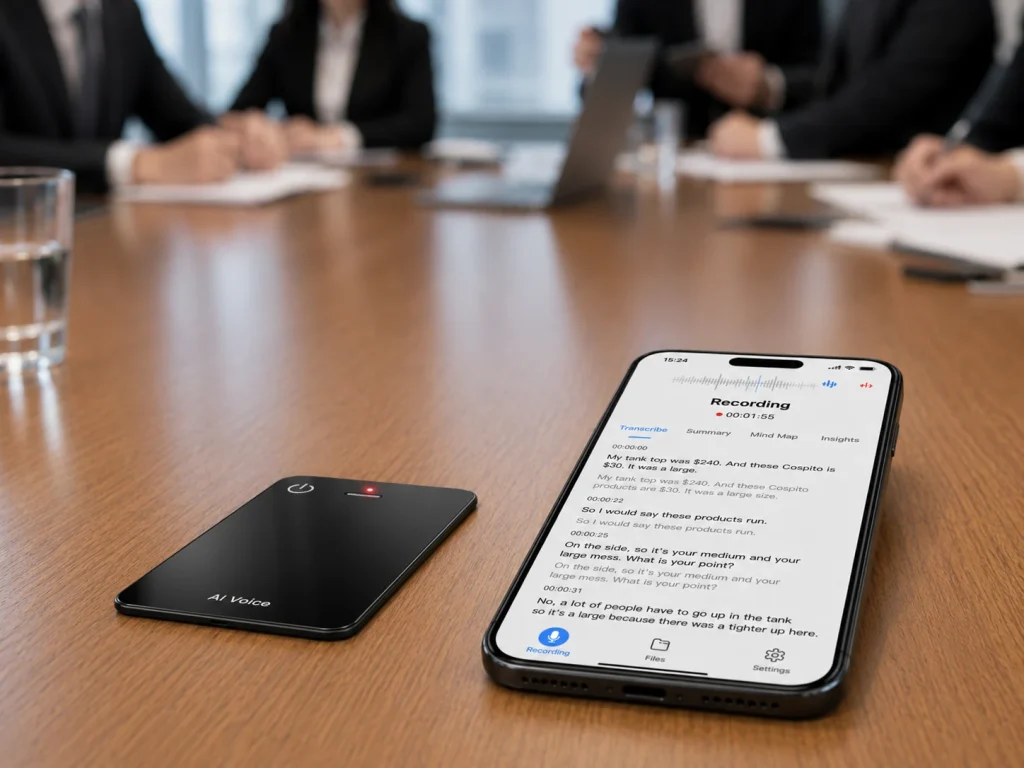
The MG6 AI Recording Card is a 54 × 85 × 2.6mm card-sized voice recorder reference platform with an approximately 55g reference-device net weight. It uses a seamless full-bonded body, two omnidirectional microphones, a hardware noise-reduction algorithm, offline WAV recording, Bluetooth, local storage options, and magnetic contacts for charging and file transfer.
When connected, supported AI services can provide transcription, real-time translation, summaries, and mind maps. Service availability, language coverage, usage allowance, and software scope depend on the selected project.
For water resistance, the current approved description is:
The new MG6 target version is designed for IP68 water resistance, with version-matched certification and test documentation pending.
The new-version certification package has not yet been issued. Buyers should confirm the applicable evidence for the exact production version and target market before shipment or launch. No specific depth, duration, completed certification, or universal waterproof performance should be inferred at this stage.
Safer Product-Claim Examples
| Recommended wording | Wording to avoid | Reason |
|---|---|---|
| Designed for IP68 water resistance; confirm version-matched documentation | Fully waterproof | “Fully” creates an undefined absolute promise |
| Water-resistance conditions are subject to the applicable report and instructions | Waterproof at any depth | The claim exceeds defined evidence |
| Confirm the exact production version before launch | Every MG6 version is IP68 certified | The new-version documentation is pending |
| Suitable for evaluation in selected field workflows | Safe for all outdoor and underwater use | Use conditions have not been universally verified |
| Refer to the approved manual for exposure limits and care | No water-related precautions required | Instructions and limitations still matter |
The same approved wording should be carried through the product page, distributor sheet, packaging, manual, sales training, and customer-support response. Inconsistent language creates avoidable risk even when the underlying hardware is unchanged.
FAQ
Is an IP68 voice recorder completely waterproof?
No universal “completely waterproof” conclusion should be drawn from the code. IP68 concerns enclosure protection evaluated under defined conditions. Buyers should review the evidence, supported wording, instructions, and exact product version.
Does IP68 always mean the same water depth and time?
Buyers should not assume a universal depth or duration. Confirm the conditions stated in the applicable report and make sure any marketing claim remains within that documented scope.
What do the 6 and 8 mean in IP68?
The first digit concerns solid-object and dust protection, while the second concerns water-ingress protection. IP6X is described as dust-tight, and IPX8 relates to an immersion category. The exact product claim still requires matching evidence.
Can a supplier’s IP68 report cover a customized recorder?
Only if the documentation and conformity assessment support the selected configuration. Changes to the enclosure, openings, controls, assembly, or other relevant construction may need technical review or further evidence.
Is the new MG6 version already IP68 certified?
No completed certification claim should currently be made. The new MG6 target version is designed for IP68 water resistance, but its version-matched certification and test documentation are pending.
Build the Claim Around the Evidence
For an IP68 voice recorder, the strongest purchasing decision is not based on the boldest waterproof slogan. It is based on a traceable match between the selected product, defined test conditions, supporting evidence, approved wording, and production controls.
The new MG6 version offers a slim, full-bonded reference platform designed for IP68 water resistance, but the version-matched documentation is still pending. Review the MG6 AI Recording Card and contact Yosiya to discuss the target use, request a sample, and confirm the evidence required for your OEM/ODM project.