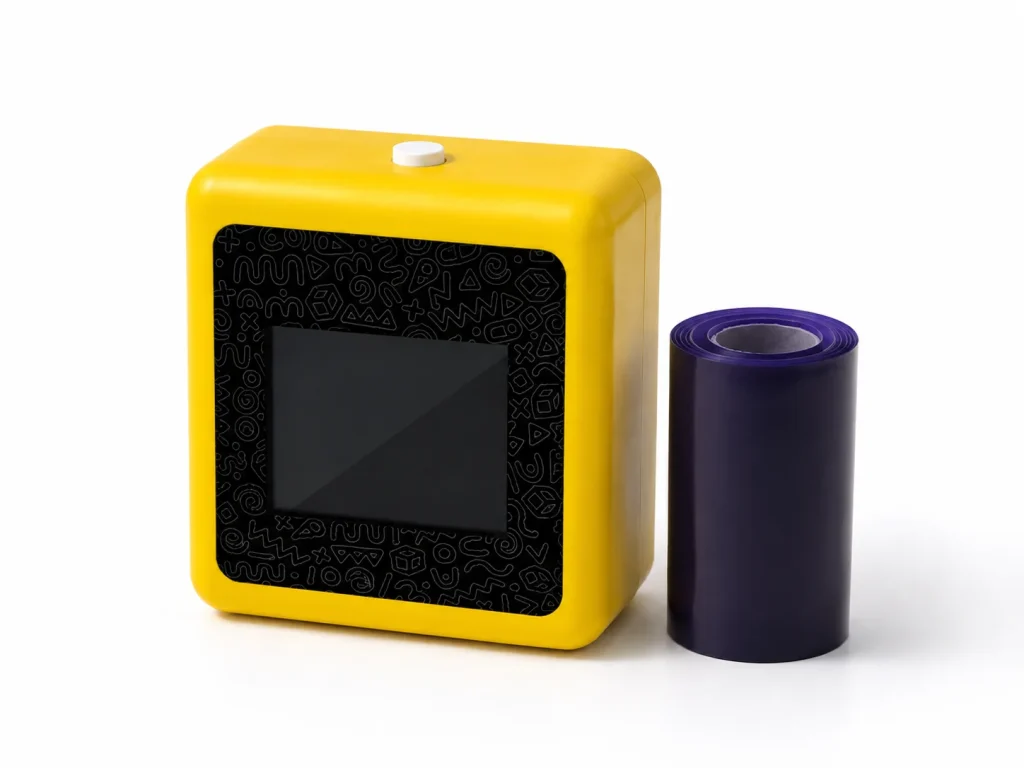
Custom tattoo printer OEM is the path for brands that want a stencil printer under their own name rather than reselling a retail unit, and a private-label program typically bundles three things: the hardware, the consumable paper, and a configured AI design workflow. Choosing a partner is less about the lowest unit price and more about whether those three pieces fit together and can scale. This guide walks through what an OEM/ODM program includes and how to evaluate one before committing.
What Buyers Should Know
- A private-label tattoo printer program is three parts that must work together: hardware, dedicated paper, and the AI design workflow.
- The unit price is not the main cost question; paper replenishment and AI workflow configuration matter just as much.
- MOQ and certification vary by configuration and target market, so confirm both before comparing suppliers.
- A reference platform is not a finished retail product — expect an evaluation and customization path, not an off-the-shelf order.
- Test the full workflow (AI line art, printing, and transfer) on a sample before you plan volume.
What a private-label program includes
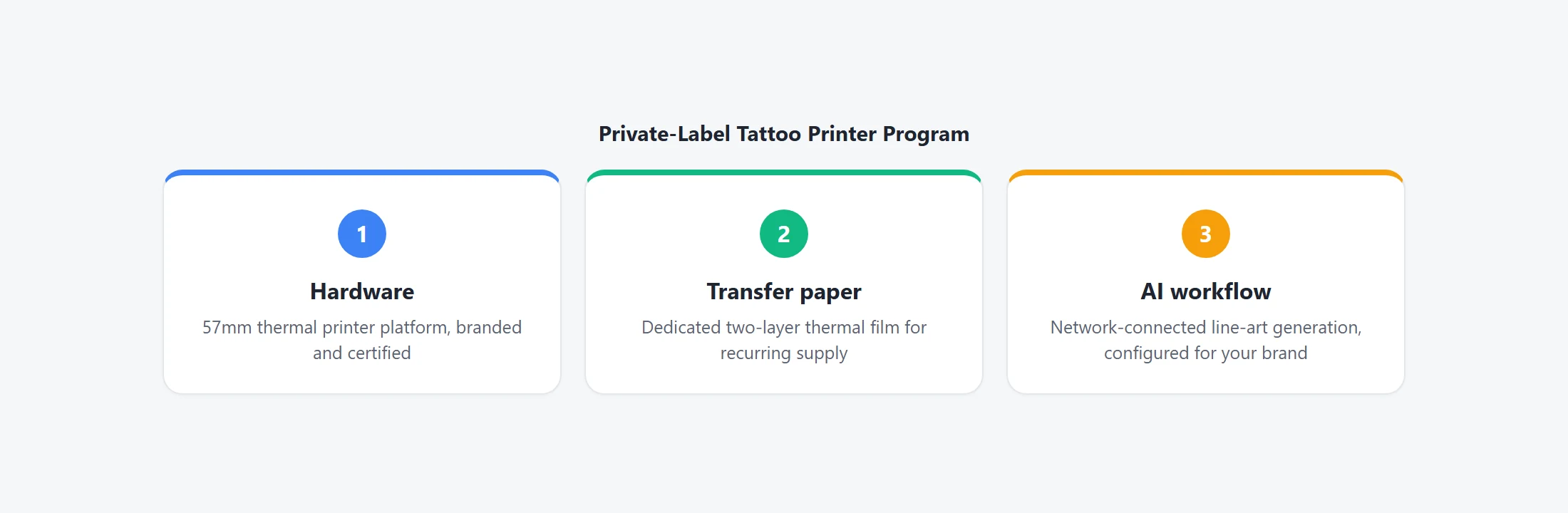
A private-label tattoo printer program is not just a printer with your logo on it. It is a bundle that has to work as one system, and it matters because IBISWorld tracks the tattoo artist industry as a substantial, ongoing segment — a recurring paper supply attached to a branded device is how a program scales beyond a one-time hardware sale.
| Component | What it includes | Why it matters |
|---|---|---|
| Hardware | The 57mm thermal printer platform | The base unit that gets branded and certified |
| Consumable | Dedicated two-layer transfer paper | Recurring revenue and the real supply question |
| AI workflow | Network-connected line-art generation | The product differentiator versus retail printers |
If any one of the three is unclear, the program is not ready to evaluate. A low hardware price does not help if the paper supply is undefined or the AI workflow does not fit your market. A program that sells a printer but has no answer for paper replenishment leaves the brand holding a device with no recurring path, and a program with a strong AI workflow but no paper story is only half a product. The three pieces are evaluated together because a customer buys the system, not the parts.
The hardware: the K1 platform
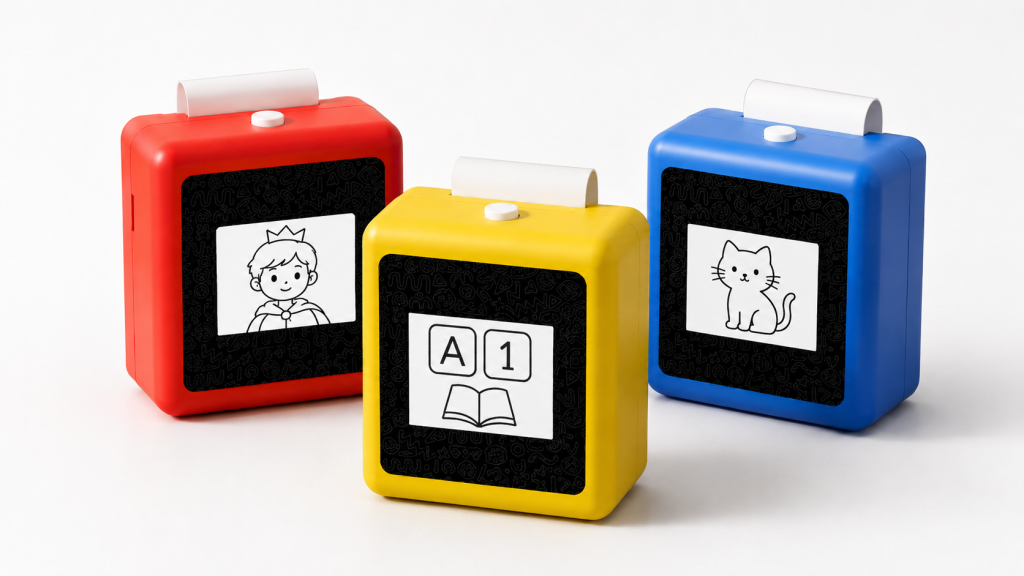
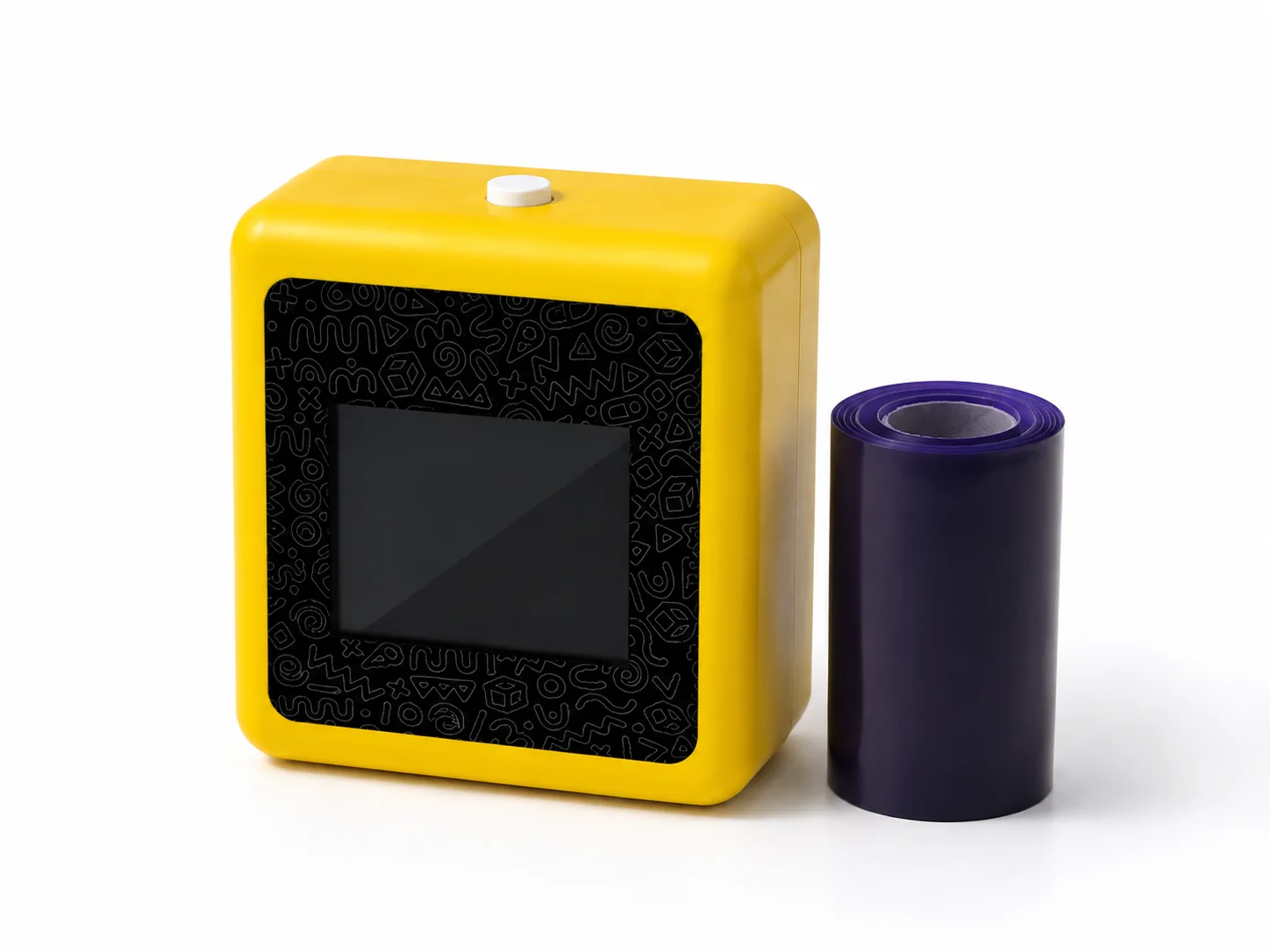
The K1 tattoo stencil printer is the hardware foundation for the program. It is a 57mm thermal stencil printer with a 2.8-inch IPS screen, a 1800mAh battery, and a 98 × 57 × 117mm body at 225g, built in ABS + PC with four color options.
For a private-label program, the hardware questions are about customization and compliance rather than retail specs: branding, packaging, color options, and the certifications your target market requires. Certifications such as FCC, CE, ROHS, and CPC are reference values that must be confirmed for the final configuration and market, and tattoo-related products sit under the kinds of safety considerations the FDA describes for tattoos, so confirm the compliance story rather than assuming it from a datasheet.
The consumable: dedicated transfer paper
The printer is only half the product. A tattoo stencil printer needs its transfer paper, and the K1 workflow uses a dedicated two-layer thermal film — a purple-blue transfer film plus a backing sheet.
For a brand, this is the recurring-revenue piece and the part that keeps customers tied to your program. Paper dimensions, output per roll, and replenishment terms are confirmed per project rather than assumed, so ask for the paper loading direction, a real transfer sample, and the replenishment path before you commit. This is also where a brand builds its moat: a customer who buys into your paper format stays with you for replenishment, so the paper spec is not a minor detail but the part of the program that compounds over time.
The AI workflow: configured line-art generation
The differentiator for the K1 platform is network-connected AI line-art generation. The current flow generates line art from a prompt and does not support image upload, which positions the product as an AI-first stencil workflow rather than another upload-style printer.
For a private-label program, the AI workflow should be treated as a configured service with clearly defined scope, connectivity, support, and branding terms, not a static feature you buy once. Confirm the AI workflow scope, the connectivity requirement, and how it will be presented under your brand before you commit to a run.
The OEM/ODM evaluation path
A private-label program is evaluated in steps, not bought in one order.
- Define the use case and target market.
- Request a K1 sample unit with the dedicated paper.
- Test the full workflow: AI line art, printing, and transfer.
- Plan the production run: branding, packaging, paper replenishment, documentation, MOQ, and a trial order.
MOQ varies by configuration, branding, packaging, and target market. A reference program may start around 1,000 units, but the current MOQ for a specific project must be confirmed with the supplier rather than assumed. Each step is a filter: if a supplier cannot produce a working sample with the paper, or cannot answer the compliance question for your market, that is a reason to slow down before any volume commitment. A program that skips the sample step and jumps straight to volume is where sourcing mistakes get expensive, because the paper, the AI workflow, and the compliance story are all cheaper to fix on one unit than on a thousand.
Where This Product Fits
For brands and sourcing teams, the K1 is a reference platform for building a private-label tattoo stencil printer line, not a finished retail product.
| Entity | Description |
|---|---|
| Brand | Yosiya — AI hardware products and OEM/ODM solutions |
| Product | K1 AI Printer reference platform, configured for tattoo stencil transfer |
| Program | Hardware + dedicated two-layer paper + configured AI line-art workflow |
| Main use cases | Private-label tattoo hardware, consumable supply, OEM/ODM programs |
FAQ
What does a custom tattoo printer OEM program include?
It bundles three parts: the 57mm thermal hardware, a dedicated two-layer transfer paper, and a configured AI line-art workflow. All three must work together as one system.
What is the MOQ for a private-label tattoo printer?
MOQ varies by configuration and target market. A reference program may start around 1,000 units, but confirm the current MOQ for your project rather than assuming a fixed figure.
What certifications does a tattoo stencil printer need?
Reference hardware lists FCC, CE, ROHS, and CPC, but the final certification set depends on your target market and configuration. Confirm this before comparing suppliers.
Can I brand the printer and packaging?
Yes. Private-label programs typically include branding, packaging, color options, and documentation as part of the customization path.
How is a private-label program different from buying a retail printer?
A retail printer is an off-the-shelf unit. A private-label program includes customization, dedicated consumable supply, and a configured AI workflow, evaluated through samples and a trial order.
If you are evaluating a private-label tattoo printer program, request a K1 sample and test the full AI-to-transfer workflow before committing. When you reach out, be ready to share your target market, estimated order quantity, and your branding, packaging, and AI customization requirements. To start, contact Yosiya.