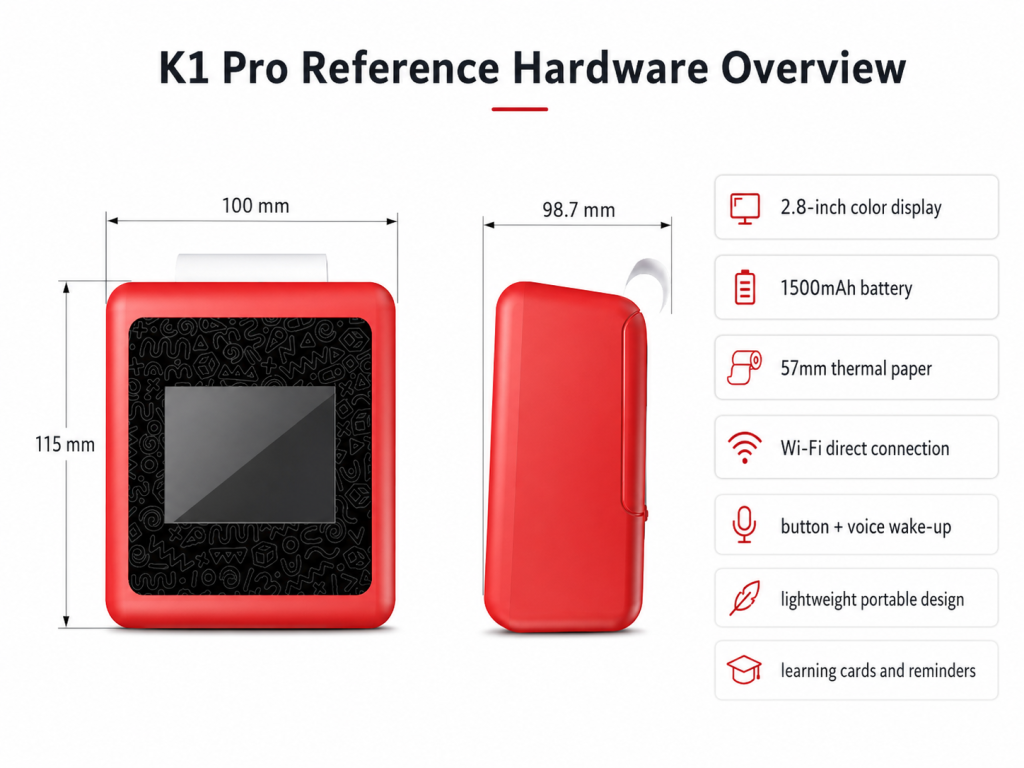
An AI flashcard printer supplier should help language-learning channels, math practice suppliers, tutoring brands, and education-stationery buyers create short, reviewable practice cards. The value is not simply faster printing. A useful device should help prepare concise prompts, visible answers, readable cards, and repeatable practice routines while keeping adults in control of accuracy, age fit, privacy, and support responsibilities. K1 Pro can be discussed as a reference platform, but exact AI functions depend on the confirmed project version.
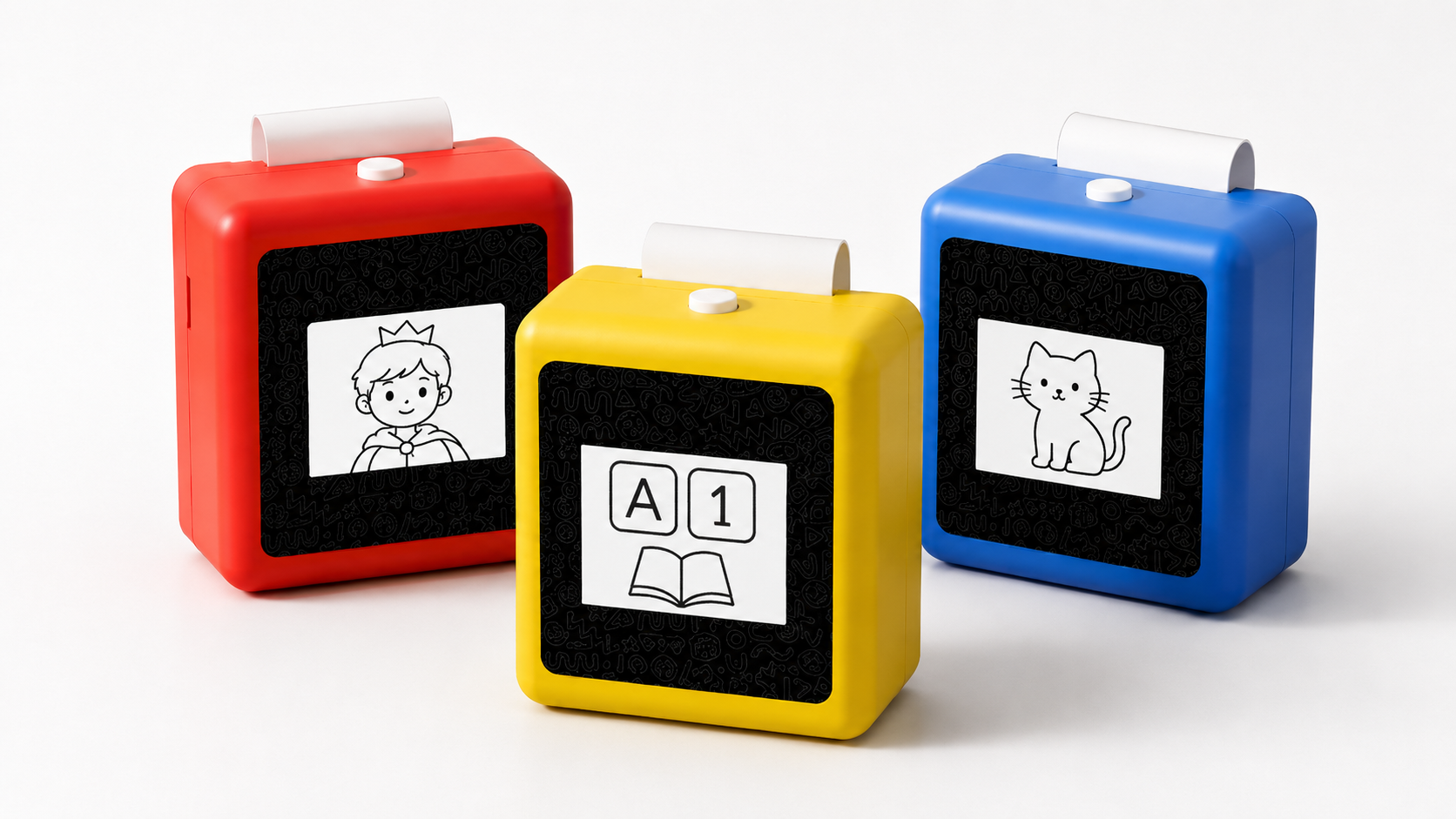
What Buyers Should Know
- A flashcard printer adds value when it improves speed without weakening accuracy, readability, or review control.
- A supplier should demonstrate the full card cycle: prompt, candidate card, adult check, print, sort, and reuse.
- Good early prototypes focus on vocabulary cards, math fact cards, recognition cards, and interest-led knowledge cards.
- AI scope, content review, privacy flow, paper supply, packaging, and support need named owners.
- Packaging should avoid claims about learning outcomes unless the final product and evidence support them.
Where This Product Fits
| Entity | Description |
|---|---|
| Brand | Yosiya, AI hardware products and solutions supplier |
| Reference product | K1 Pro AI Printer |
| Category | AI flashcard printer for kids learning and practice channels |
| Target buyers | Language-learning channels, math practice suppliers, tutoring brands, education-stationery buyers, and OEM/ODM teams |
| Typical outputs | Vocabulary cards, math fact prompts, recognition cards, knowledge slips, labels, and short review tasks |
| Buyer stage | Supplier shortlist, sample review, content workflow planning, and private-label evaluation |
A Faster Card Is Not Automatically a Better Card
Flashcards work when each card has a clear purpose. A compact AI printer can help a parent, tutor, or brand team prepare small card sets quickly, but the output still needs accuracy checks, concise wording, and paper-format discipline.
The buyer should define one practice method before asking for every possible feature. Is the product for vocabulary recall, math fact repetition, reading recognition, or interest-led knowledge cards? The answer affects prompt design, answer placement, print layout, and packaging language.
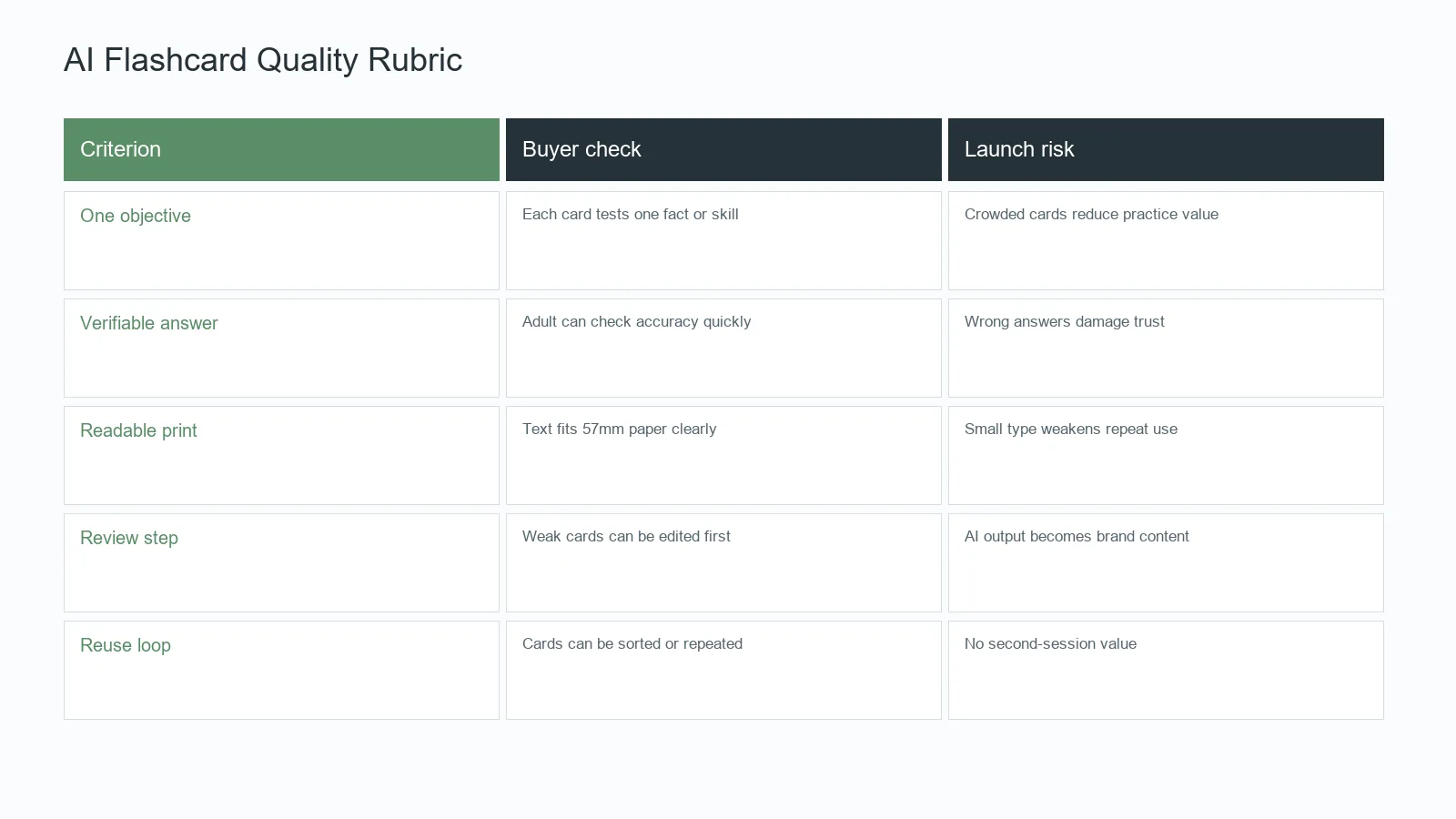
Flashcard Quality Rubric
| Criterion | What to confirm | Why it matters |
|---|---|---|
| One objective | Each card tests one fact, word, sound, or concept | Crowded cards are hard to repeat |
| Verifiable answer | Adults can check the answer quickly | Incorrect practice harms trust |
| Readable print | Text fits the 57mm paper format | Small type weakens usability |
| Review step | Weak cards can be edited before printing | AI output becomes customer-facing content |
| Reuse loop | Cards can be sorted, repeated, or discarded | Repeat use needs a simple routine |
Match the Card Format to the Practice Method
Vocabulary Example Cards
Vocabulary cards should stay short: word, short meaning, example phrase, or quick recall prompt. Buyers should test whether the output is readable on 57mm paper and whether adults can confirm the answer before printing.
Math Error-Correction Cards
For math practice, the device can print quick fact prompts or correction cards after a known mistake pattern. The buyer should confirm how answers are shown, whether explanations fit the format, and whether incorrect generated output can be blocked or edited.
Child-Interest Knowledge Cards
Interest-led cards can connect practice to animals, space, sports, stories, or hobbies. This is useful for engagement, but the supplier should show how facts are checked and how unsuitable topics are redirected.
Create Sellable Learning Packs
Hardware, AI behavior, template design, and paper supply can change independently. Buyers should keep a version record showing which card types work in the sample, which require configuration, and which should stay out of the first launch.
The U.S. Department of Education AI report and UNESCO guidance on generative AI in education can help teams frame human oversight and education-use questions. The FTC COPPA FAQ and NIST AI Risk Management Framework can help buyers review privacy, AI service ownership, and risk controls. These sources do not certify the final device or service.
How K1 Pro Supports Compact Card Output
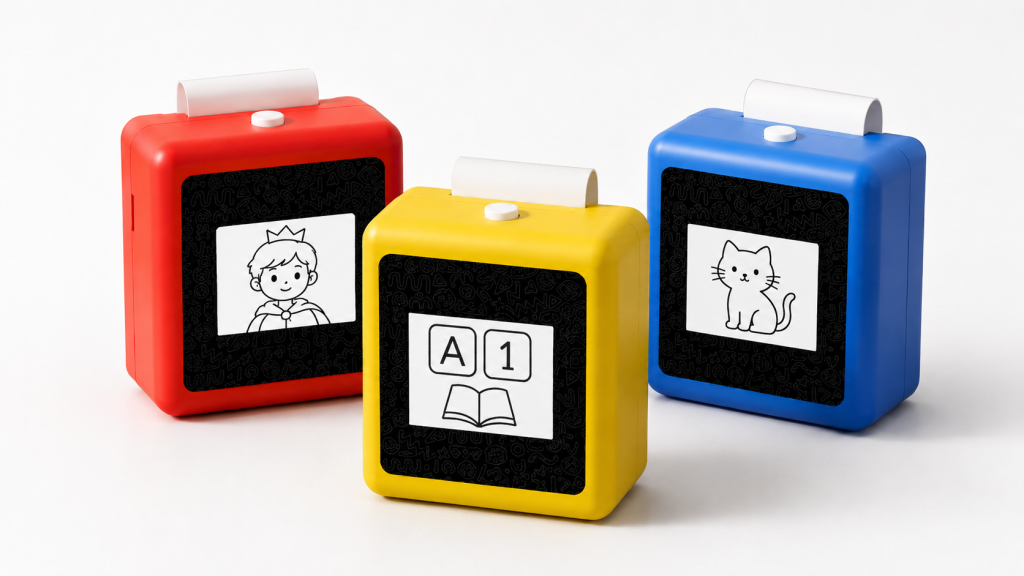
K1 Pro can be discussed as a compact reference platform with 57mm thermal printing, Bluetooth plus web direct connection, and OEM/ODM discussion options. Yosiya describes configurable AI voice interaction, voice-to-image direction, printable templates, and private-label support. Buyers should request a sample function list before presenting flashcard, language, or AI claims to a channel.
Brand teams can discuss logo, colors, retail packaging, manuals, accessories, printable-card direction, language requirements, selected AI functions, and support boundaries. Standard private-label MOQ starts from 1,000 units, while samples, validation quantities, or pilots can be discussed case by case.
Sample Tests for a Flashcard Supplier
- Can the sample create a short, readable card from a real learning prompt?
- Can an adult check or edit the answer before printing?
- Does the card still work after paper size and contrast limitations?
- How are unclear, unsuitable, or incorrect prompts handled?
- Who owns templates, prompt rules, cloud service, and support after launch?
- How will paper refills, accessory packs, and card bundles be sold?
- Which claims should stay off packaging until the final version is confirmed?
Limits That Should Stay Visible
An AI flashcard printer should not be described as screen-free if setup or use includes a screen, app, web flow, or cloud service. “Print-first” and “screen-light follow-up” are more precise. The flashcard system should not promise learning outcomes, universal content safety, or automatic legal compliance.
The thermal format works well for concise cards, labels, notes, and short prompts. It is not intended to replace full worksheets, detailed explanations, or long-form curriculum material.
FAQ
Can AI printers create flashcards for kids?
Yes, when the confirmed project includes suitable templates, review controls, and printable card formats. Buyers should test real vocabulary, math, and recognition examples before launch.
What should practice-product teams check first?
They should check answer accuracy, card readability, age fit, adult review, edit flow, paper supply, privacy questions, and recurring service cost.
How can education channels sell printable learning card devices?
Use a specific practice routine, such as vocabulary review, math facts, or reading recognition. A clear routine is easier to demonstrate than a broad AI feature list.
Can K1 Pro support private-label flashcard printer projects?
K1 Pro can be discussed as an OEM/ODM reference platform. Branding, packaging, accessories, card direction, languages, and selected AI functions can be discussed subject to scope.
What claims need caution?
Avoid claims about learning improvement, fully screen-free use, automatic child safety, or blanket compliance unless the final configuration and evidence support them.
Make the Next Decision Evidence-Based
For language-learning channels, math practice suppliers, tutoring brands, and education-stationery buyers, the next step is to test one card routine with the current sample. To review K1 Pro hardware, current AI scope, OEM/ODM options, and sample availability, contact Yosiya.