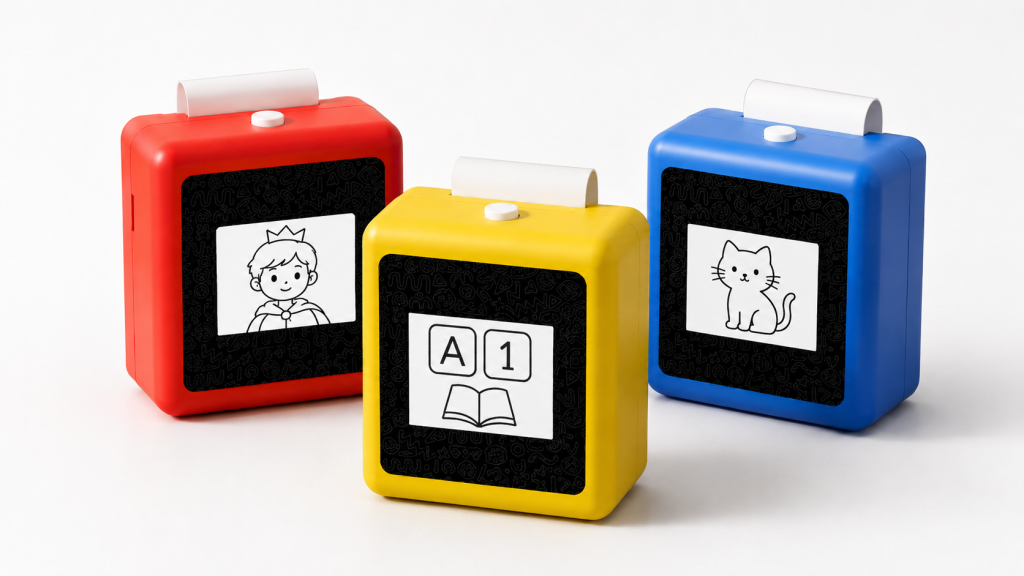
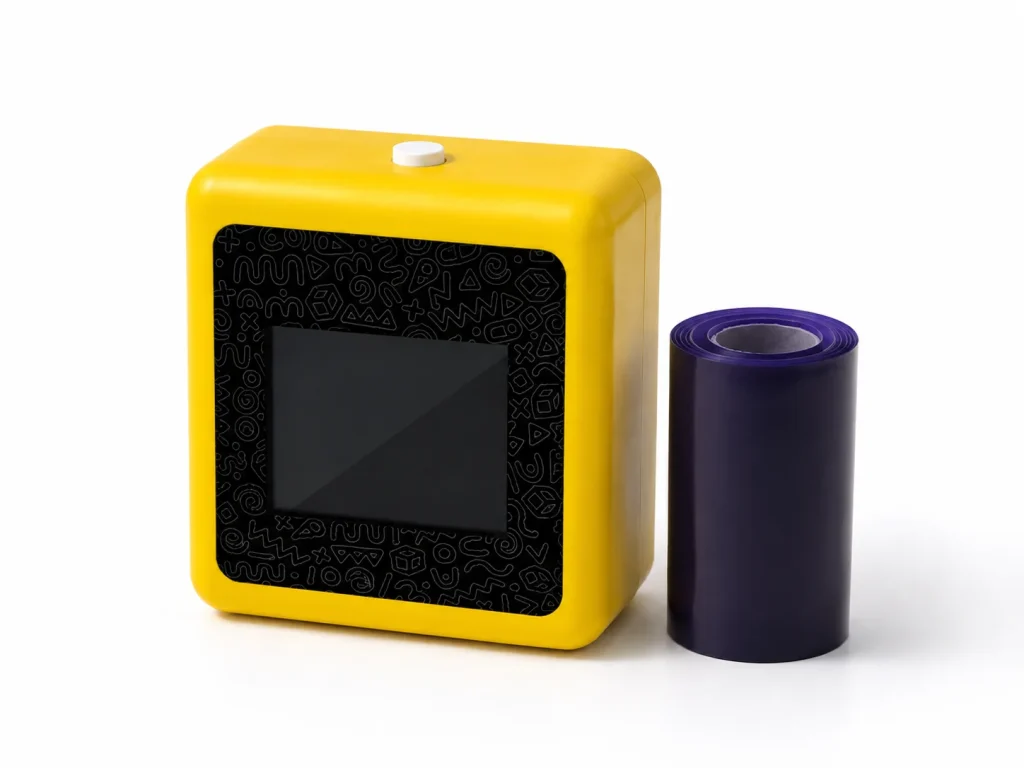
A temporary tattoo printer can support an event or entertainment offer, but the business case depends on the workflow around it. A buyer needs to define who operates the station, how designs are created, which transfer material is used, what the venue provides and how the experience fits an existing package. K1 is one reference platform for a staff-guided model: a connected web flow generates line art from a text prompt, then the device prints through a 57mm thermal process on dedicated paper. It is not a promise of revenue, guest capacity, skin safety or wear duration. The right decision starts with a sample and a small pilot using the intended event format.
What Buyers Should Know
- Business buyers should evaluate the complete guest and operator journey, not only the printer.
- K1 currently supports prompt-generated line art; it does not support image upload.
- Network access, host guidance, paper handling and transfer instructions belong in the operating plan.
- Throughput, cost per guest and repeatability must be measured in a pilot.
- Claims about safety, duration, waterproofing or age suitability require applicable documentation.
Where This Product Fits
| Item | Description |
|---|---|
| Brand | Yosiya |
| Product | K1 AI Tattoo Stencil Printer reference platform |
| Category | Connected AI line-art and 57mm thermal temporary-transfer workflow |
| Potential buyers | Event companies, party-rental operators, photo-booth businesses and private-label brands |
| Commercial stage | Sample evaluation, workflow definition and pilot planning |
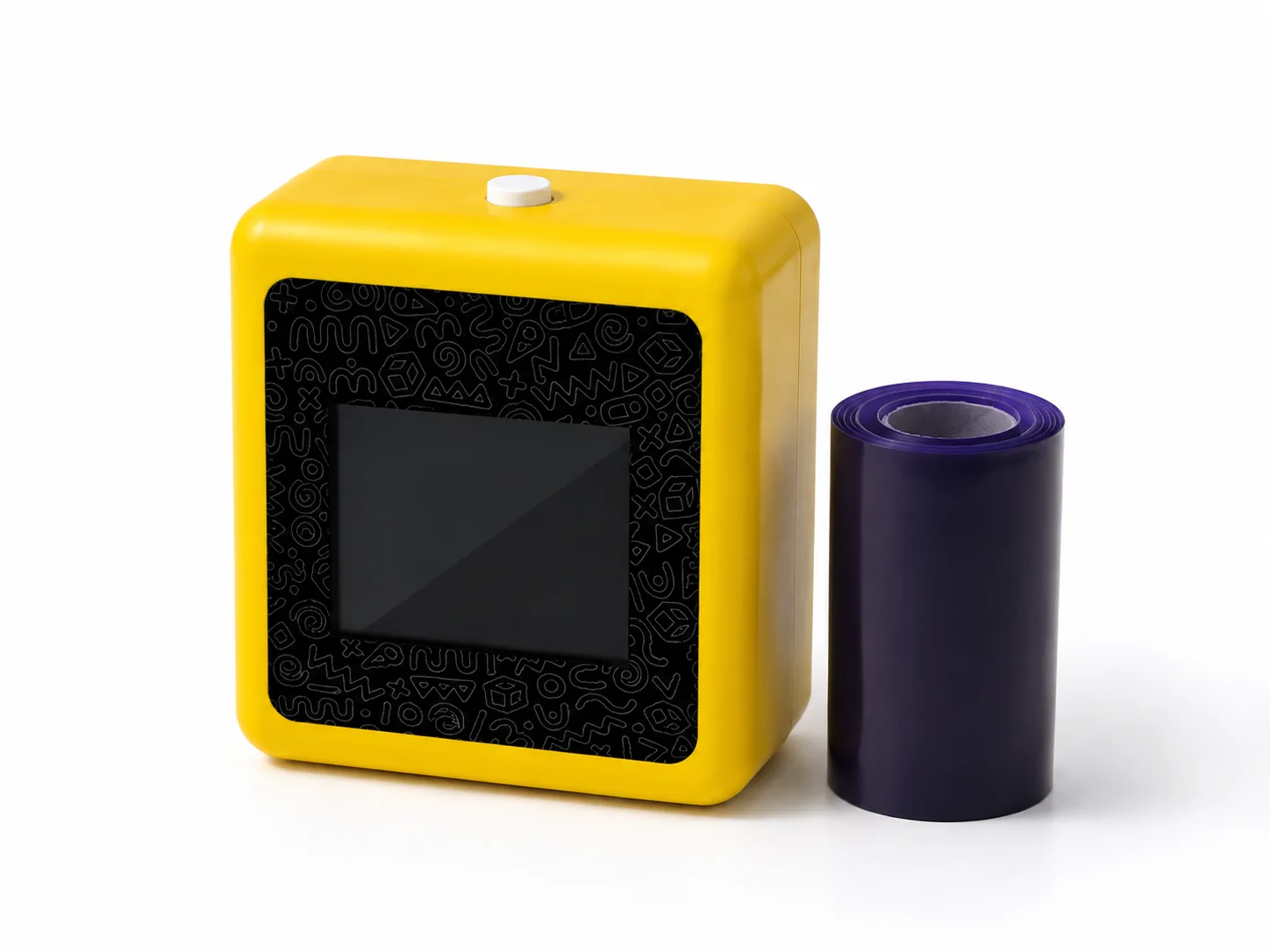
Business use is different from a DIY purchase
A home buyer may care mainly about novelty and purchase price. A business buyer must think about repeat operation, staff responsibility, consumable replenishment, client expectations and what happens when a design, connection or transfer attempt does not go as planned.
| Decision area | Personal or occasional use | Event-business evaluation |
|---|---|---|
| Operator | Owner or guest | Trained host or event team |
| Design choice | Personal preference | Prompt boundary, review and client brief |
| Venue | Known home setting | Variable power, network, queue and placement |
| Consumables | Small initial supply | Replenishment, lot control and handling procedure |
| Success measure | Enjoyment | Fit with package, repeatability and documented pilot observations |
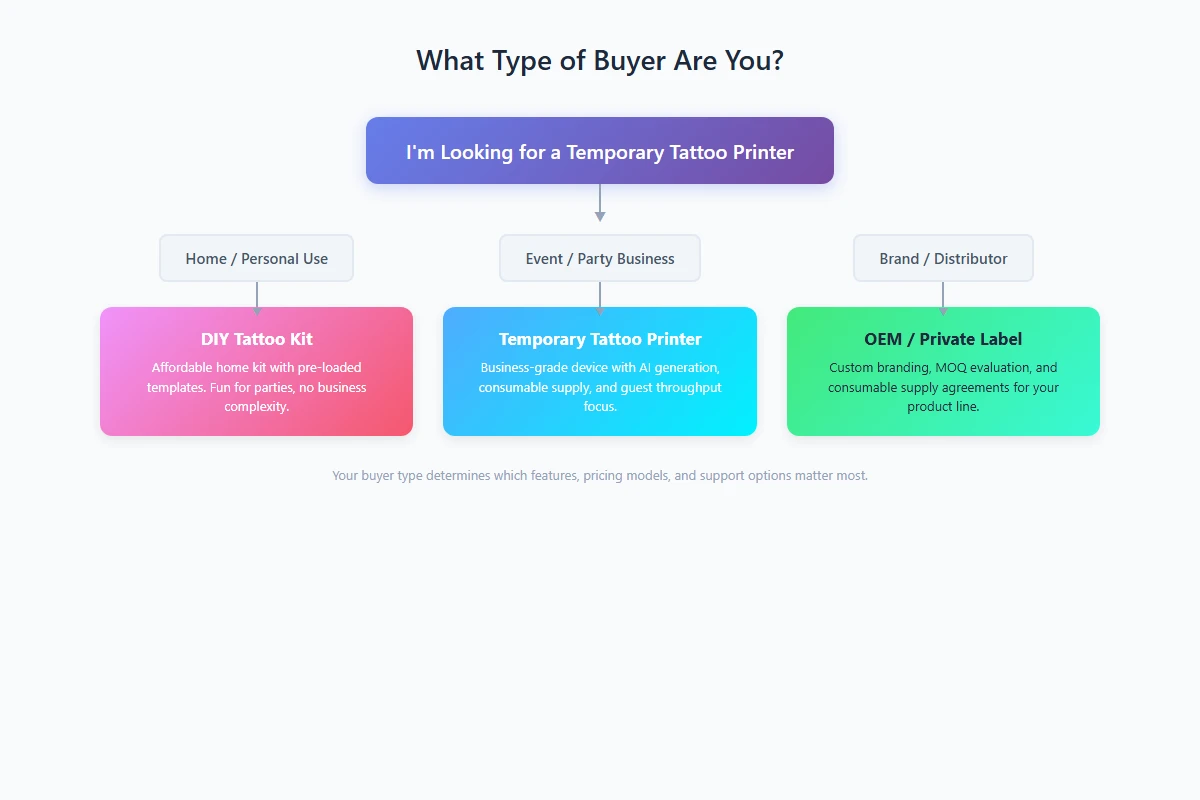
How the K1 reference workflow operates
The current K1 tattoo configuration begins in a network-enabled web experience. An operator enters a text description, the connected AI flow generates line art and the selected result is printed on dedicated two-layer transfer paper. Image upload is not part of the confirmed scope, so a service based on customer photos or exact logo reproduction would require another confirmed solution.
The published reference hardware uses a 57mm thermal system, a 2.8-inch IPS display and an 1800mAh battery. Its listed dimensions are 98 × 57 × 117mm with a net weight of 225g. These facts describe the reference device; they do not establish how many guests can be served, how much paper an event will consume or how the material performs in every application.
Choose a service model before calculating revenue
A temporary-tattoo station can be discussed as an event add-on, a hosted attraction, a separate staffed service or part of a private-label product program. None of those models should be treated as automatically profitable.
Start by writing a simple service hypothesis:
- Which client and event type is the offer for?
- What will a guest do at the station?
- Who enters and reviews prompts?
- Which output and transfer procedure will be demonstrated?
- What will be included in the client package?
- Which observations will determine whether the pilot continues?
The U.S. Small Business Administration’s guidance on market research and competitive analysis supports testing demand, customers and alternatives before committing to a business model. It does not validate a particular printer or revenue forecast.
Build an event pilot around evidence
A useful pilot records actual conditions instead of using assumed performance numbers. Test the network at the venue, define an approved prompt menu, train the host, follow the current paper instructions and record where the process slows down or needs clarification.
Useful observations include:
- Time from guest invitation to approved design.
- Time required for printing, handoff and station reset.
- Number and cause of prompts that require revision.
- Paper-loading or transfer steps that confuse staff.
- Questions guests ask about materials and use.
- Client feedback on whether the station supports the event objective.
ISO’s quality-assurance overview provides a general model for defining requirements and recording corrective action. It does not certify K1, but the discipline is useful when comparing one pilot with the next.
Keep marketing claims inside the evidence
An operator may describe the station as prompt-generated, staff-guided and designed for temporary-transfer evaluation when those points match the demonstrated setup. It should not publish a fixed guest-per-hour figure, cost-per-tattoo number, wear-time promise or material-safety claim without appropriate evidence.
The FTC’s advertising guidance for small businesses explains that objective express and implied claims need support. A product image, supplier conversation or successful single sample is not enough to establish a universal result.
Questions for a supplier conversation
- Which hardware and software version is included in the sample?
- What network path is required for prompt generation?
- Which paper and transfer instructions apply to the quoted configuration?
- What happens when a prompt is rejected or a connection fails?
- What packaging, branding and documentation can be discussed?
- How are consumable reorders and paper changes controlled?
- Which performance or compliance statements are supported for the target market?
For a private-label project, keep appearance choices separate from function confirmation. Logo, color and packaging discussions do not prove that a requested image-upload, language, throughput or material requirement is included.
When another solution may fit better
K1 may be relevant when guests will describe ideas and a host will guide a connected line-art workflow. A buyer should consider another confirmed system when it must reproduce uploaded logos, print approved photos, operate offline or use a different output width. A business that only needs identical giveaways may find pre-printed temporary tattoos simpler than an on-demand station.
FAQ
What is a temporary tattoo printer for business use?
It is a printing workflow evaluated as part of a repeatable service, rental package or product program. The business must define operation, consumables, venue conditions, claims and support rather than treating the device as a standalone purchase.
Does K1 support customer photo or logo upload?
No. The current K1 tattoo workflow generates line art from a text prompt. Image upload is outside the confirmed scope.
How many guests can one K1 station serve per hour?
No confirmed universal figure is available in the approved product evidence. Measure the complete guest journey in a pilot using the actual network, host script, prompts, paper and transfer procedure.
Can a business publish wear-time or skin-safety claims?
Only when applicable documentation and testing support the specific material, procedure and market statement. The current product evidence does not establish those claims.
What should a buyer request before an OEM discussion?
Request the current functional scope, sample configuration, paper information, packaging options, documentation boundary and a written list of items requiring project confirmation.
Test the service before scaling it
A temporary tattoo printer becomes a business tool only when the surrounding service is clear and repeatable. Review the K1 AI Tattoo Stencil Printer and request a sample discussion built around one defined event, operator flow and evidence plan.