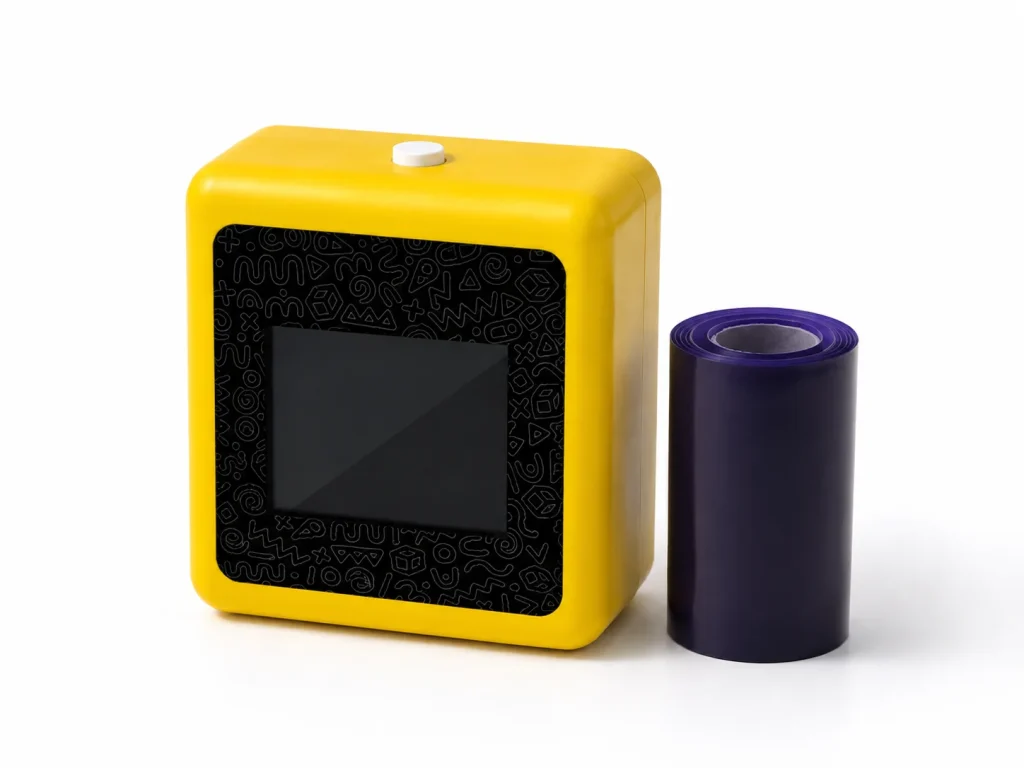
Trade show booth ideas should create a useful reason to stop, a clear branded interaction and a practical next step for the sales team. A K1 AI tattoo station can be evaluated as one hosted engagement: an attendee describes an idea within an approved prompt boundary, a connected web flow generates line art, and the team prints a temporary-transfer output on dedicated paper. It is not a substitute for a booth message, qualified staff, lead process or show-specific approval. The value of the station depends on how it fits the attendee journey.
What Buyers Should Know
- Start with the target conversation and follow-up action, not the attraction alone.
- K1 currently creates line art from text prompts through a network-connected web flow; image upload is not included.
- Make the host, prompt menu and lead handoff visible parts of the booth plan.
- Test the selected network and dedicated-paper procedure under realistic show conditions.
- Do not claim fixed traffic, dwell time, lead yield or transfer duration without evidence.
Where This Product Fits
| Item | Role |
|---|---|
| Product | Yosiya K1 AI Tattoo Stencil Printer |
| Category | Hosted, connected AI line-art and temporary-transfer interaction |
| Booth role | A conversation opener or branded participation moment |
| Design input | Text prompt through a network-enabled web experience |
| Operational dependency | Approved prompts, dedicated paper, host workflow and venue/show rules |
| Not established | Fixed lead conversion, image upload, unattended operation or universal material claims |
Design the attendee journey, not a queue for its own sake
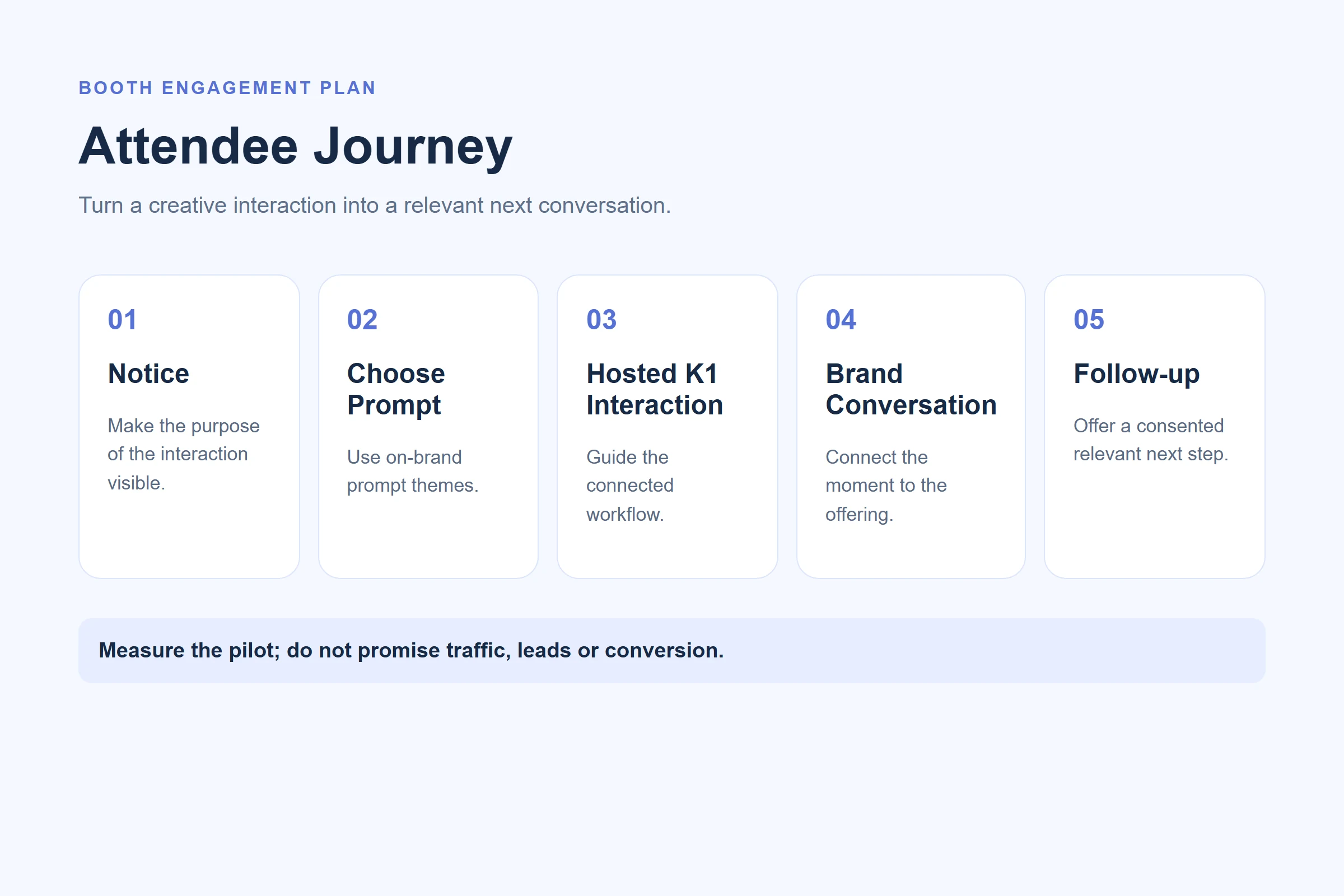
An engaging booth does not need an elaborate game, but it does need a coherent path. The attendee should understand what the interaction is, why it connects to the brand and what happens after the transfer is printed. The host should know when to introduce the product, when to capture consented lead information and when to move an attendee to a deeper conversation.
The International Association of Exhibitions and Events (IAEE) highlights people, product, learning and other in-booth tactics as parts of exhibitor engagement. Its attendee and exhibitor engagement resources support the broader principle that a tactic should align with exhibitor goals, rather than being selected only for spectacle.
| Journey stage | Booth decision |
|---|---|
| Notice | What visual or host invitation tells attendees what is happening? |
| Choose | Which on-brand prompt themes are available? |
| Participate | Who guides the prompt and K1 workflow? |
| Connect | What is the relevant product or message to discuss while the output is prepared? |
| Follow up | What consented next step can the team offer after the interaction? |
Keep the K1 interaction within its confirmed scope
K1’s current configuration starts with a network-enabled web experience and a text prompt that produces AI line art. The selected design is printed through the 57mm thermal workflow on dedicated two-layer transfer paper. It does not currently include image upload. A booth should therefore promote a prompt-generated creative interaction, not a logo-upload service unless that feature has been separately confirmed.
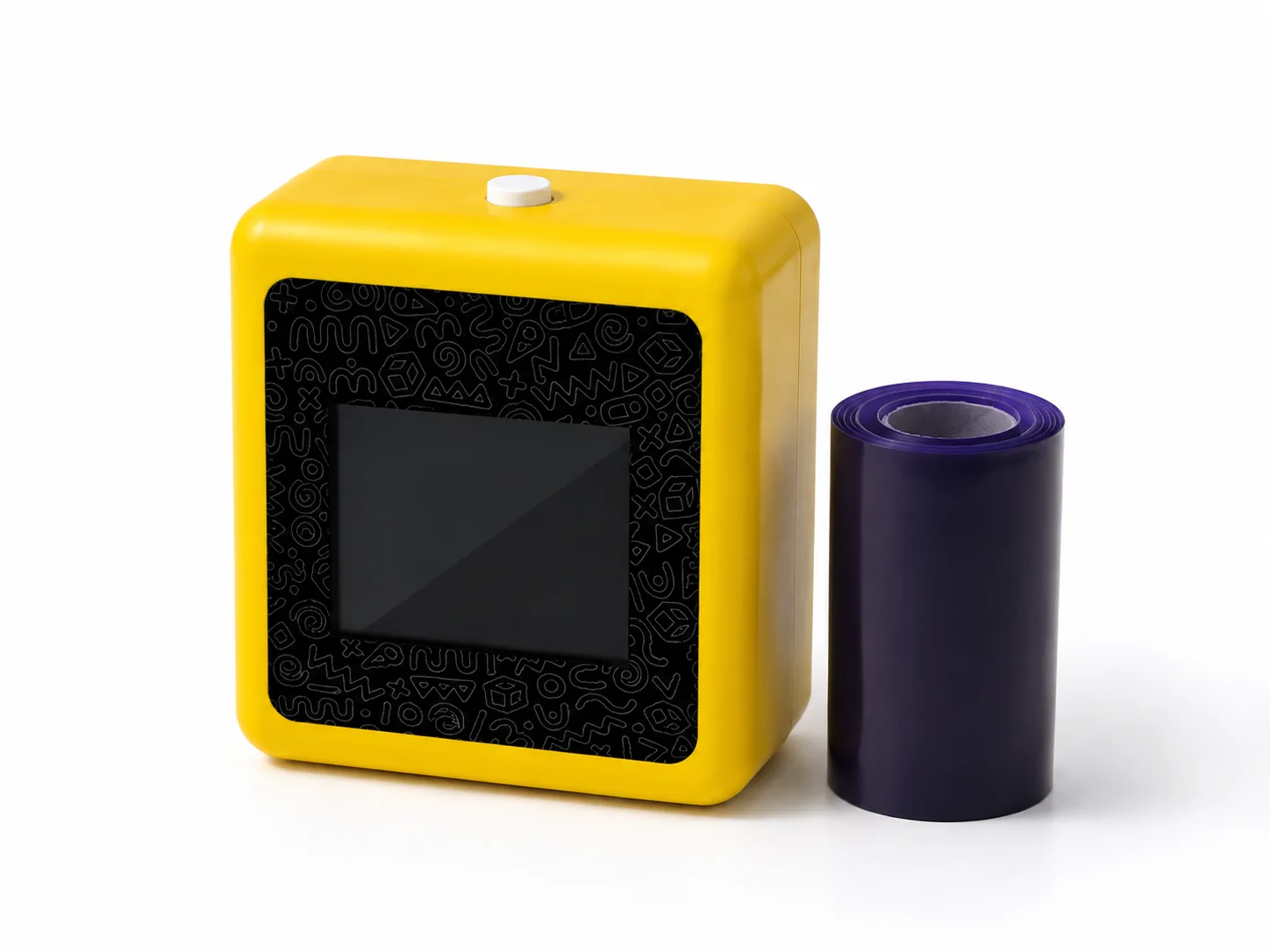
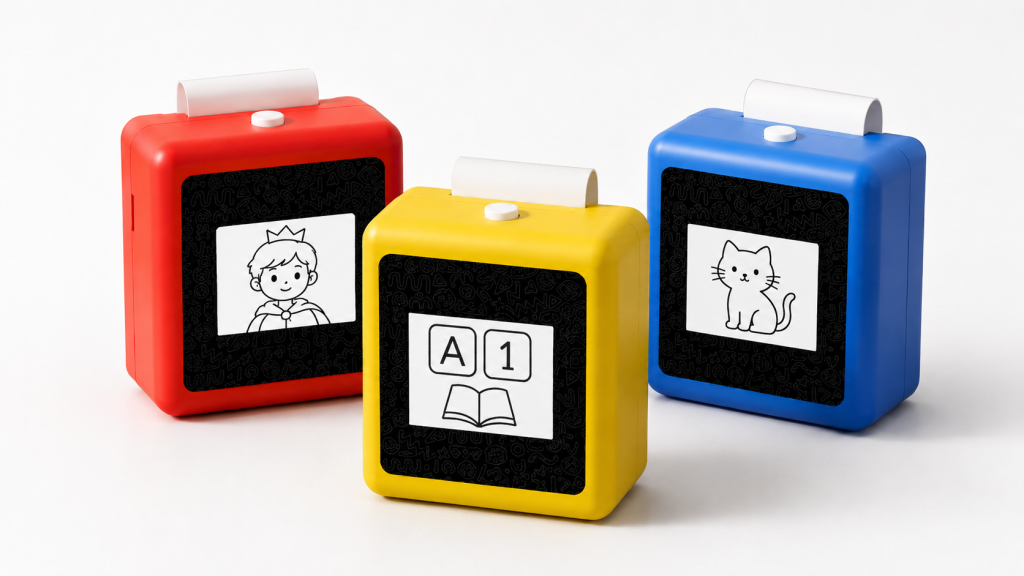
The product image shows K1 for the stated product category. It does not prove a result under a particular exhibition network, paper configuration, venue policy or staffing model.
Give the host a short, workable script
A host-led interaction works well when each person knows their role. The greeting should be short, the prompt menu should be easy to explain, and the product conversation should not block the next attendee. This is not a fixed throughput recipe: it is a way to expose where the real friction appears during a booth rehearsal.
- Invite attendees with one sentence that connects the interaction to the campaign.
- Offer a compact set of approved prompt themes and explain the boundary.
- Generate line art through the connected K1 workflow.
- Use the waiting moment for a relevant brand or product conversation.
- Follow the selected dedicated-paper procedure and inspect the result.
- Offer a consented follow-up action that fits the exhibitor’s sales process.
For general event-business evaluation, consumable planning and purchase questions, see Temporary Tattoo Printer for Businesses. For a sourcing-team acceptance record, see Tattoo Stencil Printing Solution: A B2B Evaluation Checklist.
Plan data and brand boundaries before the show
The creative interaction and the lead process should be separate but connected. Do not imply that entering a prompt requires an attendee to provide contact information unless the booth clearly explains the choice. Do not put personal information into prompts merely to make a design feel customized. Build a clear handoff: the host can invite an attendee to a conversation, QR action or opt-in form, while the exhibitor manages any data collection under its own privacy and show rules.
The FTC’s advertising guide for small businesses is relevant to branded promotion: objective claims about results need support. Avoid unverified statements such as “this booth will generate leads,” “every visitor receives a tattoo” or “the transfer lasts all day.” Describe the tested interaction and let the team measure the outcome for its own show.
Rehearse the show-floor conditions
Trade show plans often fail at the handoff points: network login, paper loading, unclear host roles, blocked aisle space or a lead form that interrupts the interaction. Rehearse the exact prompt set, connection, paper procedure and conversation handoff. Keep a visible plan for a busy period and a fallback for a connection issue, but do not treat a rehearsal as a guarantee of show-floor performance.
| Rehearsal check | Evidence to capture |
|---|---|
| Prompt menu | Examples that fit the brand and can be explained quickly |
| Network path | What connection is required and who can assist if it changes? |
| Host handoff | When the sales conversation begins and who owns the next step |
| Paper procedure | Confirmed paper identity, instructions and operator record |
| Venue coordination | Space, power, access and organizer questions for the selected booth |
The Health and Safety Executive’s event-planning guidance recommends assigning responsibilities and planning proportionately to the event’s scale, audience and location. It is not U.S. trade-show regulation or K1 product guidance; use it as a practical framework for clarifying owners and contingencies.
Decide if the interaction advances the booth objective
After a rehearsal or first show, decide with evidence. Advance if attendees understand the activity, hosts can repeat the workflow and the sales handoff remains clear. Revise if the prompt menu, traffic flow or conversation timing causes friction. Hold if venue approval, paper confirmation, data handling or claim support remains unresolved.
Keep the show sample separate from a performance promise
One smooth demonstration can prove only that the selected team completed the selected workflow in those conditions. It does not establish that the same queue, connection or result will occur at another show. Record the booth dimensions, prompt set, paper identity, network path, host roles and what happened when the interaction paused. That record gives the next exhibit team a usable starting point.
ISO’s quality-assurance overview is useful here as a general discipline: define the requirement, observe the output and correct a known issue. It does not certify K1 or an exhibition deployment. In practice, this means changing one variable at a time—such as the host script or the prompt menu—then retesting before the next event.
The same discipline protects sales messaging. A creative moment may invite a conversation, but it should not become a claim about visitor volume or commercial results. Keep the measurable objectives inside the exhibitor’s event plan, and publish only the features and operating scope that can be supported for the deployed configuration.
Create a brief post-show review while the observations are still specific. Note the questions attendees asked, whether the approved prompt themes reflected the brand, where a host needed sales support and which follow-up action produced relevant conversations. A review like this does not turn the station into a quantified lead engine; it helps the next team improve one defined part of the experience.
Share the review with booth operations, sales and the supplier contact so that the next test begins with the documented version rather than memory alone.
For paper traceability and replenishment questions, read Tattoo Transfer Paper Supply: A Wholesale Guide. A clear supplier record is more useful than treating a one-off booth sample as proof for every event.
This article focuses on exhibition-floor interaction and the sales handoff. For a broader campaign concept that extends beyond a booth, see Brand Activation Ideas: Temporary Tattoo Experiences.
FAQ
What are effective trade show booth ideas?
Effective ideas make the brand value clear, give attendees a reason to participate and create a practical route to a relevant follow-up conversation.
Can K1 be used as a trade show booth attraction?
It can be evaluated as a hosted, prompt-to-line-art temporary-transfer interaction when the exhibitor has a defined prompt boundary, paper procedure and booth workflow.
Does K1 support logo or image upload?
No. The current tattoo workflow uses text-prompt AI line-art generation through a network-connected web experience.
What should a trade show rehearsal test?
Test prompt choices, connection conditions, paper handling, host responsibilities, sales handoff and venue coordination.
What outcomes should exhibitors avoid promising?
Avoid fixed claims about traffic, lead volume, conversion, throughput, transfer duration or universal material results unless they are supported for the exact configuration.
Build the booth around a real next step
Explore the K1 AI Tattoo Stencil Printer with an approved prompt menu, host script and documented paper plan before committing it to a trade show program.