A Wi-Fi-connected device that listens to your child, processes their voice on a remote server, and generates responses in real time — that is what an AI toy is, technically speaking. For a parent, the sentence reads differently than it does for an engineer. It reads like a list of things to worry about.
The good news: the safety and privacy infrastructure for children’s connected devices is more mature in 2026 than it was even two years ago. The FTC’s strengthened COPPA rules took effect in April 2026, imposing specific requirements on data retention, third-party disclosure, and verifiable parental consent. The mandatory toy safety standard ASTM F963 covers mechanical, chemical, and flammability risks for all toys sold in the US. The gap is not in the regulations — it is in how consistently manufacturers comply, and how clearly they communicate their compliance to parents.
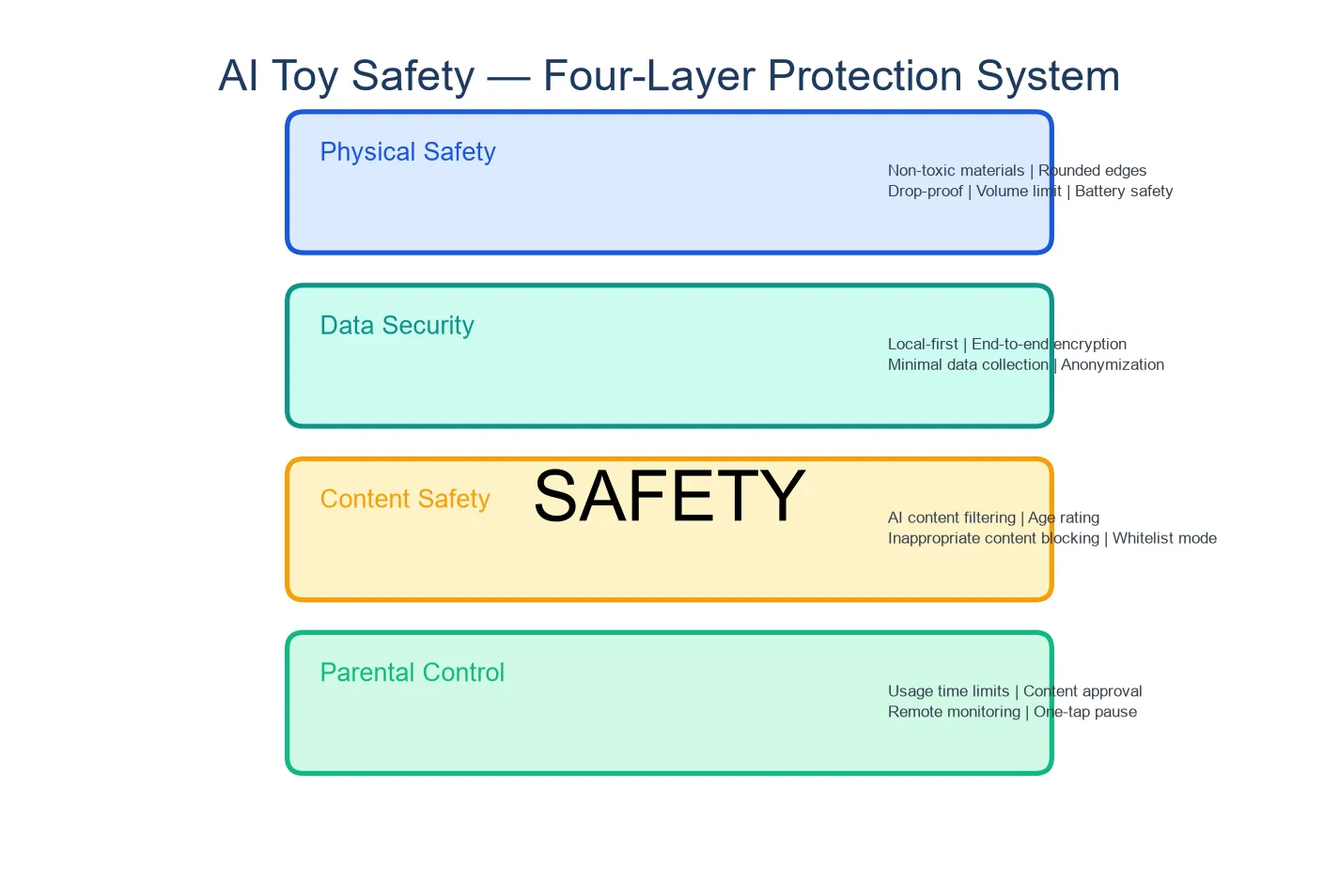
This guide walks through the four layers of AI toy safety — hardware, data, content, and physical — and compares three devices across each layer.
Layer 1: Hardware Safety and Certification
Every toy sold in the United States must comply with ASTM F963, the mandatory safety standard enforced by the Consumer Product Safety Commission. This covers mechanical hazards (sharp edges, small parts, pinch points), chemical hazards (lead, phthalates, heavy metals), and flammability.
For electronic toys, additional requirements apply. Wireless communication components must meet FCC standards. For toys sold in the EU, CE marking (covering the Radio Equipment Directive and Toy Safety Directive) and RoHS compliance are mandatory.
When evaluating an AI toy, ask the manufacturer for certification documentation specific to the production version you are purchasing — not a brand-level claim, not a certificate for a different product in their line. A credible manufacturer should be able to provide this.
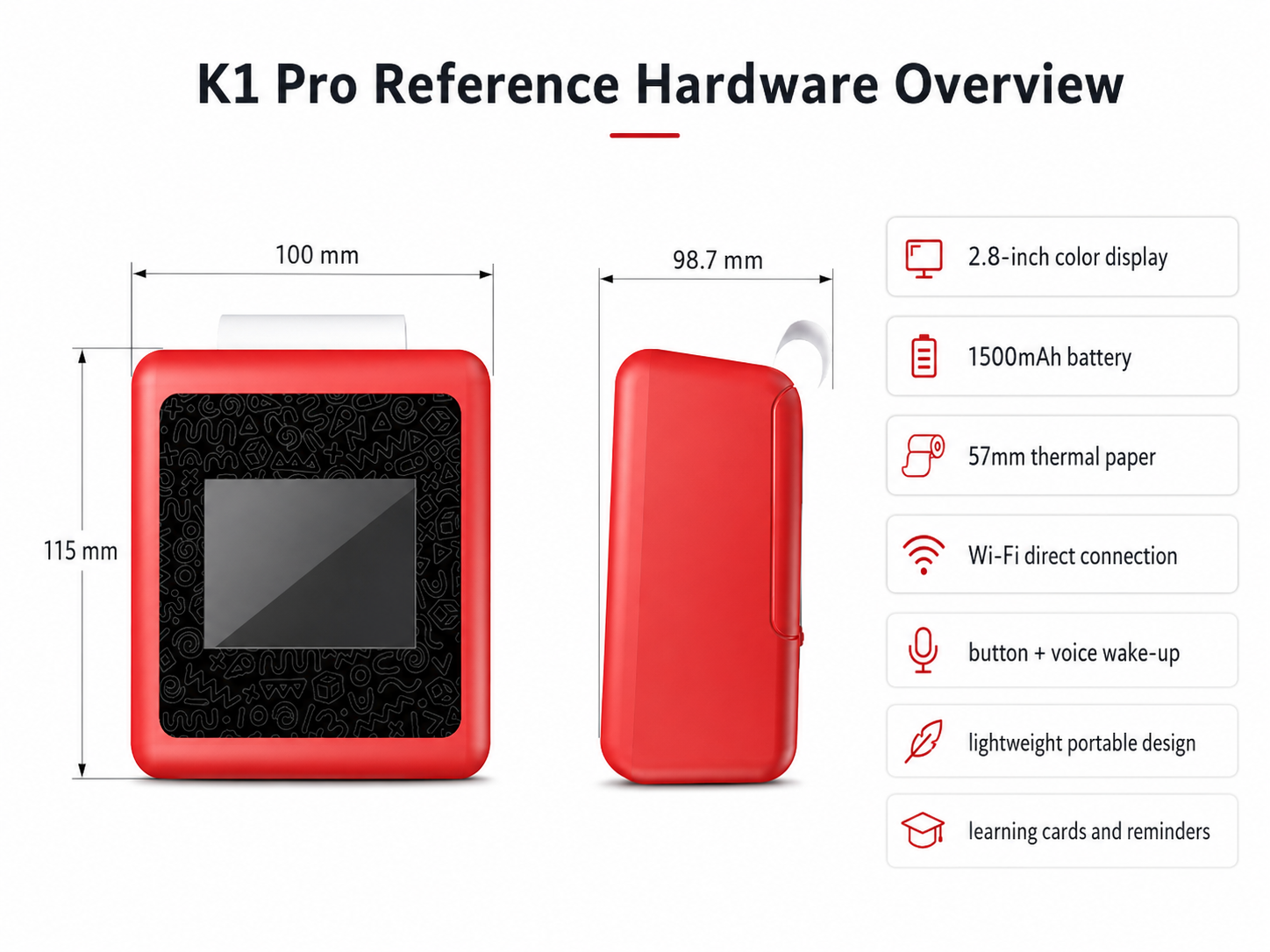
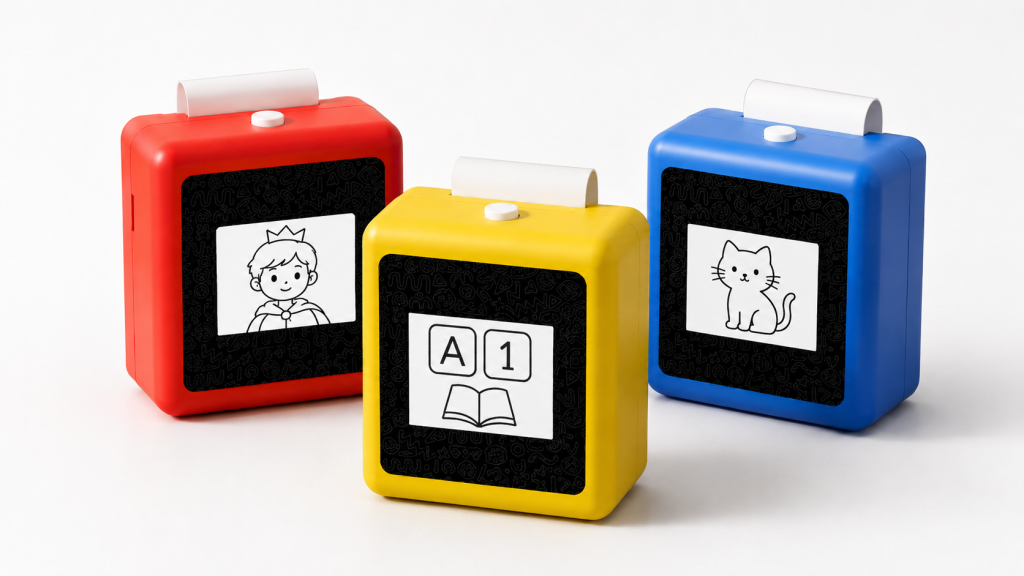
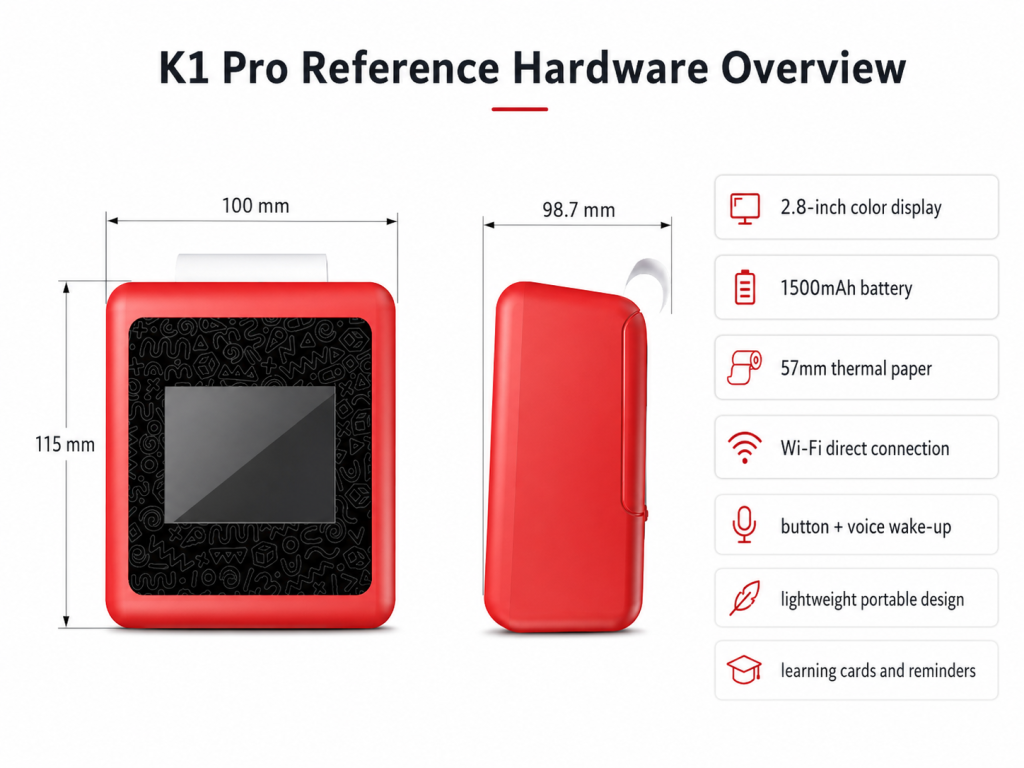
The K1 AI Printer reference platform materials indicate FCC, CE, RoHS, and CPC (Children’s Product Certificate, required to demonstrate ASTM F963 compliance) are available. The device body is described as using food-grade ABS+PC materials. Certification status should be confirmed for the specific production version.
Layer 2: Data Privacy and COPPA
The Children’s Online Privacy Protection Act governs the collection of personal information from children under 13 by online services. Under COPPA, “personal information” includes voice recordings, which makes virtually every AI toy with a microphone subject to the rule if it collects, stores, or processes children’s voice data.
The FTC’s 2025 updates to COPPA, effective April 22, 2026, strengthened requirements in three areas relevant to AI toys:
Data retention limits. Companies must delete children’s data when it is no longer reasonably necessary for the purpose for which it was collected. An AI toy manufacturer cannot keep voice recordings indefinitely “for product improvement” without more specific justification.
Third-party disclosure restrictions. If an AI toy uses a third-party AI service (for speech recognition or language processing), the toy manufacturer must disclose this and ensure the third party also complies with COPPA. This is relevant because many AI toys use cloud-based AI services from major tech companies — and the data-handling chain involves multiple entities.
Verifiable parental consent. The methods for obtaining parental consent were updated to include more secure verification mechanisms. A simple checkbox on a companion app is no longer sufficient.
In practice, here is how three devices handle privacy:
Miko Mini carries COPPA certification — the strongest privacy signal in this comparison. Its data handling for children under 13 has been reviewed against the federal standard.
Stickerbox carries both COPPA certification and the Kids Safe Seal. Of the devices compared here, it has the most comprehensive privacy credentials, and its simpler feature set (voice command processing, no conversation storage) means less data is collected in the first place.
K1 AI Printer reference platform documentation indicates privacy considerations are part of the design — AI dialogue content boundaries are configurable, and the device does not require a companion app with third-party SDKs. COPPA compliance status should be confirmed for the specific production version. Parents should ask: where is voice data processed? Is it stored after processing? Can parents access and delete conversation history?
Layer 3: Content Filtering and AI Safety Boundaries
Beyond privacy, there is the question of what the AI says and generates. An AI toy that can produce images from a child’s description must have content filters that prevent the generation of inappropriate imagery. An AI toy that can hold conversations must have boundaries that prevent it from discussing topics unsuitable for children.
Content filtering for AI toys is technically challenging because it must balance two competing requirements: safety (block harmful content) and openness (allow creative, educational, and imaginative content). Overly aggressive filtering makes the toy feel restricted and boring. Underly aggressive filtering creates risk.
The K1 platform’s AI includes configurable content boundaries — parents or brands can set parameters for what topics and types of content the AI can engage with. The exact scope of content filtering depends on the confirmed project version.
Layer 4: Physical Safety for Daily Use
A device that a child handles daily needs to survive drops, spills, and the general chaos of a child’s environment. Specific considerations for AI toys:
Battery safety. The K1’s 1,800mAh battery is enclosed in a screw-secured compartment. This is standard for children’s electronics. A child should not be able to access the battery without tools.
Thermal printer safety. Thermal printers use heat, not ink. The K1’s print head reaches operating temperature during printing. The mechanism is enclosed in the device body and is not accessible during normal use. The print output is cool to the touch by the time it exits the device.
Material safety. The K1 reference platform specifies food-grade ABS+PC materials for the device body. This matters for a device a child handles extensively.
Small parts and consumables. Thermal paper rolls are consumables. For households with children under three, spare paper rolls should be stored out of reach — a paper roll is not a choking hazard, but a toddler could unravel and attempt to mouth the paper. The device itself, at 98 × 57 × 117mm, is too large to be a choking hazard.
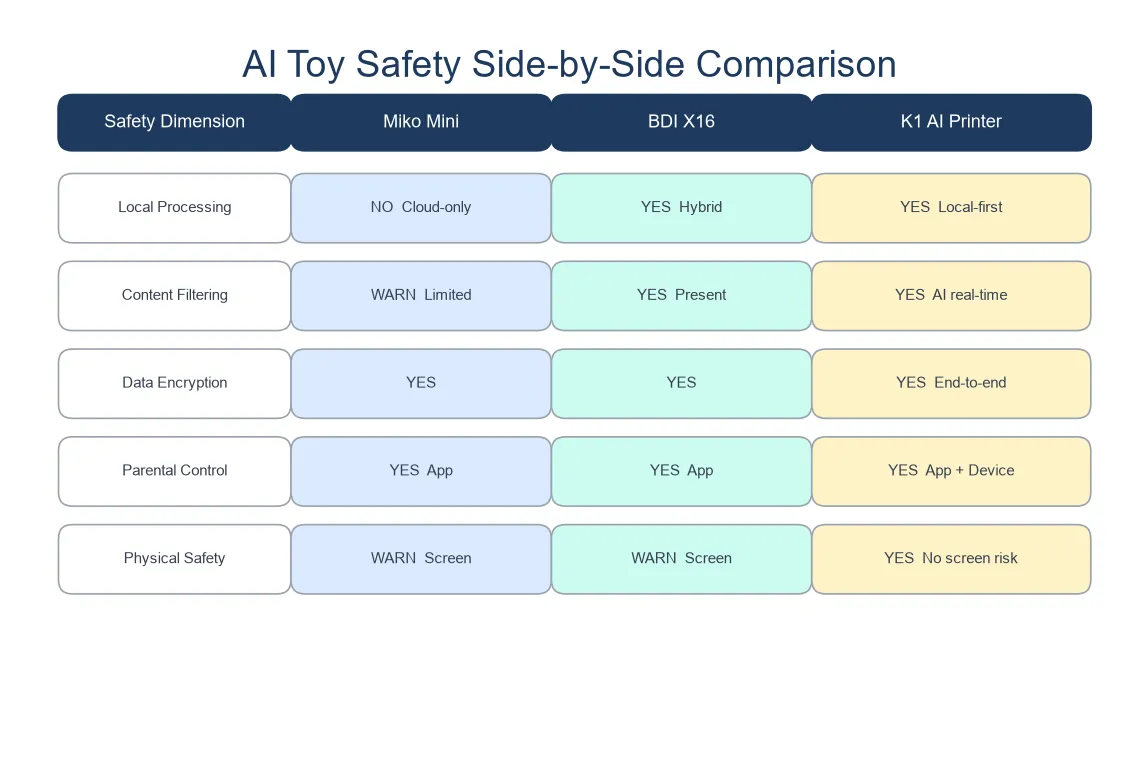
Safety Comparison: Three AI Toys
| K1 AI Printer | Miko Mini | Stickerbox | |
|---|---|---|---|
| Hardware certification | FCC/CE/RoHS/CPC materials available | Standard electronics | COPPA + Kids Safe Seal |
| COPPA compliance | Status to be confirmed | COPPA certified | COPPA certified |
| Content filtering | Configurable boundaries | Age-calibrated responses | Pre-designed content (no generative AI) |
| Data collection | Voice processing; storage TBD | Voice data collected per privacy policy | Voice commands processed; limited storage |
| Physical safety | Food-grade ABS+PC; enclosed battery; enclosed print head | Enclosed electronics | Plug-in; no battery |
| Companion app | Not required | Required for setup and management | Not required |
| Third-party SDK risk | No companion app means no app SDK risk | Parent app may include SDKs | No companion app |
This table does not rank the devices by safety — each has a different safety profile that matches a different parent concern. Stickerbox leads on privacy certification. Miko Mini leads on comprehensive COPPA certification with a mature conversation product. The K1 offers content configurability and physical output without a companion app — which eliminates a common privacy vector — but certification status for the production version should be verified.
Parent Safety Checklist
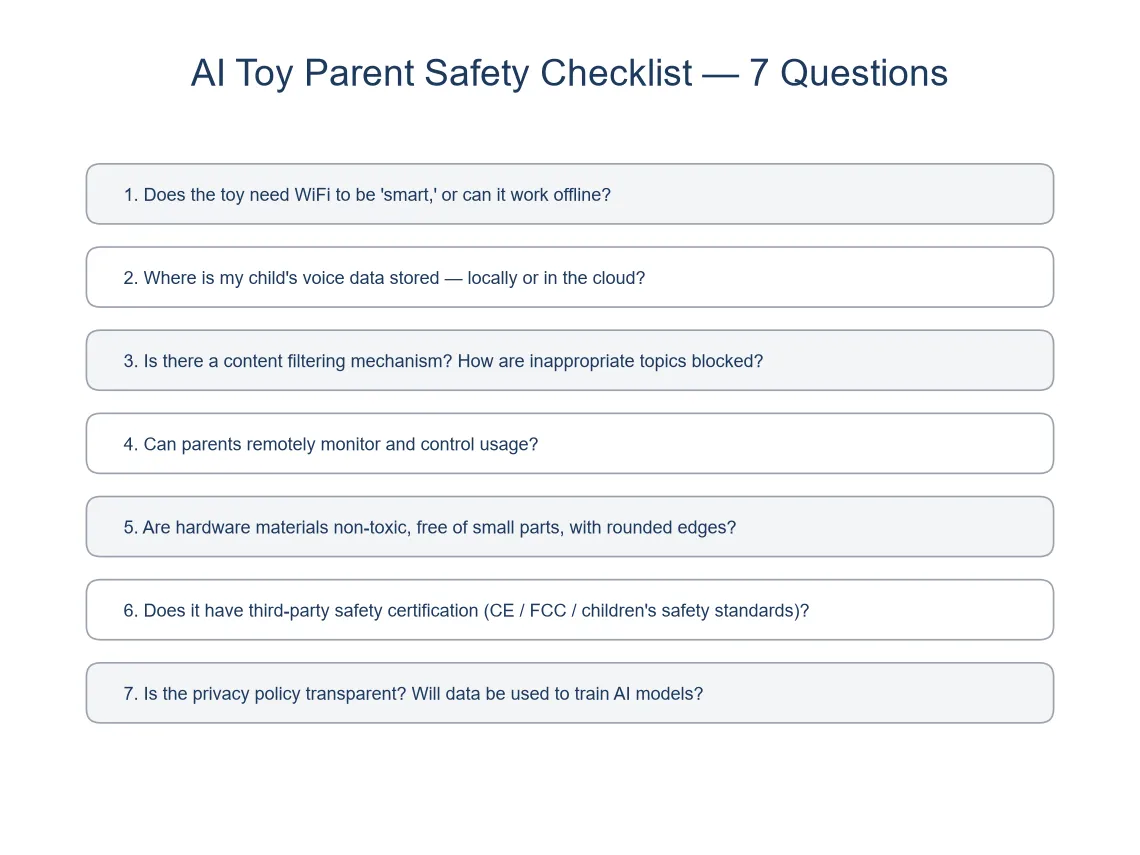
Before purchasing any AI toy, get answers to these seven questions from the manufacturer:
- What hardware certifications does this specific production version carry? Ask for documentation, not a brand-level claim.
- Where is my child’s voice data processed, and is it stored after processing? If stored, for how long and for what purpose?
- Does the device or its companion app use third-party services that receive or process children’s data? This is where many privacy policies have gaps.
- Can parents review and delete their child’s conversation history? A “yes” with a clear method is good. A “we do not store conversations” is better — but verify.
- What content filters are in place, and can parents configure them? Look for specificity, not reassurance.
- Is the battery accessible to a child without tools? The answer should be no.
- What is the manufacturer’s policy on security updates and vulnerability disclosure? A connected device needs ongoing security support.
FAQ
1. Does my child’s AI toy listen all the time?
Most AI toys use push-to-talk or wake-word activation — they are not continuously streaming audio. The K1, Miko Mini, and Stickerbox all require active input (button press or wake word) to begin processing. Confirm the specific activation mechanism for the device you are evaluating.
2. Where is the AI processed?
For current AI toys in 2026, language processing and image generation run on cloud servers, not on the device itself. This means voice data leaves the device and travels over the internet. The device manufacturer should disclose which cloud service processes the data and in which geographic region.
3. How do I set up safe AI for my child?
For the K1 platform: AI content boundaries are configurable. Set age-appropriate topic restrictions, review conversation samples during initial use, and periodically check printed output. For any AI toy: supervise initial sessions, ask the child what the toy said, and adjust settings as the child’s maturity level changes.
4. Are thermal paper chemicals safe for kids?
Thermal paper uses a chemical coating that reacts to heat. BPA-free thermal paper is available and should be confirmed with the manufacturer. The K1 platform uses standard 57mm thermal paper. Parents should ask the manufacturer about BPA/BPS content and request documentation.
5. Can I see what my child talks about with the device?
This depends on the device. Some AI toys provide parent dashboards with conversation history. Others do not store conversations at all — which is better for privacy but means parents cannot review past interactions. Confirm this feature before purchasing. For the K1, the printed output serves as a partial activity log — whatever the child chose to print is visible, even if the full conversation history is not.
The Takeaway
An AI toy in 2026 is not inherently more or less safe than any other connected device in a child’s life. The difference is that AI toys interact with children in ways that feel personal — conversation, creation, adaptation — which makes the privacy and safety stakes feel higher. The right response is not to avoid the category. It is to ask the manufacturer the seven questions above, read the answers carefully, and choose the device whose safety profile matches what matters most to your family.