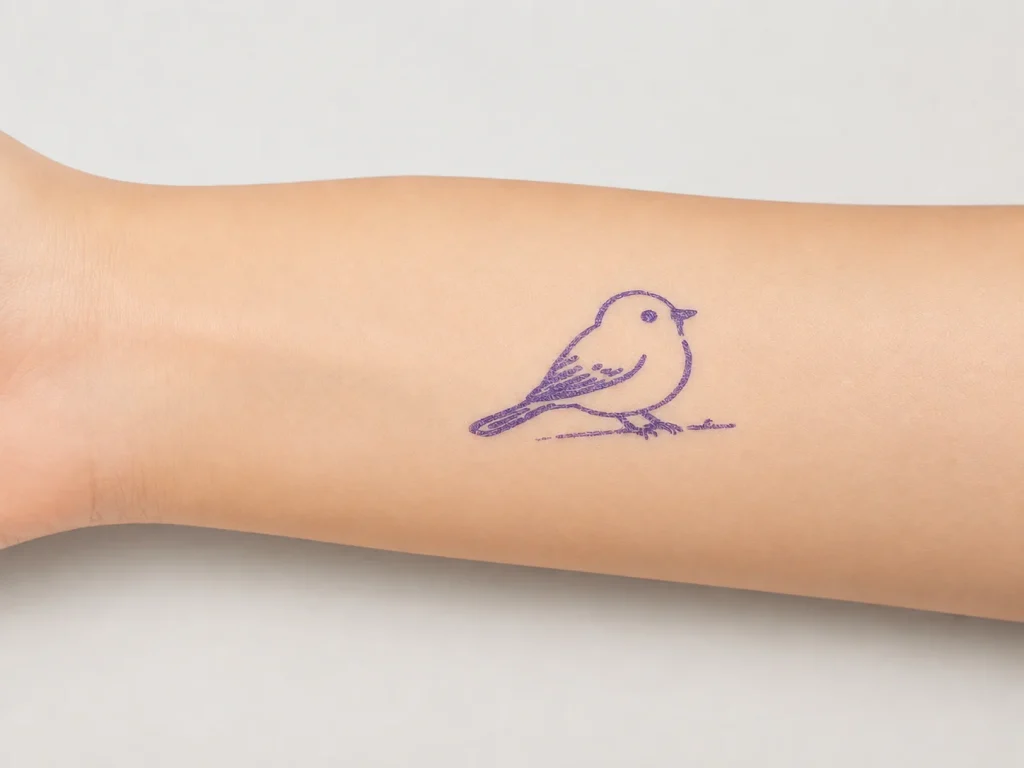
Event activation ideas should be designed as participation mechanics, not as a list of attractive objects. A temporary tattoo station can create a guided prompt-to-transfer interaction when an event needs a creative pause, a host-led conversation or an on-brand guest choice. K1 can be assessed for this defined workflow: connected AI line art from a text prompt, 57mm thermal printing and dedicated transfer paper. It does not establish a fixed attendance result, permanent tattoo outcome, safety claim or fully unattended event solution.
What Buyers Should Know
- Define the guest action before selecting the station or writing the promotion.
- Set prompt rules, host responsibilities and a usable network path for K1’s connected workflow.
- Measure the parts of the journey the team can actually observe, rather than claiming universal engagement results.
- Use the temporary-transfer category accurately and keep supplier-confirmed scope separate from event assumptions.
Where This Product Fits
| Item | Role |
|---|---|
| Brand | Yosiya |
| Product | K1 AI Tattoo Stencil Printer |
| Category | Connected AI line-art, 57mm thermal-print temporary-transfer workflow |
| Activation role | A staff-guided participation mechanic within a wider event |
| Not positioned as | Permanent tattooing, a robotic device or an outcome guarantee |
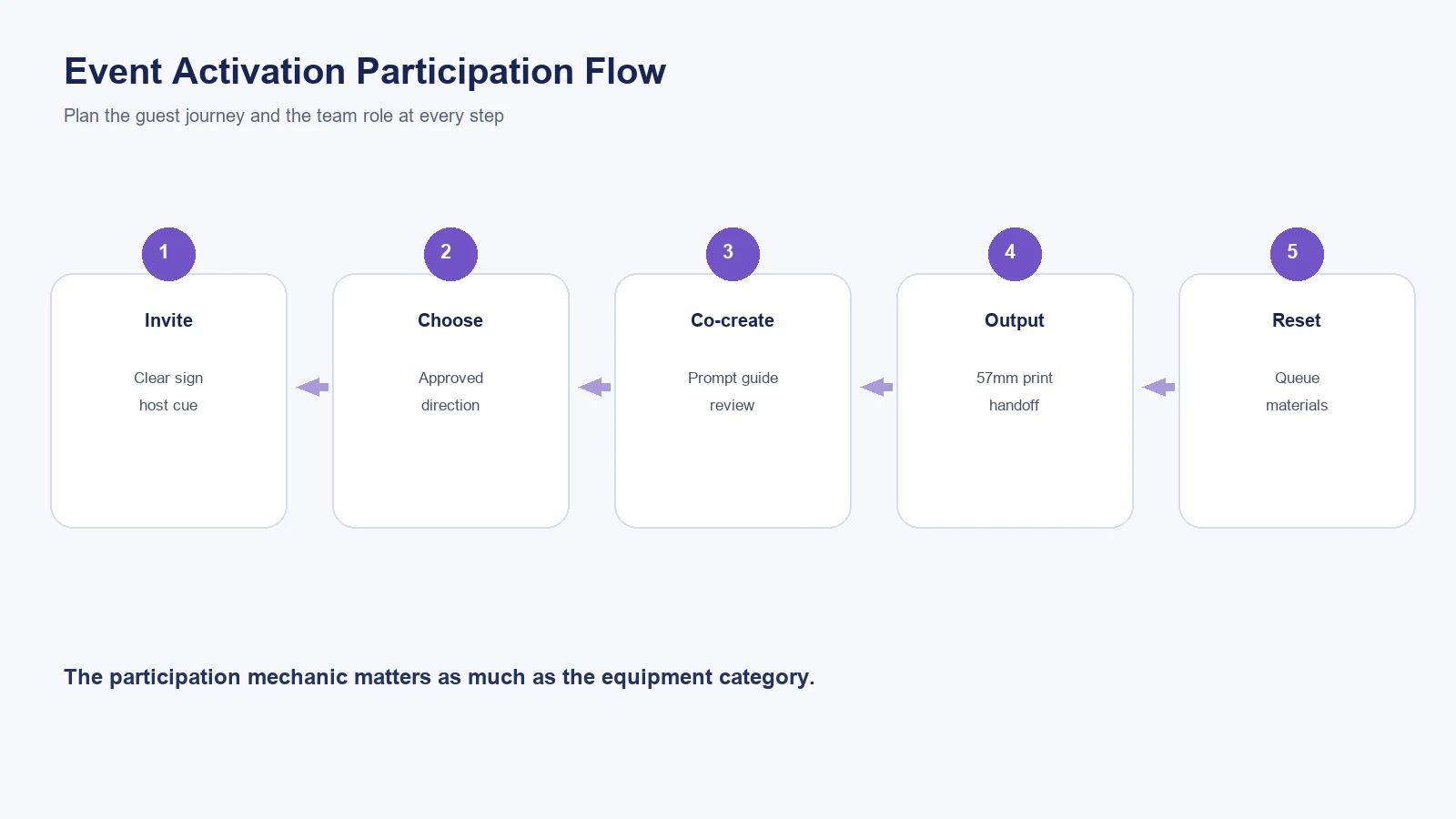
Map the participation mechanic
| Step | Guest experience | Team responsibility |
|---|---|---|
| Invitation | Understand the activity in one sentence | Signage and host cue |
| Choice | Pick an approved creative direction | Prompt examples and brand boundary |
| Co-creation | Describe an idea | Host guidance and output review |
| Output | Receive the temporary transfer instructions | 57mm print, selected paper and handoff |
| Reset | Leave space for the next participant | Queue, materials and station reset |
Plan the conditions that make the interaction usable
K1’s AI line-art step is connected, so the event plan needs a usable network path. The host also needs the demonstrated paper version and current instructions for the selected configuration. These are operational requirements, not a promise about event speed, paper yield or guest outcome.
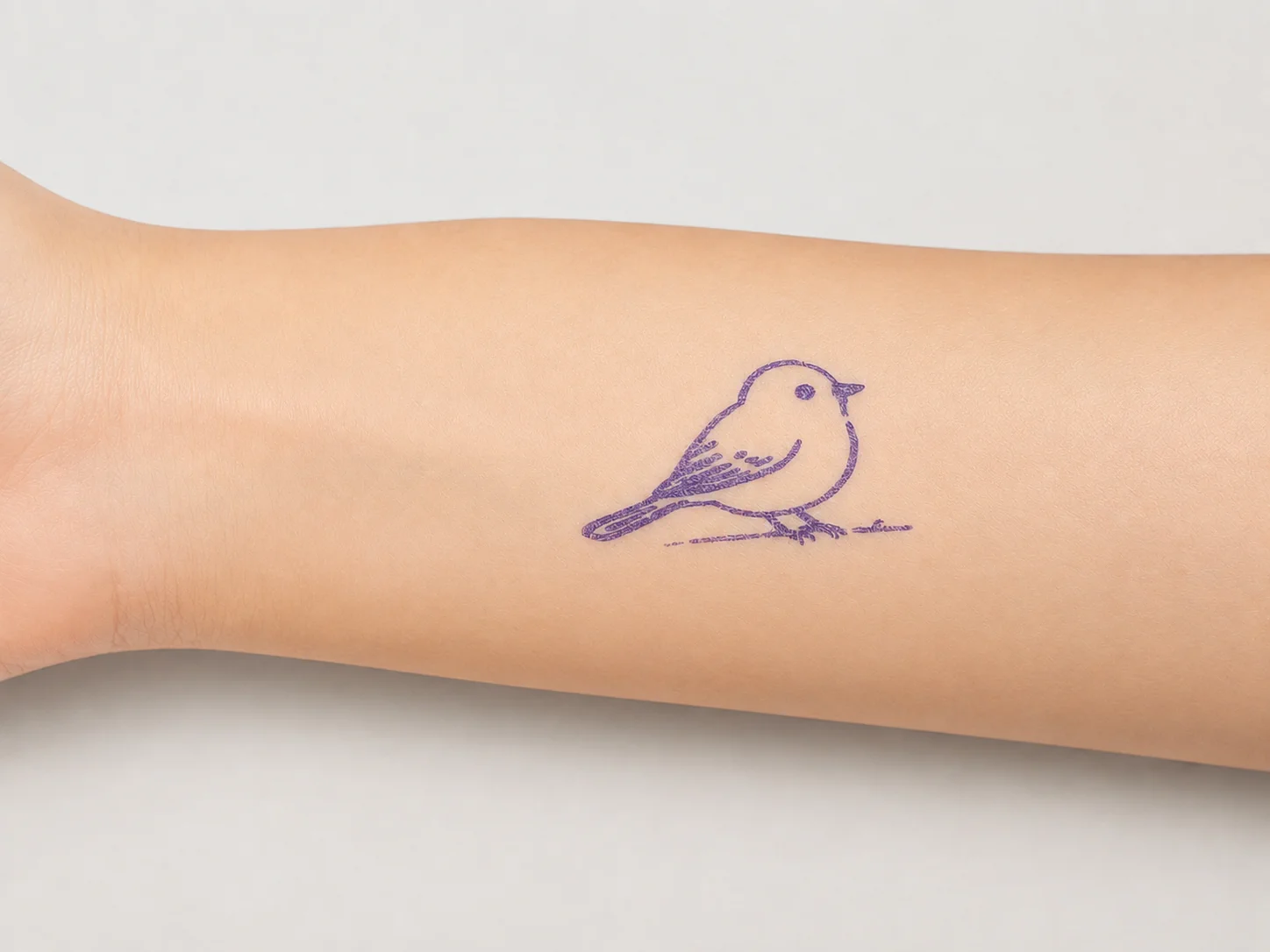
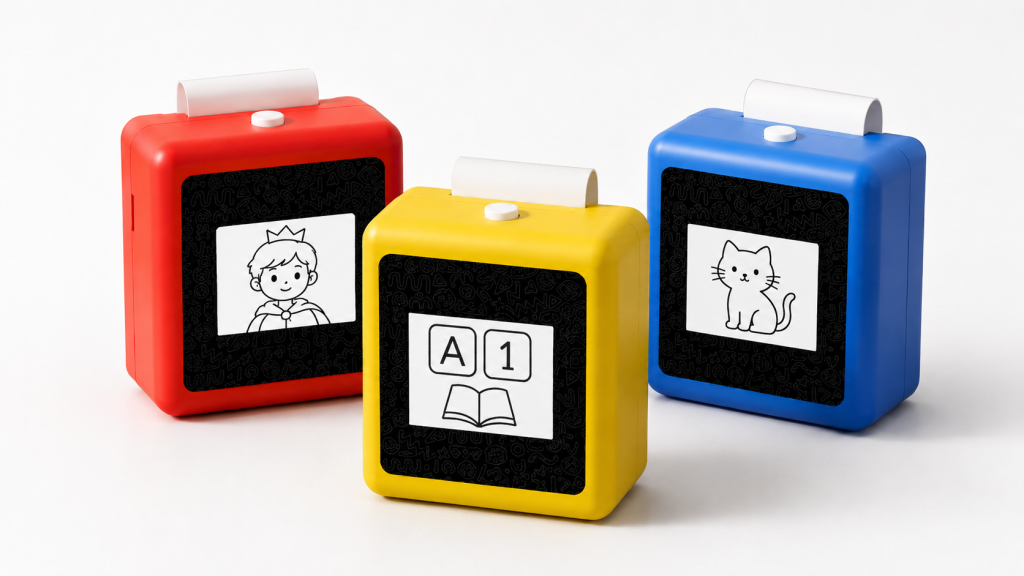
This image illustrates the temporary-transfer category only; it does not support a safety, duration, capacity or performance claim.
Review the activation after a pilot
Use a short event debrief to record observations: which prompt examples were easiest to understand, where hosts needed to intervene, whether the station placement caused friction, and what client approvals should change. This is a more defensible learning process than presenting a single activation as proof of a repeatable commercial result.
The FTC recommends support for objective advertising claims. Agency reports, proposal decks and event landing pages should avoid unverified statements about engagement, output quantity, safety, duration or return. See the FTC’s advertising guide for small businesses.
Separate event design from sourcing
| Decision | Use this guide for | Continue elsewhere for |
|---|---|---|
| Participation mechanic | Guest action, host role and event-day flow | Product and supplier comparison |
| Brand boundary | Prompt rules and approvals | Personalized activation execution |
| Pilot review | Observations and next-event improvements | Detailed business purchase questions |
For brand-level activity selection, see Brand Activation Ideas: A Temporary Tattoo Station. For the individualized brand workflow, read Personalized Tattoo: Brand Activation Guide. For purchasing and sample evaluation, see Temporary Tattoo Printer for Businesses: Beyond DIY Kits.
Write the host script around decision points
The host does more than invite a guest to type a prompt. The host explains the creative boundary, helps the guest narrow an idea, reviews the generated line art and manages the handoff. A short script should therefore cover the points where confusion is most likely.
Start with four lines: what the guest can request, what the current workflow cannot reproduce, who approves the design and what happens after printing. Avoid promising a fixed duration, material result or exact image match. If the brief requires an uploaded logo or approved artwork, identify that gap before the event instead of improvising around it on site.
A rehearsal should include difficult cases:
- A guest enters a prompt that is too vague or outside the event theme.
- The generated line art needs another attempt.
- The network path becomes unavailable.
- A guest asks about material safety or wear time.
- The queue grows faster than the planned host process can absorb.
Each case needs a simple response and an owner. This is where an attractive activation concept becomes an operable event format.
Use venue conditions as part of the design
Station placement affects whether guests understand and complete the interaction. A loud entrance may attract attention but make prompt guidance difficult. A hidden corner may provide a calmer review process but produce little participation. The team should inspect the venue, identify the expected traffic pattern and decide where guests wait, review the design and receive the handoff.
Network access also needs a fallback decision. The current K1 flow is connected, so the plan should state whether a tested venue network or another approved connection path will be used. If the required connection cannot be established, the event team should not describe the station as fully available.
Define a useful pilot scorecard
Measure observable workflow signals instead of assigning value to novelty alone. Useful fields include invitation acceptance, prompt revisions, host interventions, completed outputs, reset issues and guest questions. Record the event conditions beside the observations so that a later team can understand what changed.
The scorecard should also capture qualitative friction: whether the activity fits the event tone, whether the client is comfortable with the prompt boundary and whether staff can explain the temporary-transfer category accurately. Those findings are more actionable than a single unqualified engagement number.
Event-day readiness checklist
- Guest invitation and host explanation are approved.
- Prompt examples and exclusions are visible to the team.
- Network, paper and transfer procedure were tested in advance.
- Output review and escalation responsibilities are assigned.
- Queue, handoff and station reset are included in the floor plan.
- Claims about safety, duration, capacity and return remain within documented evidence.
- The debrief form is ready before the event begins.
FAQ
What are event activation ideas?
They are planned ways for guests to participate in an event message, product story or shared activity.
Can a temporary tattoo station be an activation mechanic?
It can be evaluated when the team can guide prompts, operate the connected workflow and provide the temporary-transfer handoff.
What does K1’s event workflow include?
Its published workflow includes connected AI line art from a text prompt, 57mm thermal printing and dedicated transfer paper.
What should an activation team measure?
Record observable workflow issues such as prompt clarity, host questions, placement friction and approval changes needed for the next event.
What claims should event teams avoid?
Avoid unsupported claims about safety, duration, capacity, engagement, commercial return or permanent-tattoo capability.
Test one real event brief
Explore the K1 AI Tattoo Stencil Printer and request a sample evaluation against an event brief with defined guest flow and responsibilities.