Kids party entertainment works when an activity is easy to join, easy for an adult to explain and proportionate to the party’s venue and rules. A K1 AI tattoo station can be evaluated as one guided creative activity: an adult uses a network-connected web flow to create line art from a text prompt, then prints a temporary-transfer output with confirmed dedicated paper. It is not evidence that the activity is appropriate for every age, that children can operate it alone, or that the paper makes a child-safety claim. Those decisions belong to the host, venue, selected materials and applicable documentation.
What Buyers Should Know
- Start with the adult-led activity plan, not a device feature list.
- K1’s current tattoo flow generates line art from a text prompt; it does not support image upload.
- Keep the prompt menu short, visible and appropriate to the party’s own rules.
- Use only the confirmed paper and current application instructions in a pilot.
- Do not advertise age suitability, skin safety, wear time or unattended use without evidence.
Where This Product Fits
| Item | Role |
|---|---|
| Product | Yosiya K1 AI Tattoo Stencil Printer |
| Activity type | Adult-guided prompt-to-line-art temporary-transfer activity |
| Planning use | A defined creative station within a wider party program |
| Design input | Text prompt through a network-connected web experience |
| Material step | Dedicated two-layer transfer paper and documented procedure |
| Not established | Self-service child use, age guidance, skin-safety or duration claims |
Choose an activity model before choosing prompts
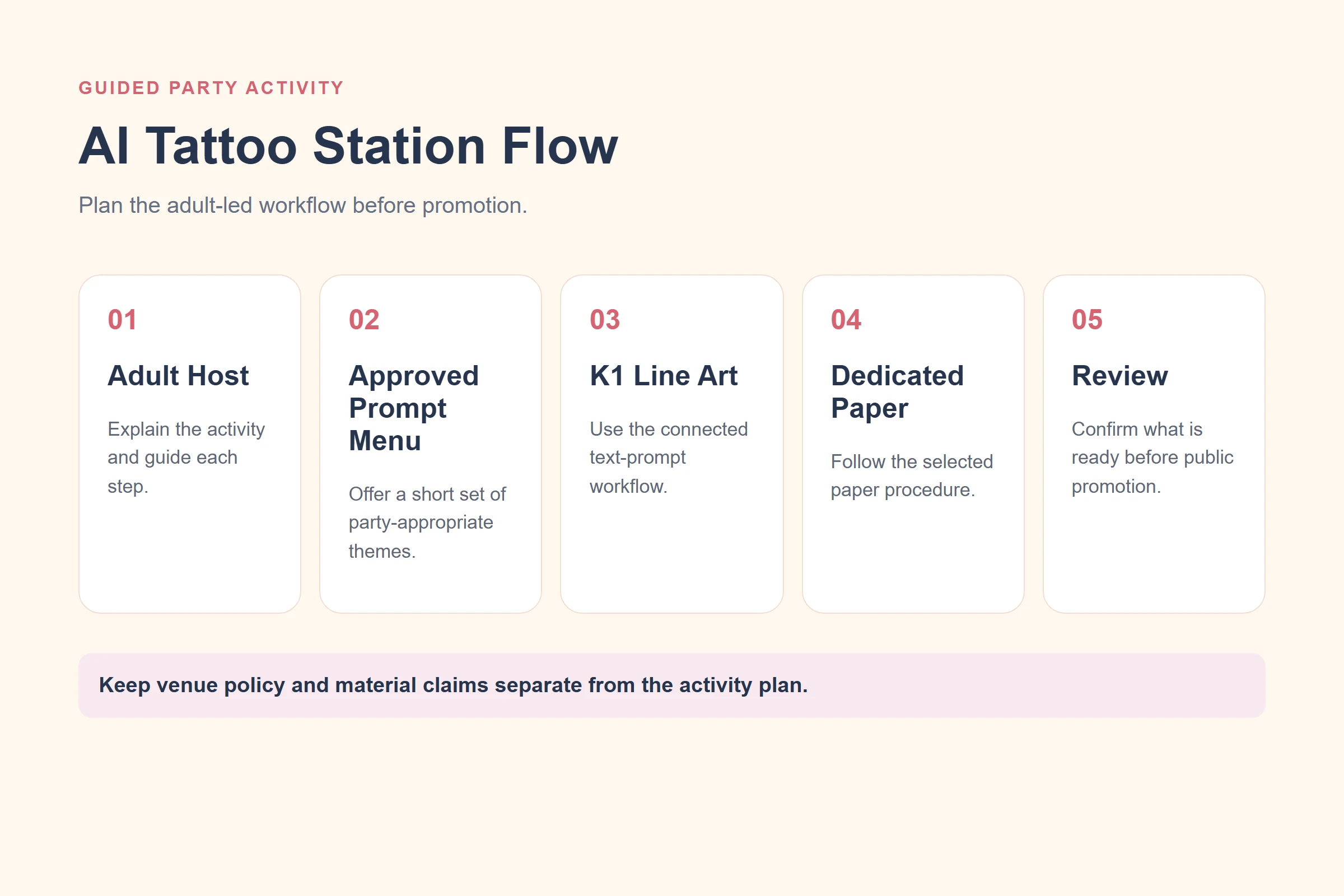
Parents and planners often need a simple activity with a clear beginning and end. A guided station can have a host invite a guest, offer an approved prompt choice, generate line art, print the transfer and follow the current procedure. That is different from leaving a printer at a craft table or promising every guest the same experience without a host.
For broader ideas about event equipment, costs and business formats, see Temporary Tattoo Printer for Businesses. This article focuses on the operating choices that matter when the party audience includes children.
| Party question | Planning decision |
|---|---|
| Guest flow | Where does a child join, wait, receive help and leave the station? |
| Adult role | Who selects prompts, operates K1 and follows the transfer procedure? |
| Prompt boundary | Which themes are offered, and who handles unsuitable requests? |
| Materials | Which paper, storage method and instructions have been confirmed? |
| Venue policy | What does the host need to know about participation, consent or photography? |
Keep the K1 workflow accurate
K1’s current tattoo configuration uses a network-enabled web experience: a user enters a text prompt, AI generates line art, and the selected output is printed on dedicated transfer paper. Image upload is outside the current scope. For a party, the host should test the actual connection path and a small approved prompt menu before the event, rather than discovering the workflow limits in front of guests.
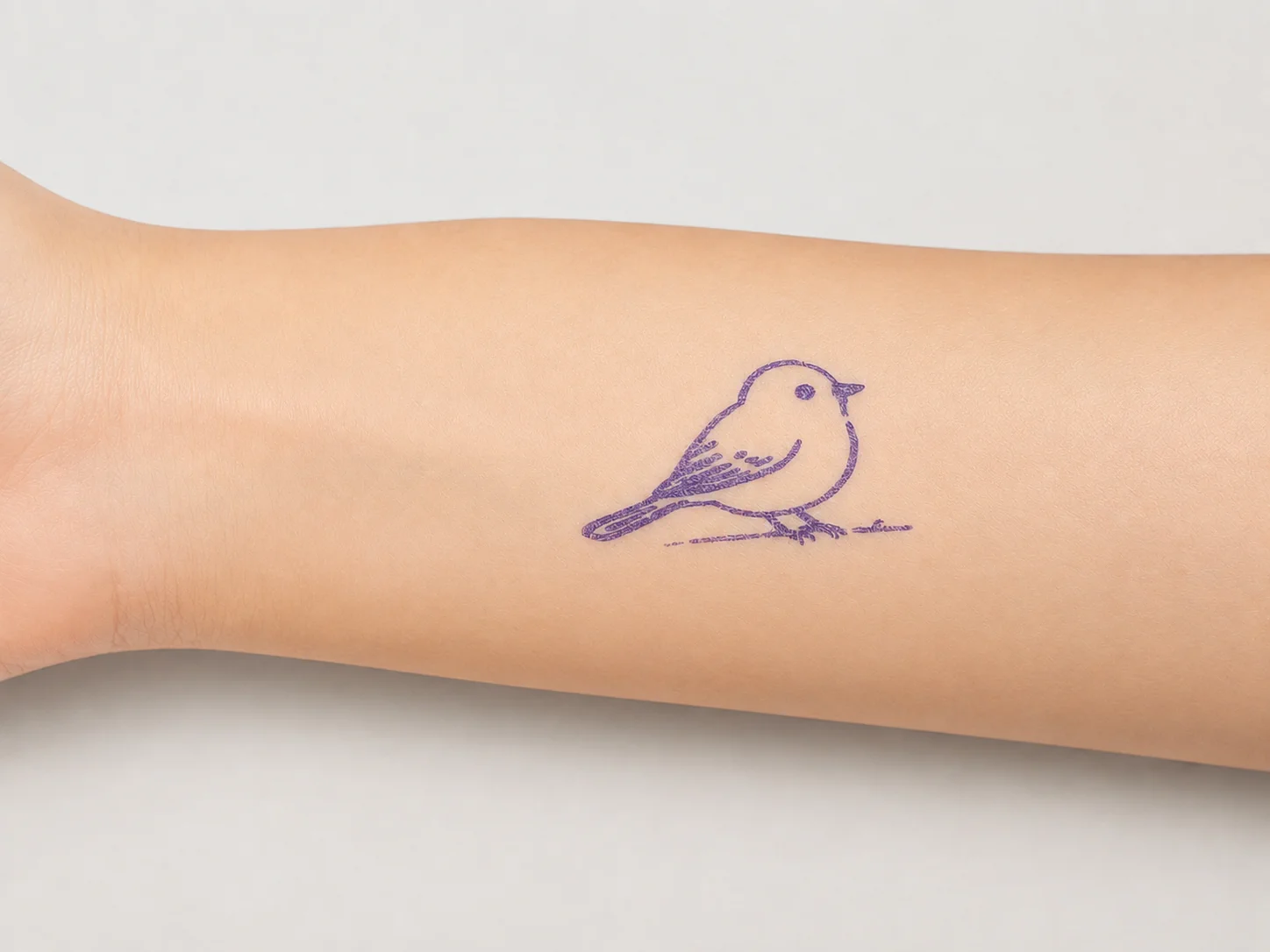
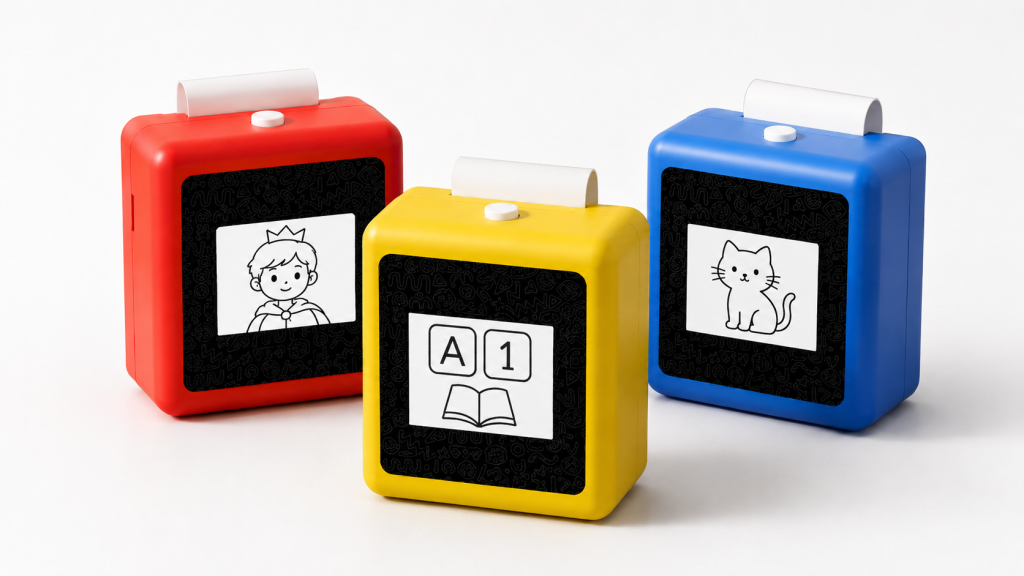
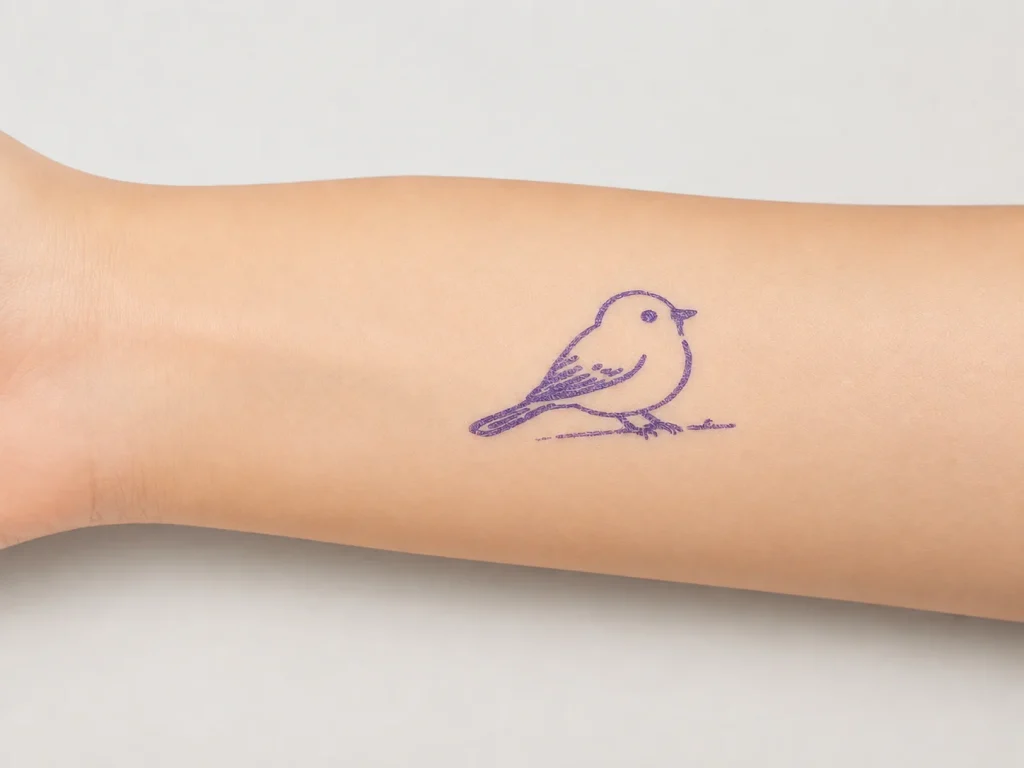
The product image shows the temporary-transfer category only. It does not establish a result for a particular child, a particular paper lot, a duration, or a material-safety conclusion.
Build an adult-led station brief
The simplest way to prevent last-minute confusion is a one-page brief. Give each task an owner and write down which questions remain open. The goal is not to create a complicated event manual; it is to make the trial repeatable and to prevent promotional language from getting ahead of evidence.
- Define the guest journey from invitation to completed activity.
- Assign an adult to prompt selection, printing and procedure guidance.
- Prepare a limited prompt list that fits the party theme.
- Record the confirmed paper identity and current instructions.
- Decide how the host will handle a pause, refusal or parent question.
- Keep photography, consent and age-policy choices with the party organizer or venue.
The American Academy of Pediatrics’ parent guidance on birthday-party planning emphasizes matching activities to young guests and planning adult support. It is not product guidance for K1, but it supports the practical principle that a children’s activity should be planned around the participants rather than around novelty alone.
Treat child-focused marketing as a separate review
Children’s-party language changes the risk of a public claim. The CPSC explains that a product designed or intended primarily for children 12 and under can be subject to applicable children’s-product requirements, and that intended use, marketing and materials matter. See the CPSC’s promotional products guidance. That resource is not a classification, certification or approval for this K1 activity. It is a reason to ask the supplier and the venue the right questions before describing the activity as child-safe or suitable for a specific age.
Keep a clear separation between two statements: “a host has chosen to offer a supervised creative station under its own party policy,” and “the product or transfer material is suitable for children.” The first is an operational decision; the second needs appropriate evidence and review. The FTC’s advertising guidance for small businesses is a useful reminder to support objective marketing claims.
Pilot the actual party conditions
Run a small test with the selected adult operator, prompt choices, network path, paper and station location. Record what guests understood, when adults needed to step in, whether the queue was manageable and which questions the party organizer received. Do not turn a short demonstration into a promise about engagement, throughput or suitability.
| Pilot observation | Action before promotion |
|---|---|
| Prompts cause confusion | Simplify the approved menu and host script |
| Network path is inconsistent | Test the intended venue setup again or revise the plan |
| Procedure needs more explanation | Update the operator guide and repeat the test |
| Policy question is unresolved | Pause child-focused wording and seek clarification |
For a broader solution-level evaluation of hardware, paper, procedure and documentation, read Tattoo Stencil Printing Solution: A B2B Evaluation Checklist. For paper traceability and replenishment questions, see Tattoo Transfer Paper Supply: A Wholesale Guide.
This article addresses a one-off, adult-guided party plan. For a standing venue with recurring visitors, staffing and station-placement decisions, see Family Entertainment Center Ideas: Add an AI Tattoo Station.
Keep supply, records and changes traceable
The paper and procedure should be treated as part of the activity, not as a background consumable. Record which dedicated paper was used, the date of the test, the operator and the instructions that accompanied it. If a later event uses different paper, a changed web flow or a new host script, treat that as a changed condition and review it rather than assuming the earlier result applies.
ISO’s quality-assurance overview describes the value of defined requirements, monitoring and corrective action. It does not certify K1, paper or any child-focused deployment. It is a useful general model for keeping a small party pilot from becoming an undocumented anecdote.
The plan should also distinguish a host’s party policy from supplier documentation. A host can choose to limit a prompt menu or ask a parent to stay nearby; those are operational choices. If the host wants to make a public material, age, skin-contact or duration claim, the claim needs separate support. This distinction makes it easier to revise a party plan without accidentally rewriting the product’s scope.
Use a simple close-out note after every trial. It can state what was tested, who operated the station, what issue occurred, what was changed and who must approve the next step. This protects the party host as well as the supplier: a missing record should lead to a question or a retest, not to an assumption that the transfer result, material guidance or host workflow is unchanged.
If the station will be offered repeatedly, make the brief reusable. Keep the approved prompt menu, current instructions and contact details together, then review them whenever the party setting, paper source or advertised audience changes. The purpose is repeatability, not a claim that every party will run in the same way.
Decide whether the station belongs in the party plan
Use the pilot to make a concrete decision. Advance only when the selected adult can repeat the workflow, the party organizer understands the operational boundary, and outstanding material or policy questions have an owner. Revise when a specific item—such as prompt choices or station placement—needs another test. Hold the idea when the needed documentation or policy decision is not available.
FAQ
What are good kids party entertainment ideas?
Good ideas match the guests, adult supervision, venue rules and the time available. A guided creative station is one option among games, crafts and performances.
Can K1 be used at a kids party?
It can be evaluated as an adult-guided prompt-to-transfer activity. The organizer must confirm the operating procedure, material information and party policy for the intended use.
Can children operate K1 by themselves?
That is not established by the current product scope. Plan an adult-led workflow instead of assuming unattended use.
Does K1 print uploaded photos or artwork?
No. The current tattoo workflow creates AI line art from a text prompt through a connected web experience.
What should be tested before promoting the activity?
Test the host script, prompt menu, network conditions, dedicated paper procedure, station placement and unresolved policy questions.
Start with a documented pilot
Explore the K1 AI Tattoo Stencil Printer with a defined host role, approved prompt boundary and dedicated-paper plan before offering it as a party activity.