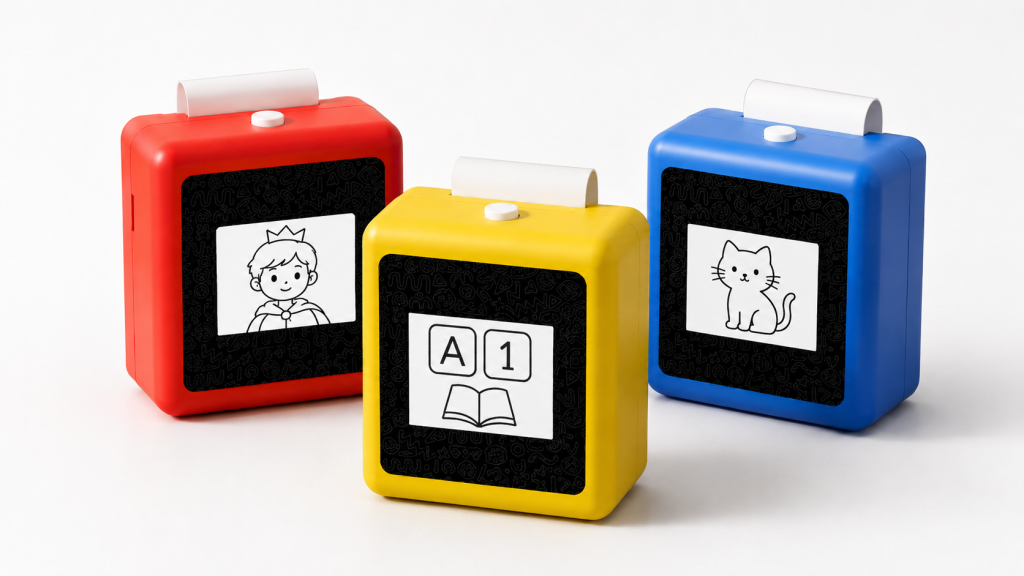
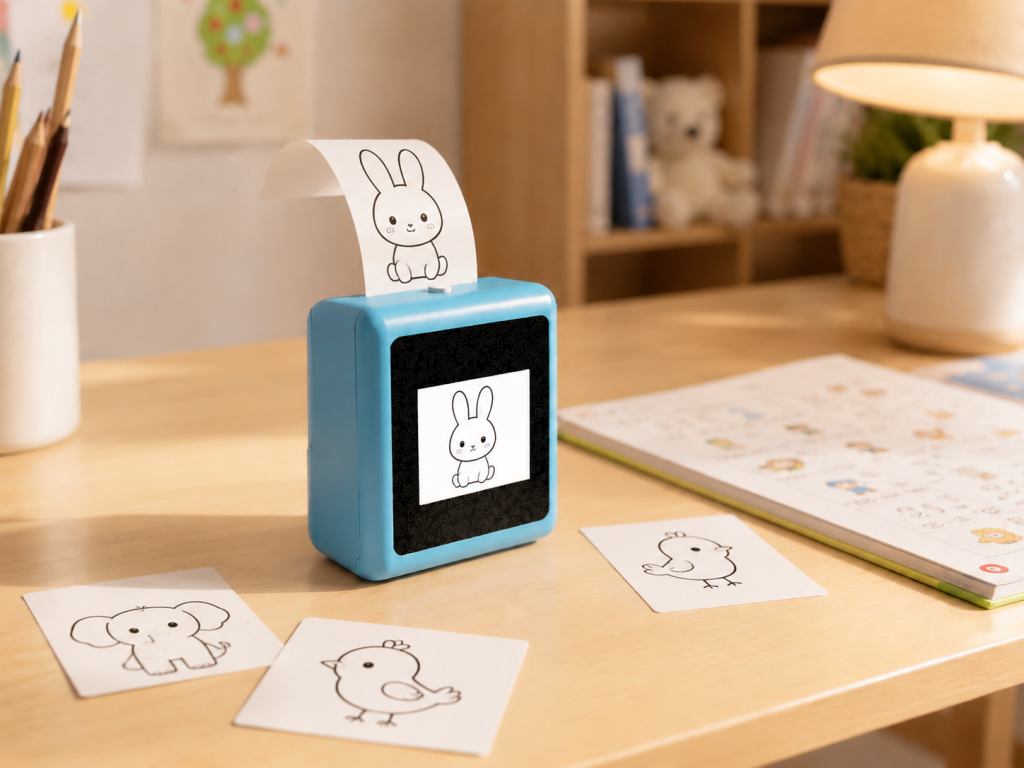
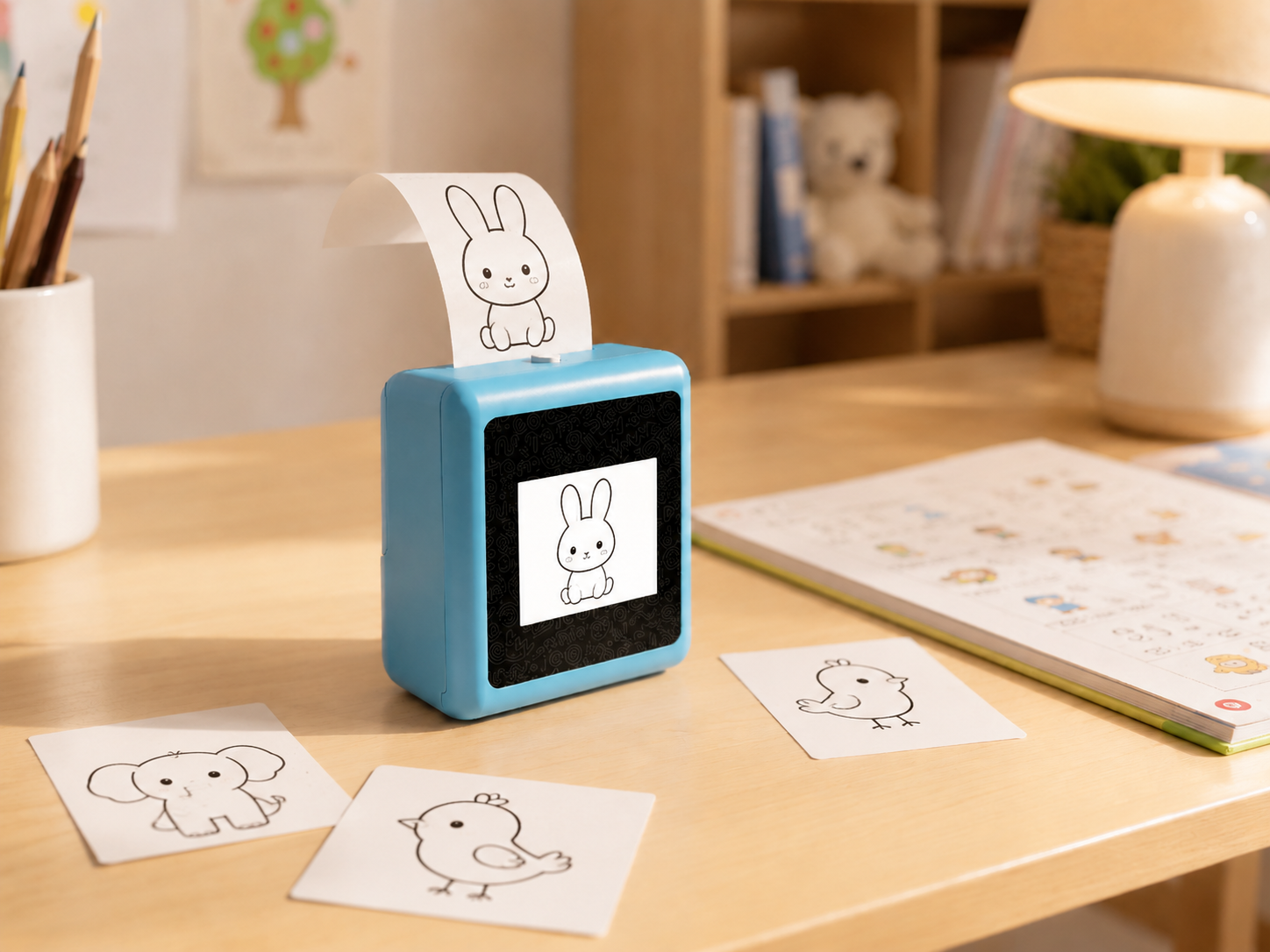
An AI story printer OEM project should turn generated text into a family reading ritual, not just another stream of digital content. For children’s reading brands, parent-child product companies, and gift-channel sourcing teams, the product value comes from short printable story cards, character cards, next-chapter prompts, and keepsakes that children can read, color, save, or continue. Buyers should evaluate the whole story-card workflow: prompt input, content boundaries, adult review, print readability, privacy, packaging, and repeat-use value.
What Buyers Should Know
- The product is the story ritual: choose, generate, review, print, read, keep, and continue.
- AI-generated stories need editorial boundaries, not just creative freedom.
- Strong first versions focus on short cards, visible adult involvement, and repeatable family use.
- Cloud service, content review, privacy, paper supply, packaging, and support need named owners.
- K1 Pro can be discussed as an OEM/ODM reference platform, but exact story and AI functions depend on project scope.
Where This Product Fits
| Entity | Description |
|---|---|
| Brand | Yosiya, AI hardware products and solutions supplier |
| Reference product | K1 Pro AI Printer |
| Category | AI story printer for printable learning and gift cards |
| Target buyers | Children’s reading brands, parent-child product companies, gift-channel buyers, and OEM/ODM teams |
| Typical outputs | Bedtime story cards, character cards, next-chapter prompts, reading keepsakes, and creative story starters |
| Buyer stage | Concept validation, sample review, content workflow planning, and private-label evaluation |
The Product Is the Ritual
A useful story printer brief begins with one family moment and one printed story output. For example, a child chooses a character, a parent confirms the theme, the system prepares a short story card, and the printed card becomes a bedtime reading prompt or a saved chapter in a small collection.
This framing keeps the device from being positioned as a full reading curriculum or an unlimited story generator. The output should be short enough for the paper format, clear enough for a child to use, and bounded enough for a parent or brand team to trust.
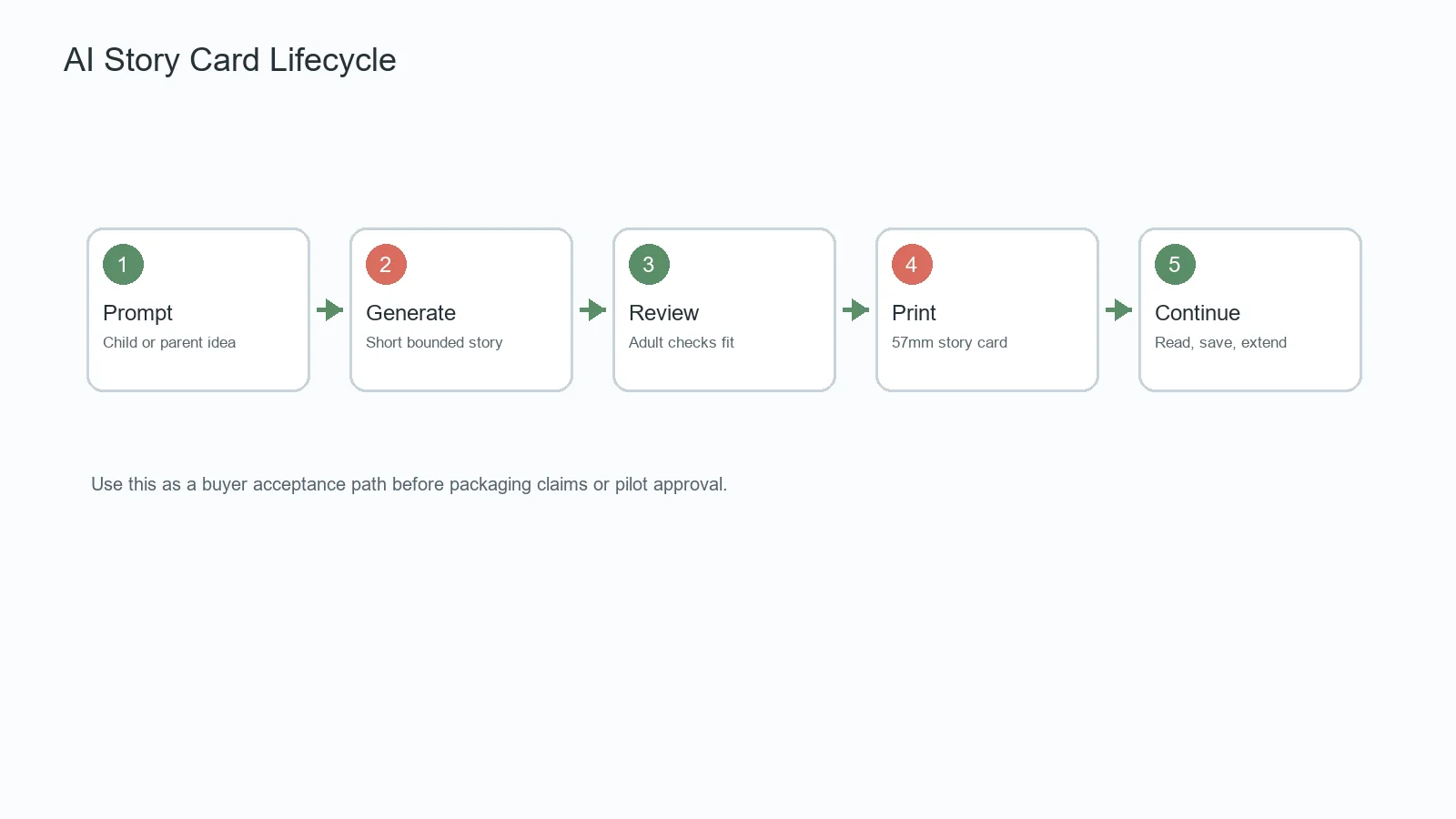
Story Card Lifecycle
| Stage | What to confirm | Buyer question |
|---|---|---|
| Prompt | Child idea, parent topic, or selected template | Can the input stay simple and age-appropriate? |
| Generation | Short story, character, or next-chapter prompt | Who defines tone, length, and boundaries? |
| Review | Adult approval, edit, reject, or retry | What happens before printing? |
| 57mm story card or reading prompt | Is the output readable and useful on paper? | |
| Continue | Read, color, save, reorder, or extend | Why will the family use it again? |
Three Story Products to Prototype
Bedtime Chapter Card
This version should produce a short, calm story segment that can be read in a few minutes. Buyers should check whether parents can guide names, themes, and tone, and whether the printed card is short enough for bedtime use.
Weekend Story Chain
A weekend story chain can print a sequence of short cards that children arrange, continue, or illustrate. The supplier should demonstrate how character names and story context are handled without creating privacy or continuity problems.
Seasonal Gift Story Pack
Gift brands may want themed cards for birthdays, holidays, or family activities. The packaging must explain a simple use pattern and avoid unsupported claims about reading progress or learning outcomes.
Keep Personalization Bounded
Personalization can make the product feel special, but it also creates review questions. Buyers should decide which names, themes, locations, and story details are allowed, what the system remembers, and when content should be refused or redirected.
The UNICEF guidance on AI and children, FTC COPPA FAQ, AAP Family Media Plan, and UNESCO guidance on generative AI in education can help buyers form child-use, privacy, and education-context questions. These sources do not certify any final device or story service.
Where K1 Pro Fits the Story Product
K1 Pro can be discussed as a compact reference platform with 57mm thermal printing, Bluetooth plus web direct connection, and OEM/ODM discussion options. Yosiya describes configurable AI voice interaction, voice-to-image direction, printable templates, and private-label support. Buyers should request a quoted-version function list before presenting story, language, or personalization claims to a channel.
Brand teams can discuss logo, colors, retail packaging, manuals, accessories, printable story direction, language requirements, selected AI functions, and support boundaries. Standard private-label MOQ starts from 1,000 units, while samples, validation quantities, or pilots can be discussed case by case.
Story Content Review Before a Pilot
- Is each story short enough for the thermal paper format?
- Can parents guide names, topics, and boundaries?
- How are unsuitable, inaccurate, or frightening outputs handled?
- What data is used to create or continue a story?
- Can the same test prompts be rerun after a model or template change?
- Does packaging explain the repeatable ritual without overstating learning outcomes?
Limits That Should Stay Visible
An AI story printer should not be described as screen-free if setup or use includes a screen, app, web flow, or cloud service. “Print-first” and “screen-light follow-up” are more precise. The story product should not promise automatic reading improvement, universal content safety, or legal compliance.
The thermal format works well for short story cards, prompts, labels, and keepsakes. It is not designed for long books, detailed illustrations, or permanent archival printing.
FAQ
What is an AI story printer?
It is a compact connected printer workflow that can help create and print short story cards, character prompts, next-chapter cards, or reading keepsakes, depending on the enabled project functions.
Is an AI story printer suitable for gifts?
It can be, when the product has a clear repeat-use ritual, careful content boundaries, understandable packaging, and a story flow that works without a sales representative explaining it.
What should reading-product teams evaluate?
They should test prompt input, story length, age fit, adult review, print readability, privacy flow, content ownership, and support responsibilities.
Can K1 Pro support AI story printer OEM projects?
K1 Pro can be discussed as an OEM/ODM reference platform. Branding, packaging, accessories, language direction, printable templates, and selected AI functions can be discussed subject to scope.
What should not be promised?
Avoid claims about assured reading improvement, unlimited safe content, fully screen-free use, or compliance unless the final product evidence supports them.
Make the Next Decision Evidence-Based
For reading brands, parent-child product companies, and gift-channel sourcing teams, the next step is to test one story-card ritual with the current sample. To review K1 Pro hardware, current AI scope, OEM/ODM options, and sample availability, contact Yosiya.