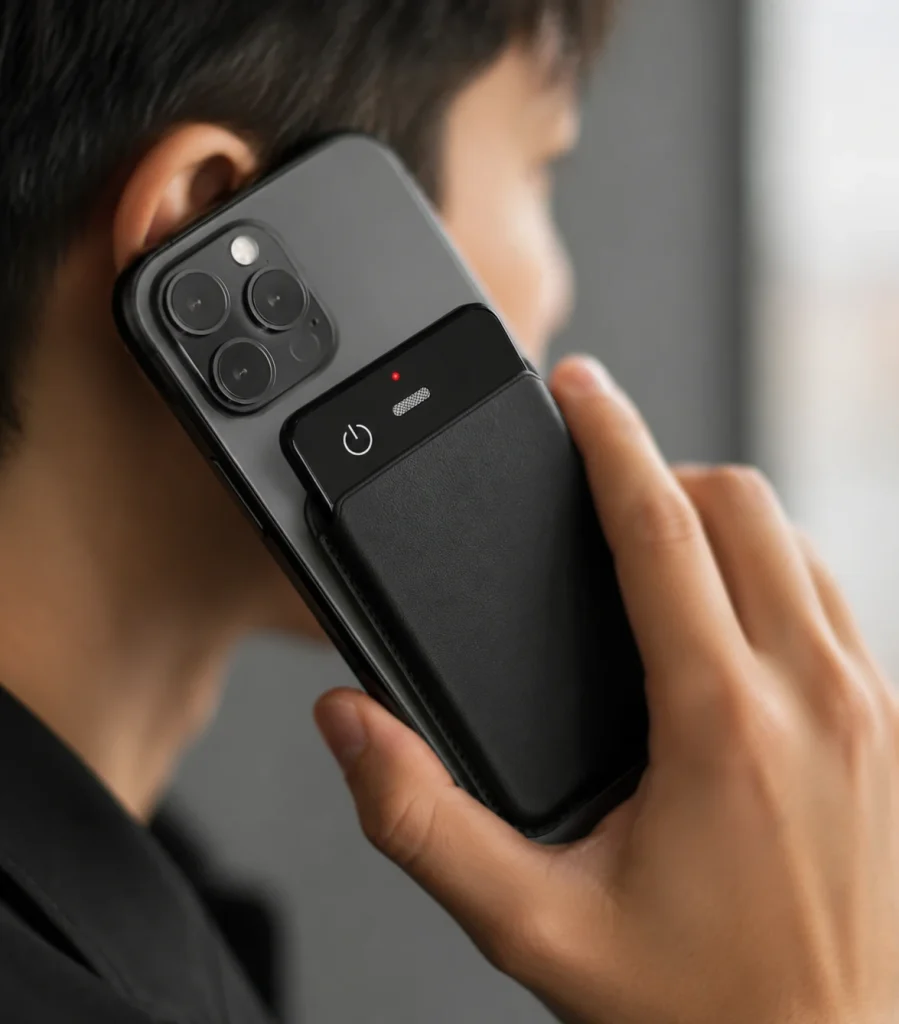
The best AI voice recorder is the one that matches a defined recording workflow, not the device with the longest feature list. A buyer who records customer visits has different requirements from someone documenting online meetings, interviews, lectures, or personal ideas. Before comparing products, decide where conversations happen, whether capture must work without a network, who needs the original audio, how transcription will be reviewed, and whether the organization wants a consumer device, an enterprise deployment, or an OEM product. Then test the shortlisted system under the same conditions. This conditional approach produces a defensible recommendation without relying on rankings, affiliate popularity, or accuracy claims that were never measured in the buyer’s environment.
What Buyers Should Know
- There is no universal best recorder for every room, user, and data policy.
- “AI voice recorder” includes dedicated devices, phone applications, meeting platforms, and hybrid systems.
- Audio capture and AI processing should be evaluated separately.
- Subscription, export, retention, support, and device management can matter as much as battery or storage.
- A realistic sample test is more useful than a generic Top 10 list.
Where This Product Fits
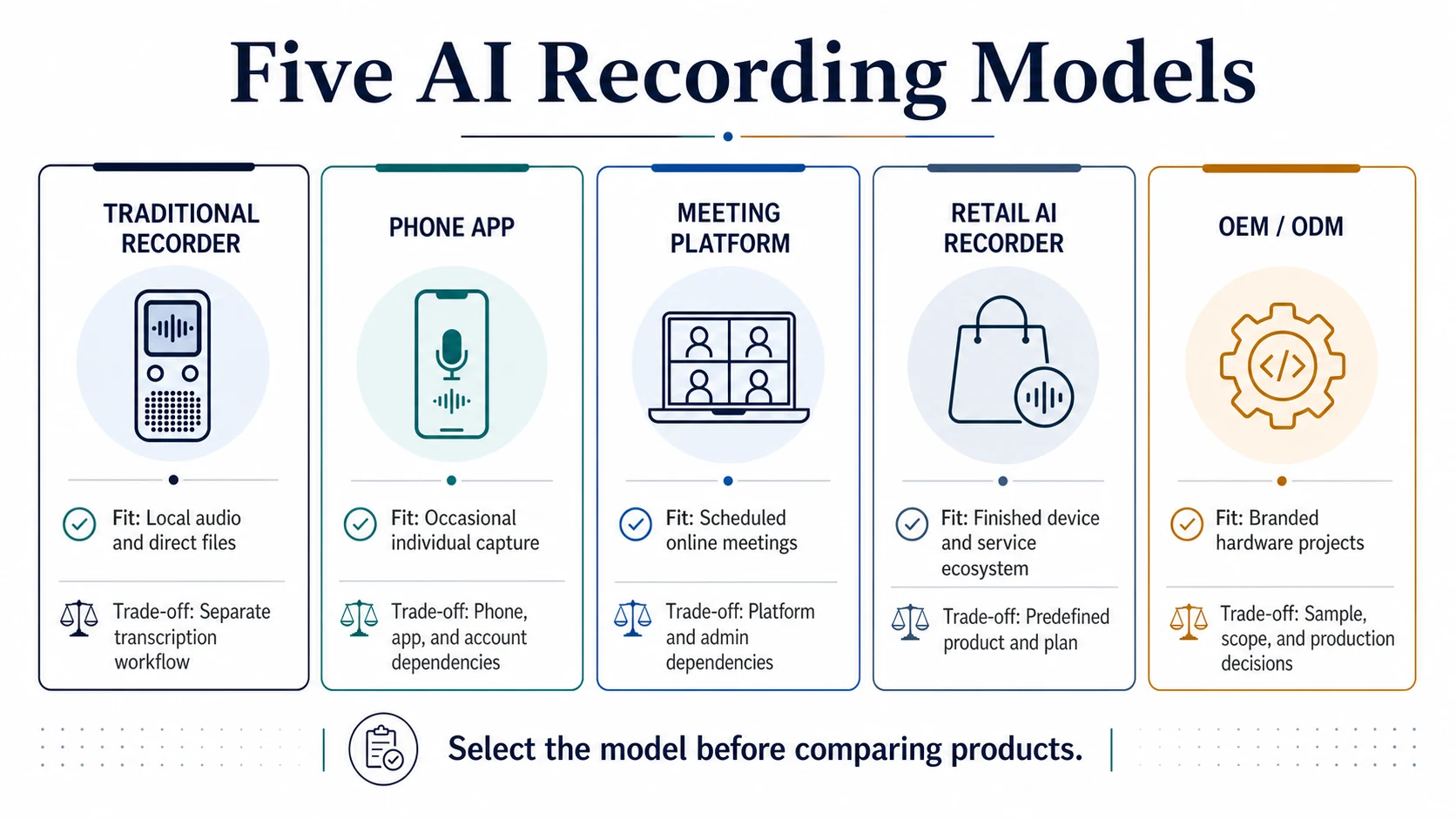
| Solution type | Strongest fit | Main trade-off | Typical buyer |
|---|---|---|---|
| Traditional digital recorder | Local audio capture and manual file workflows | Requires separate transcription or note process | Journalists, researchers, audio-focused users |
| Phone recorder or AI app | Occasional individual use | Depends on a general-purpose phone and app workflow | Individual professionals and students |
| Meeting platform or bot | Scheduled online meetings | Depends on the supported platform, identity, and plan | Teams with recurring virtual meetings |
| Retail AI recorder ecosystem | Ready-to-use hardware plus an established app/service | Product and service terms are largely predefined | Professionals seeking a finished product |
| OEM/ODM AI recorder platform | Branded hardware and project-defined commercial scope | Requires sample, application, service, documentation, and production decisions | Hardware brands, channels, and product teams |
| Yosiya MG6 AI Recording Card | Card-sized OEM/ODM reference hardware | Project details must be confirmed before deployment | B2B buyers needing offline capture and connected services |
Define “Best” With a Recording Job
Begin with one sentence:
We need to record ______ in ______ conditions, preserve ______, create ______, and make the result available to ______.
Examples produce very different shortlists:
- Record scheduled Teams meetings and keep files inside the existing Microsoft workspace.
- Record in-person customer interviews, preserve original audio, and create searchable text later.
- Give field staff a fast local recorder for sites with inconsistent connectivity.
- Launch a branded card-style recorder with selected storage, packaging, application, and service scope.
Microsoft Teams recording guidance shows how a platform-native solution connects recordings to OneDrive or SharePoint, participant access, and administrator retention. Google Meet transcript documentation similarly connects transcription to the host, supported Workspace editions, participant indicators, Drive storage, and administrator controls. When most conversations already live in one platform, those controls may be more valuable than another device.
When conversations are in person, mobile, or outside a meeting platform, the selection problem changes.
Use the AI note taker vs AI voice recorder comparison to separate online software workflows from dedicated capture before shortlisting products.
Five Solution Models to Shortlist
1. Traditional local recorder
A traditional recorder can be the right choice when reliable local audio and direct file handling matter more than integrated AI. Sony’s ICD-UX570 specifications show the conventional model: local memory, documented recording formats, PC connectivity, playback controls, file management, and voice-focused recording functions.
Do not dismiss this category simply because it has less AI branding. A clear local file plus an approved downstream transcription tool may fit some organizations better than a tightly bundled ecosystem.
2. Phone-based recorder
A phone recorder minimizes extra hardware. Samsung’s official Voice Recorder documentation shows that supported smartphones can combine recording with transcription, summaries, translation, sharing, quality settings, and recording controls.
This model is attractive for occasional users, but the pilot should still test phone storage, battery, permissions, background behavior, room placement, supported devices, and account requirements.
3. Meeting platform or bot
This model is designed around online meetings. It can provide participant context, visible recording controls, workspace permissions, searchable transcripts, and collaboration. It is less suitable for a physical conversation that has no online session to capture.
4. Finished retail AI recorder
A retail ecosystem combines a consumer-ready device with a defined application and service. Plaud’s official Note page currently presents card-style hardware, local storage, call and in-person modes, an app/web/desktop ecosystem, AI transcription and summaries, and plan-based usage.
Retail maturity can reduce implementation work, but the buyer accepts the available product design, ecosystem, commercial terms, and roadmap. Verify current details at the time of purchase.
5. OEM/ODM recorder platform
An OEM/ODM model serves a different objective: creating or sourcing a branded hardware product. The decision covers enclosure, storage, accessories, packaging, application scope, AI-service responsibilities, data handling, sample acceptance, documents, production, and after-sales support.
Procurement teams can turn those categories into supplier questions with the small audio recorder sourcing guide.
The best retail device and the best OEM platform are answers to different questions.
Use an Enterprise Evaluation Matrix
Score the shortlisted systems against the work rather than awarding points for every available feature.
| Criterion | Questions to ask | Evidence |
|---|---|---|
| Capture environment | Online, in person, phone call, mobile, noisy, or mixed? | Matched recordings from real scenarios |
| Offline requirement | Which functions must work without a network? | Airplane-mode test and exported source file |
| Audio ownership | Where are all copies stored and deleted? | Data-flow and deletion demonstration |
| AI processing | Where do transcription and summaries run? | Service and architecture disclosure |
| Output quality | Which errors matter to the business? | Names, numbers, terms, decisions, and quote checks |
| Commercial model | Hardware, minutes, seats, storage, support, replacement? | Three-year workload-based cost model |
| Administration | Who can record, access, export, share, and delete? | Role and policy demonstration |
| Physical product | Size, controls, battery, charging, storage, accessories? | Approved sample and test report |
| Supplier capability | Retail support or OEM/ODM delivery? | Project scope, documents, lead time, and acceptance plan |
Weight the criteria before testing. A legal-interview team may give governance more weight than form factor. A channel brand may prioritize repeatable sample quality, packaging, application ownership, and production support.
Test Audio Before Testing the AI
Transcription and summaries depend on what the system captured. A fair pilot uses the same speakers, positions, duration, vocabulary, and room conditions for every candidate.
The test should include:
- A quiet one-to-one discussion.
- A multi-speaker meeting with realistic distance.
- Background noise common to the intended environment.
- Names, model numbers, prices, dates, and acronyms.
- Overlapping speech and one quiet participant.
- A long file that exercises battery, storage, transfer, and processing.
An independent review can help identify practical questions, but its result is not transferable. A TechRadar review of the Notta Memo, for example, discusses the convenience of separate hardware, local storage, synchronization, and the connected application based on that reviewer’s use. Use observations like these to design a pilot; do not use them to declare a different device superior.
A product wins the shortlist only when it performs the buyer’s work with acceptable risk. It does not win because another reviewer liked it in another setting.
Offline, Cloud, and Subscription Trade-Offs
Do not treat these as simple opposites.
- Local recording can preserve source audio without proving local transcription.
- Cloud processing can offer broad services while adding accounts, transfer, retention, and recurring terms.
- A phone may perform some AI functions locally while other features use connected services.
- A free allowance may cover occasional use but not an enterprise workload.
- A one-time hardware price may exclude the application, AI minutes, storage, support, or customization the project needs.
Build a workload before comparing cost:
users × recordings per week × average minutes × active weeks
Then add hardware quantity, spare units, service allowance, additional minutes, storage, support, replacements, and administration. Do not publish a cost winner until the current plans and the organization’s workload are known.
How the MG6 May Fit—and Where It May Not
The MG6 AI Recording Card is a reference option for brands, sourcing teams, and selected enterprise projects that want card-sized capture hardware and an OEM/ODM path.
Approved product facts include:
- Reference dimensions of 54 × 85 × 2.6 mm and a 55 g net weight
- Two omnidirectional microphones
- A hardware noise-reduction algorithm
- Offline WAV recording
- Project storage options from 8GB to 128GB
- Bluetooth connectivity and magnetic charging/data-transfer contacts
- Up to 22 hours of working time under applicable conditions
- Connected AI-service options for transcription, summaries, mind maps, and other confirmed functions
MG6 may fit when the buyer values a separate card-style recorder, local capture, capacity options, or a branded hardware project. It may not be the right answer when the buyer only needs occasional phone notes, wants a fully established consumer subscription ecosystem, requires a meeting-platform-native workflow, or needs unconfirmed certifications and integrations immediately.
The correct next step is a sample and project dossier, not an unconditional recommendation.
A Shortlist-to-Sample Process
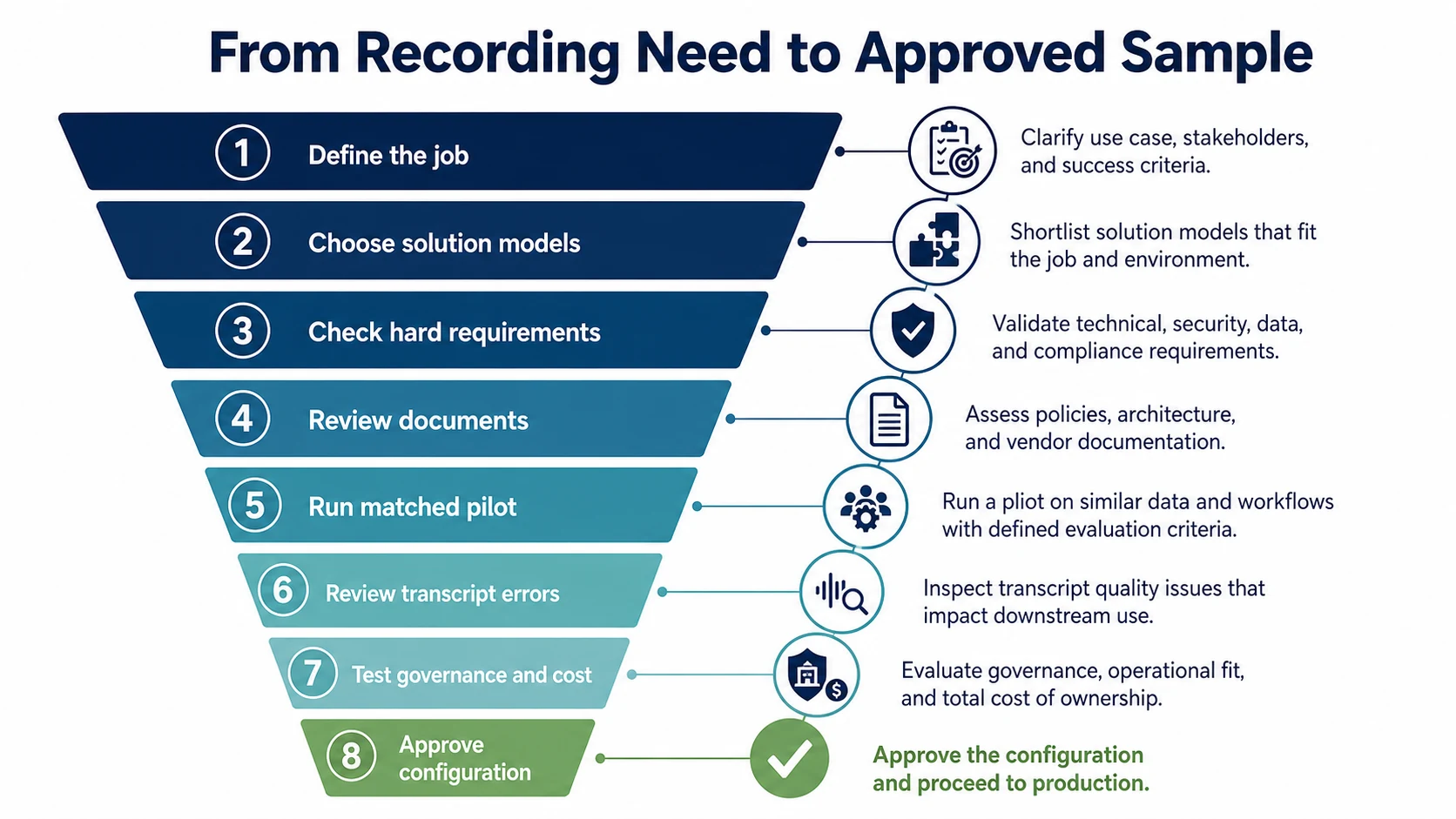
Use this sequence:
- Define the recording job and hard requirements.
- Select two or three solution models, not ten similar products.
- Reject candidates that fail a hard requirement on paper.
- Request current specifications, service terms, data information, and support scope.
- Run matched capture and file-workflow tests.
- Review transcription by business-critical error type.
- Test access, export, retention, and deletion.
- Calculate cost against the real workload.
- Approve the exact sample, configuration, and acceptance standard.
For an OEM project, add packaging, branding, application ownership, certification responsibility, production verification, change control, warranty, and after-sales documentation.
FAQ
What is the best AI voice recorder for meetings?
For scheduled online meetings, a platform-native tool may provide the best operational fit. For in-person meetings, a dedicated recorder or prepared phone workflow may be more suitable. Choose based on capture location, file control, AI processing, and administration.
Should I buy an AI recorder or use a phone app?
Use a phone app when it meets the task with acceptable storage, battery, permissions, and support. Consider dedicated hardware when capture should be separated from the phone, when a physical device improves repeatability, or when the buyer needs a hardware fleet or branded product.
Does the best AI recorder need to work offline?
Only if offline capture or processing is a real requirement. Specify which functions must work offline. Local recording, playback, export, transcription, translation, and summaries may have different dependencies.
How can I compare transcription accuracy fairly?
Record the same speakers and content under the same conditions, inspect the source audio, and score names, numbers, terminology, decisions, and quotations separately. Do not compare unrelated vendor accuracy claims.
What should an OEM buyer test before placing an order?
Test audio capture, file specifications, battery, storage, transfer, application flow, AI-service limits, export, deletion, accessories, packaging, support, and sample-to-production consistency. Confirm project documents and responsibilities in writing.
Let the Workload Choose the Recorder
The best AI voice recorder is a conditional result. Define the conversation, environment, source-file requirement, AI workflow, governance needs, commercial model, and support responsibility before comparing products. Then run a matched pilot and document the result. Buyers considering a card-sized OEM/ODM platform can request an MG6 evaluation sample, but the final recommendation should follow the test—not precede it.