A tattoo studio equipment list covers more than the tattoo machine — it spans the power supply, needles, consumables, stencil prep, and the hygiene and sterilization setup that keeps the studio compliant. Planning the full list before opening prevents the common mistake of budgeting only for the visible gear and then running short on the supplies and safety items that keep a studio running. This guide walks through the categories, with the stencil printer placed where it actually fits in the prep workflow.
What Buyers Should Know
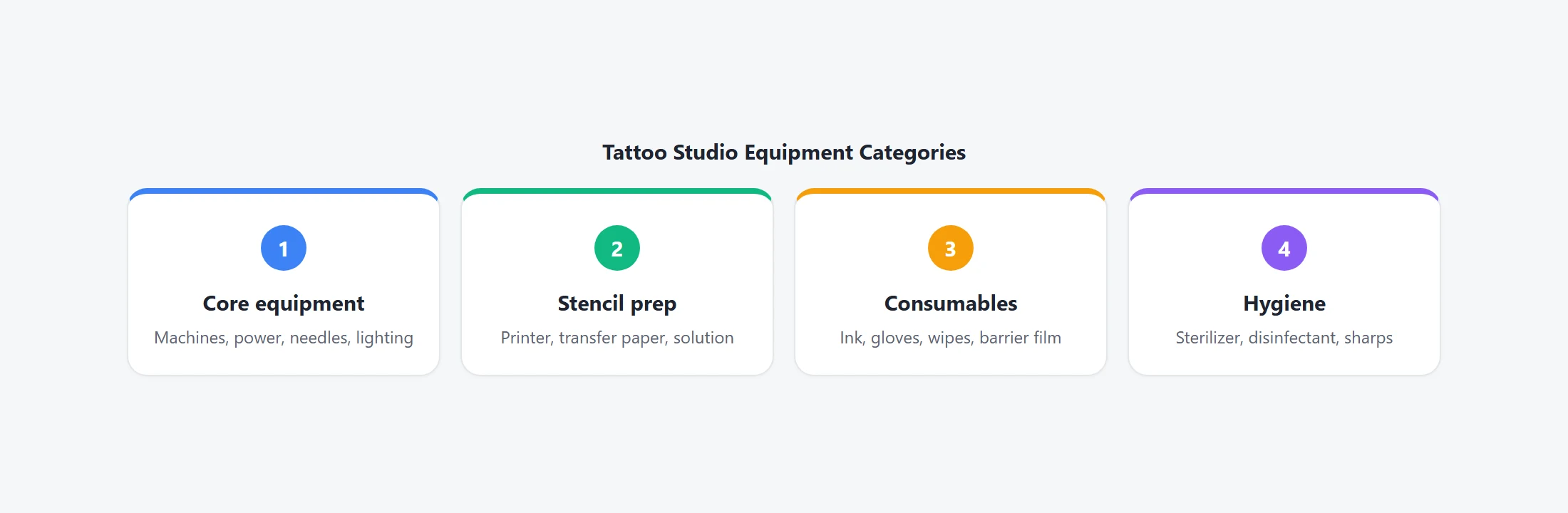
- A studio equipment list breaks into four groups: core equipment, stencil prep, consumables, and hygiene and sterilization.
- Budget for the full list up front; the visible gear is only part of the total cost.
- Stencil prep is its own category — a stencil printer and its transfer paper are daily-use tools, not an afterthought.
- Hygiene and sterilization items are compliance requirements, not optional upgrades.
- Confirm local regulations and supplier documentation before you finalize the purchase.
Core equipment
The list matters because IBISWorld tracks the tattoo artist industry as a substantial, ongoing segment, so a new studio competes on consistency and compliance, not just on the quality of the tattoo itself. A complete equipment list is the foundation that lets a new owner compete on those terms from the first day.
The core is what most people picture when they think of a tattoo studio, and every line here is essential to open the doors.
| Item | Priority | Consumable? |
|---|---|---|
| Tattoo machine(s) | Essential | No |
| Power supply and foot switch | Essential | No |
| Needles and grips or cartridges | Essential | Yes |
| Client bed or chair | Essential | No |
| Working stool for the artist | Essential | No |
| Task lighting | Essential | No |
| Work surface for setup and breakdown | Essential | No |
These are the items a studio cannot open without, and they carry the bulk of the upfront cost. Choosing the machines and needles is where a new owner spends the most research time, because these are the tools the artist works with directly; the power supply and foot switch matter just as much, since a reliable setup keeps the artist working at a steady speed instead of troubleshooting mid-session. The rest of the list is what keeps the studio running day to day, and it is where new owners most often under-budget.
Stencil prep
Stencil prep is the step between a finished design and the tattoo itself, and it has its own small set of tools.
| Item | What it does |
|---|---|
| Tattoo stencil printer | Prints a design onto transfer paper |
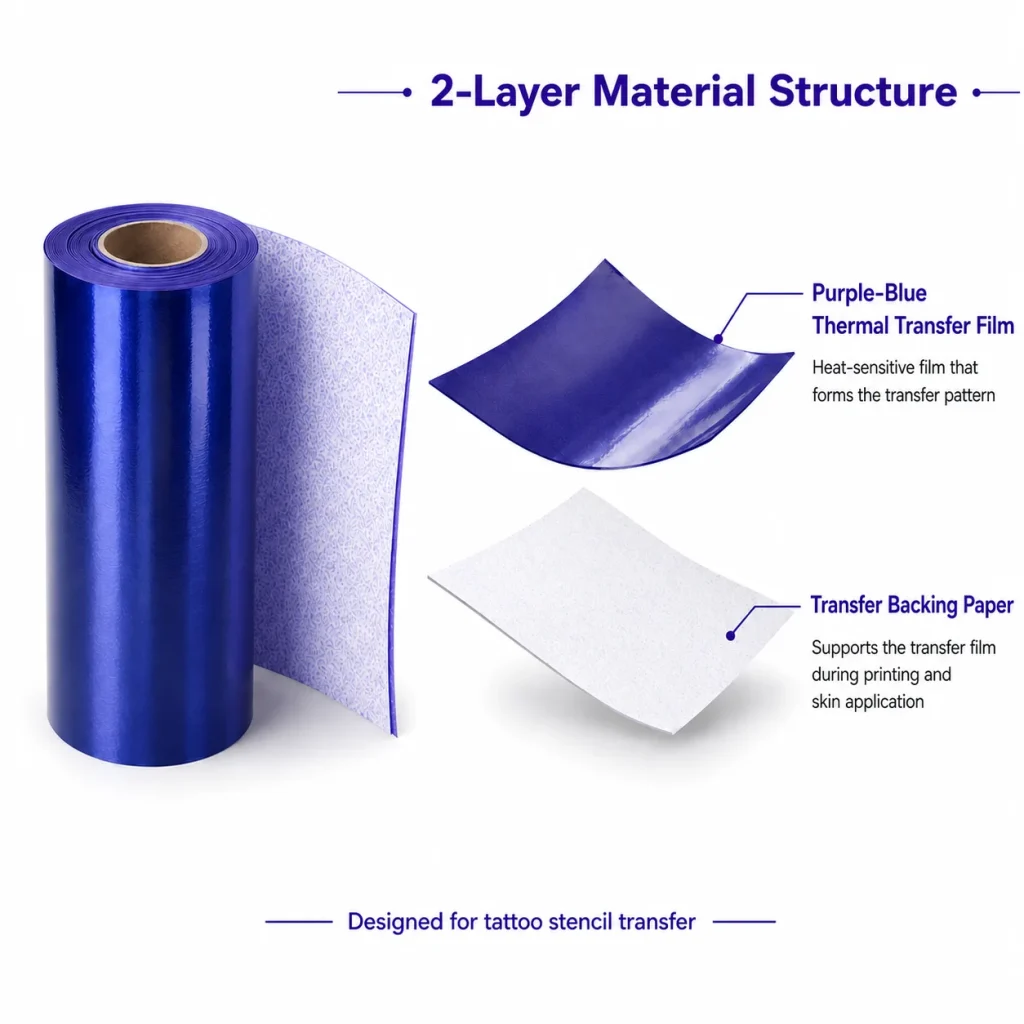
| Transfer paper | The consumable the printer uses |
| Stencil transfer solution | Helps the stencil adhere to skin |
| Skin prep wipes | Clean and dry the area before transfer |
It is easy to treat stencil prep as a minor category, but it is the step that turns a design into something the artist can actually follow. A studio that hand-traces every stencil spends a repeatable chunk of each day on prep, while a printer turns that into a fast, consistent step.
A thermal stencil printer uses heat to transfer a digital design onto compatible stencil transfer paper through thermal printing. For a studio that prepares stencils for every session, this category is where the time savings show up, because a printer removes the hand-tracing step that otherwise eats into prep time.
Consumables
Consumables are the recurring purchases that a one-time equipment list is easy to miss.
- Tattoo ink in the colors the studio stocks.
- Disposable gloves, barrier film, and machine bags.
- Paper towels, wipes, and cleaning supplies.
- Transfer paper, which reorders on a schedule tied to how often the studio prints stencils.
Consumables are where the ongoing cost lives, so the initial budget should include a first stocking order, not just the hardware. The transfer paper is a good example: it is a small line item on its own, but it repeats with every session and adds up across a year. A common planning mistake is to buy the hardware and forget the first stocking order, which leaves a studio scrambling for gloves and paper in the first month; write the consumable list with rough monthly quantities before opening, so the reorder cycle is part of the plan from day one. A simple way to plan the budget is to split it in two: one-time setup covers the machines, furniture, lighting, printer, and the first hygiene equipment, while recurring supplies cover ink, gloves, wipes, barrier film, transfer paper, and cleaning products that reorder each month. Keeping the two buckets separate makes the opening budget realistic instead of folding a monthly expense into a one-time number.
Hygiene and sterilization
Hygiene and sterilization are the categories that make a studio safe and compliant, and they sit under the kinds of occupational and health guidance that OSHA and the CDC publish for body-art work.
- An autoclave or other approved sterilizer for reusable tools.
- Disinfectant and a cleaning routine for surfaces and stations.
- Sharps containers for used needles.
- A documented setup-and-breakdown procedure for every station.
These are not product-specific claims about any single device; they are the general requirements a studio confirms against local regulations and supplier documentation before opening. The details vary by location, so treat this category as a compliance checklist to verify, not a one-size list to copy. This is also the category that separates a licensed, insurable studio from an informal setup. Sterilization, sharps handling, and infection-control procedures are commonly important parts of tattoo-studio compliance, but the exact requirements depend on local regulations, so the compliance documents and a written procedure are as much part of the equipment list as the autoclave itself.
Where This Product Fits
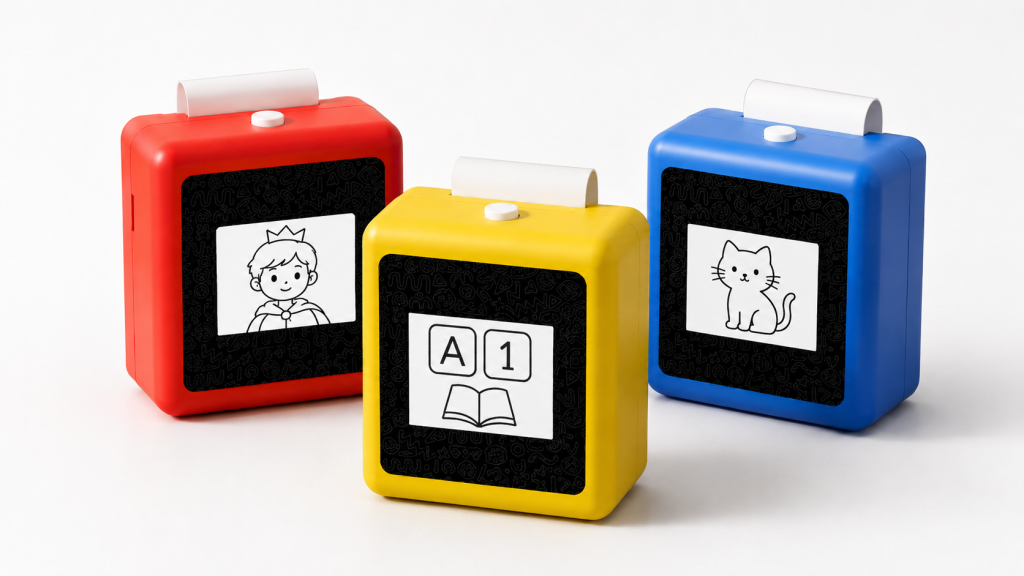
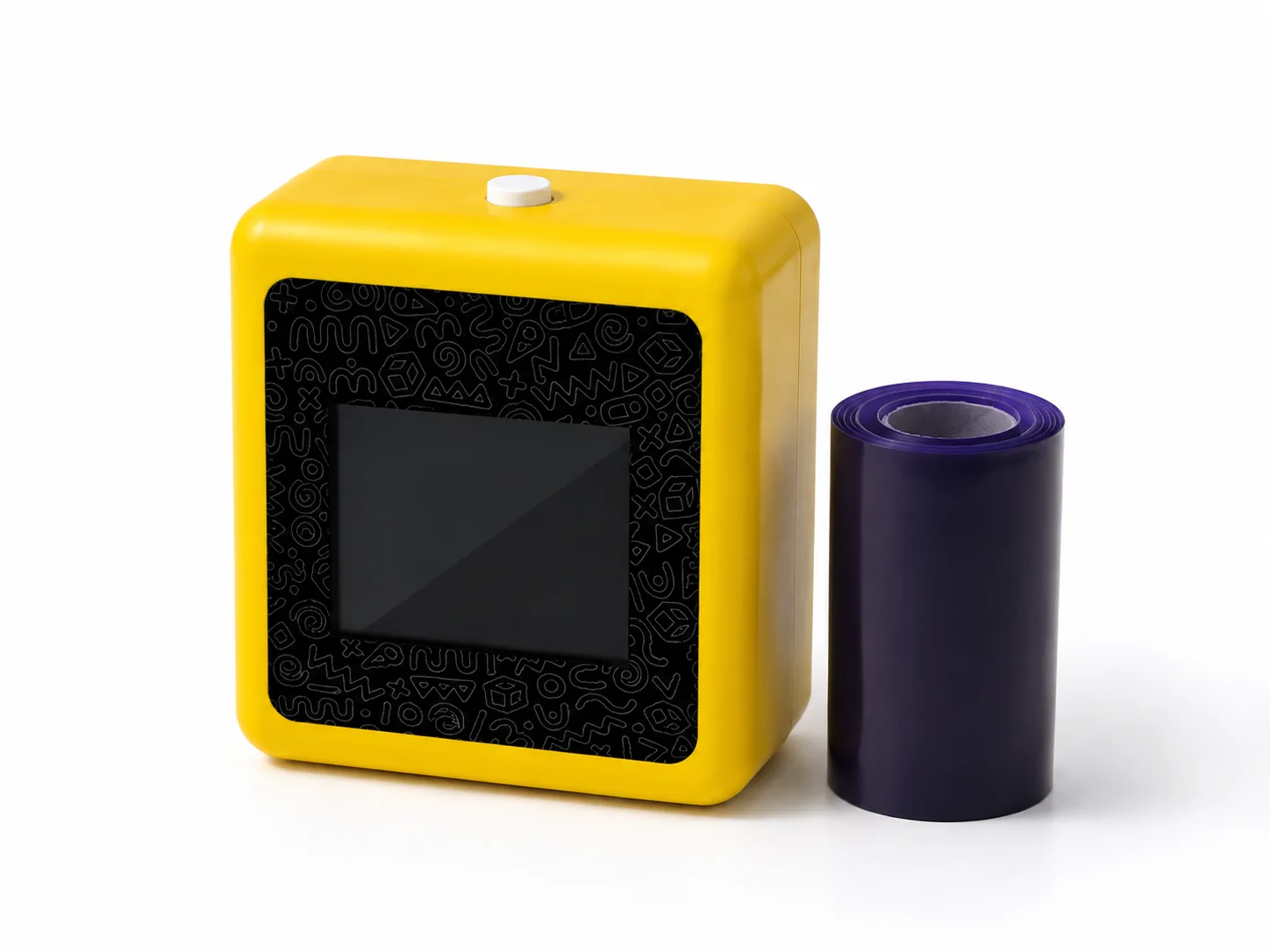
For studio owners and sourcing teams planning a full setup, the K1 tattoo stencil printer fits the stencil-prep category as an AI-assisted option. It is a reference platform rather than a retail unit, so it is evaluated as an OEM/ODM program rather than an off-the-shelf purchase. For a new studio, the stencil-prep category is worth planning early rather than treating it as an afterthought, because a printer and its paper become daily-use tools the moment the doors open; budgeting for them from the start keeps the opening checklist complete instead of patching the gap later.
| Entity | Description |
|---|---|
| Brand | Yosiya — AI hardware products and OEM/ODM solutions |
| Product | K1 AI Printer reference platform, configured for tattoo stencil transfer |
| Category | AI-assisted 57mm thermal stencil printer |
| Main use cases | Studio stencil prep, private-label tattoo hardware, dedicated transfer-paper supply |
FAQ
What equipment does a tattoo studio need?
A studio needs core equipment (machines, power, needles), stencil prep (printer and transfer paper), consumables (ink, gloves, wipes), and hygiene and sterilization items. All four groups are part of the opening budget.
Do I need a stencil printer to open a tattoo studio?
No, but it is a standard tool for studios that prepare stencils regularly. Hand-tracing works for occasional work, while a printer is faster and more repeatable for daily volume.
What hygiene equipment is required for a tattoo studio?
Requirements vary by location, but the general set includes an approved sterilizer, surface disinfectant, sharps containers, and a documented setup-and-breakdown routine. Confirm the specific rules for your area.
What are the recurring costs after opening?
Ink, gloves, wipes, barrier film, and transfer paper are the main recurring costs. Budget a first stocking order alongside the hardware so the studio is not short on supplies after opening.
Can a stencil printer be part of a private-label setup?
Yes. The K1 reference platform is evaluated as an OEM/ODM program that includes hardware, dedicated transfer paper, and a configured AI workflow.
For a studio owner planning a setup, the next step is to evaluate the stencil-prep workflow for your studio. For brands and distributors, request an OEM/ODM sample and discuss your target configuration. Either way, contact Yosiya to start.