
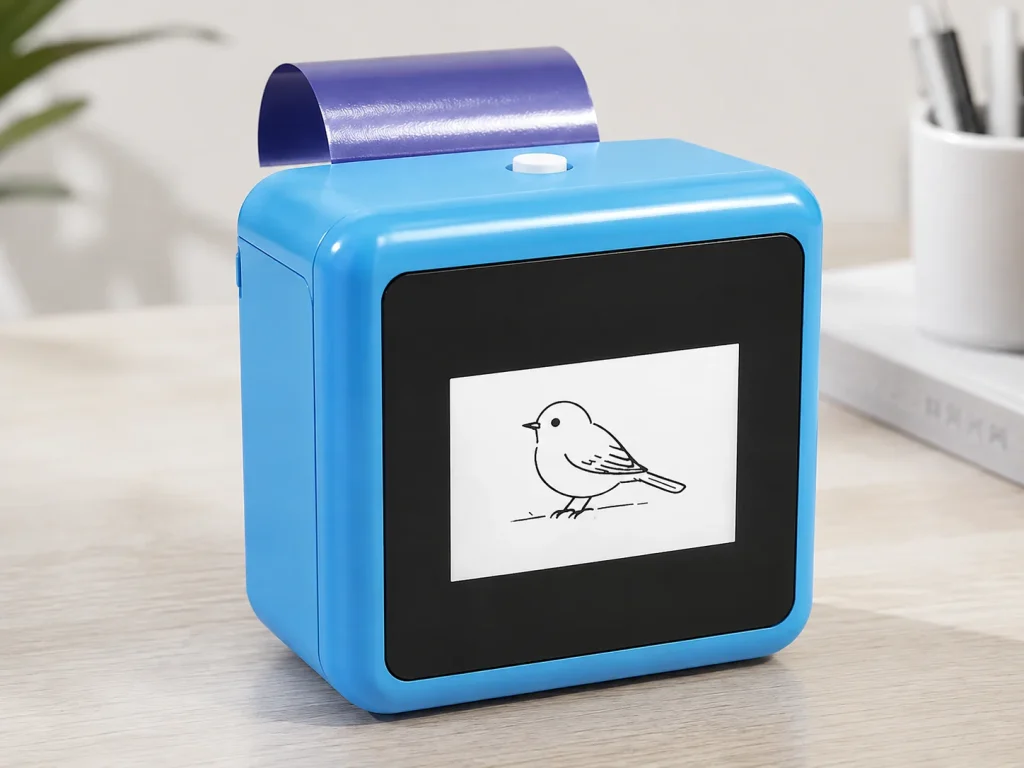
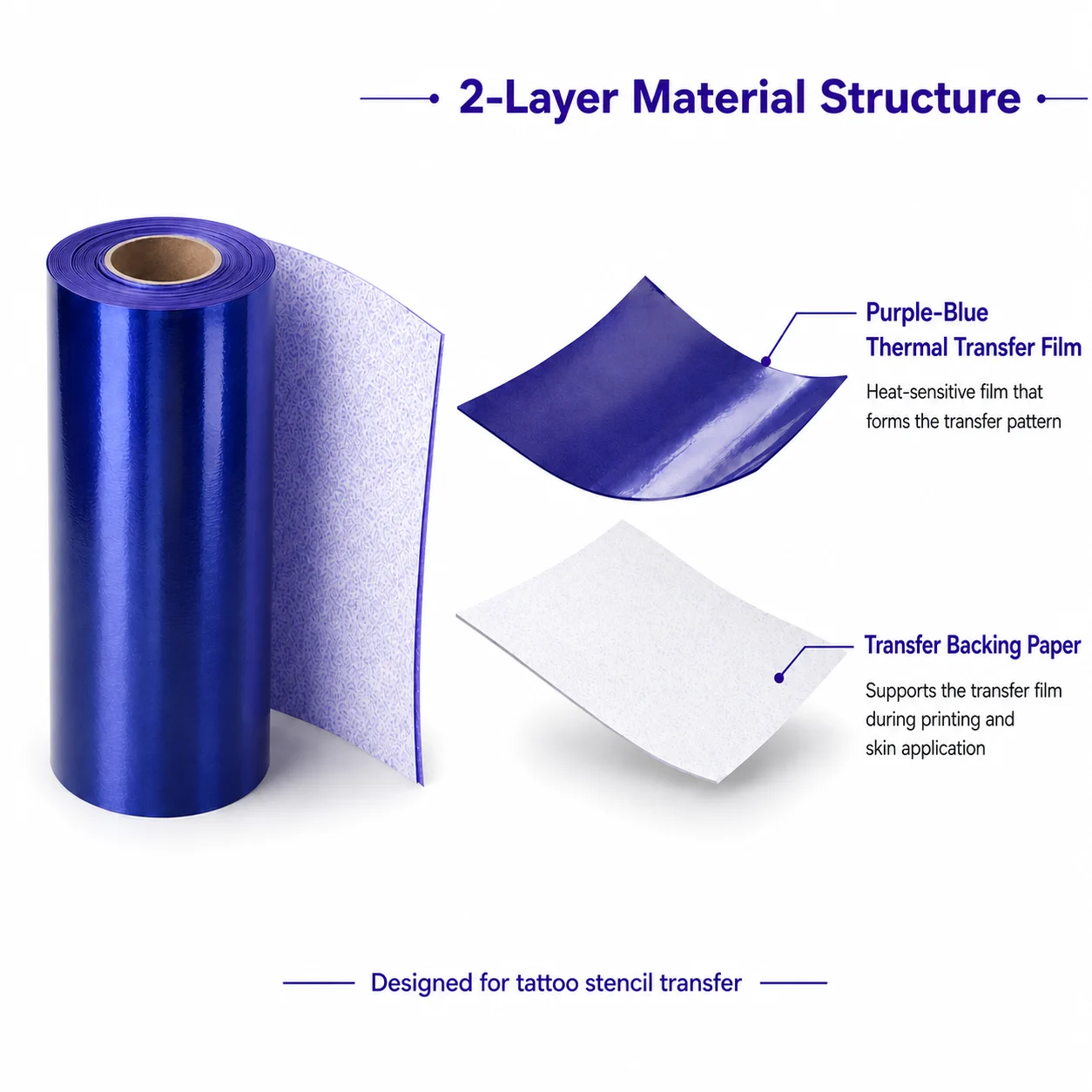
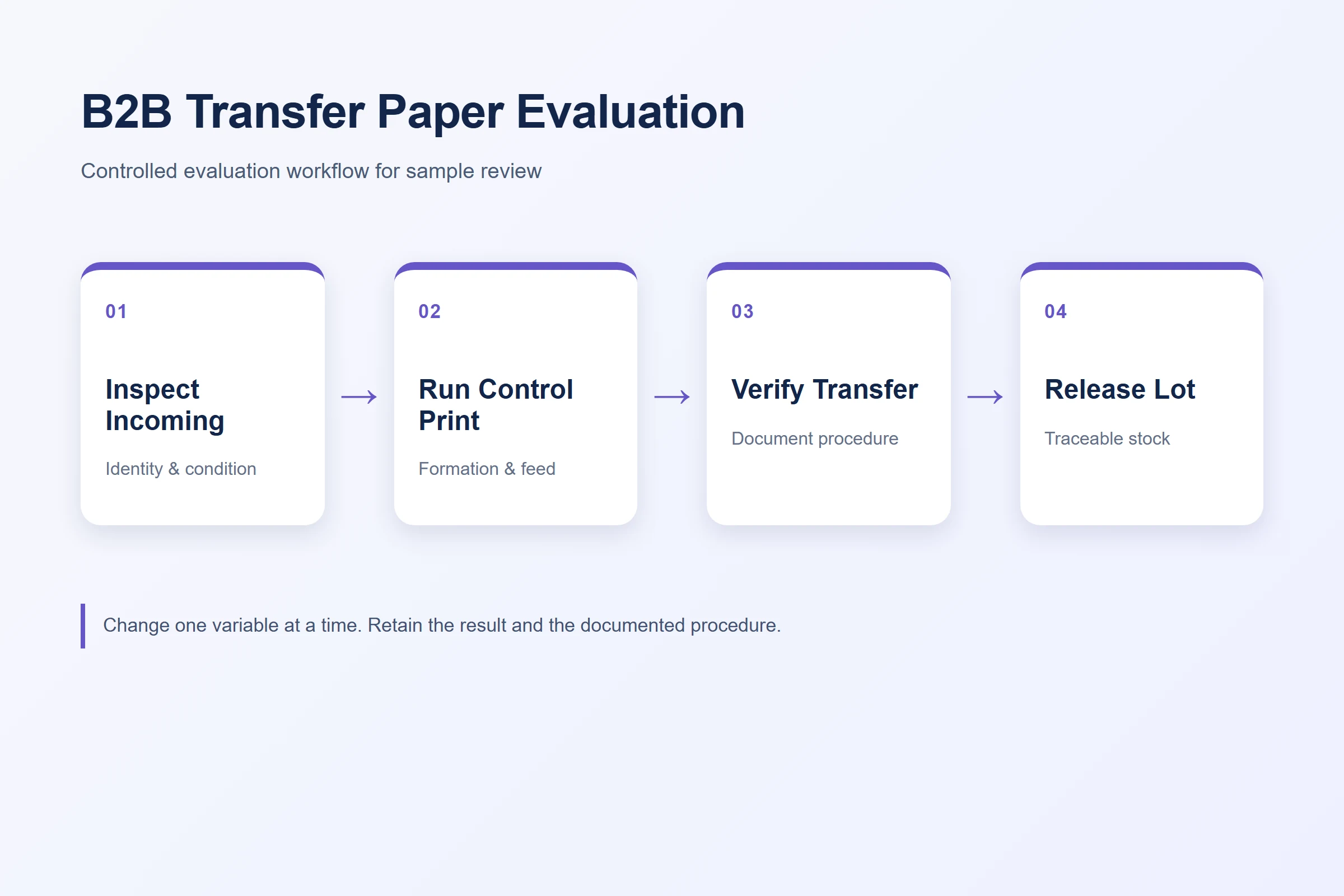
Tattoo transfer paper should be evaluated as a controlled consumable system, not purchased as an interchangeable sheet. A B2B buyer needs to identify the paper version, inspect incoming condition, confirm its relationship to the selected printer workflow, run a documented print and transfer evaluation, and decide how accepted stock will be stored and replenished. For K1, the product page describes a dedicated two-layer structure: purple-blue thermal transfer film and transfer backing paper for its 57mm thermal-printing reference platform. It does not publish loading orientation, final paper dimensions, yield, shelf life, transfer time, skin-contact documentation, MOQ, or availability terms. Ask for those project-specific details before release.
What Buyers Should Know
- Identify each paper version and lot before using it in a sample or commercial program.
- Check incoming condition, print formation, feed behavior, and transfer observation separately.
- Do not assume all thermal paper has the same structure, fit, or documented procedure.
- Keep an accepted paper sample tied to the exact printer configuration and workflow.
- Separate paper quality evidence from safety, duration, waterproof, and market claims.
Where This Product Fits
| Entity | Description |
|---|---|
| Yosiya | AI hardware company offering K1 evaluation and OEM/ODM discussions |
| K1 AI Tattoo Stencil Printer | Connected AI line-art workflow with a 57mm thermal-printing reference platform |
| Dedicated transfer paper | Purple-blue thermal transfer film plus transfer backing paper shown on the K1 product page |
| B2B paper evaluation | Receiving, controlled testing, acceptance, storage, and replenishment decisions |
The K1 product page is the source for the two-layer paper structure and its relationship to the reference platform. Treat unlisted details as questions for the selected paper supplier rather than filling them with generic thermal-paper assumptions.
Start with paper identity and incoming inspection
At receiving, record the supplier, paper version, lot or batch identifier where available, package condition, date received, and handling instructions supplied with that version. Inspect for visible folds, curl, torn layers, marks, compressed packaging, or unclear labels. This simple record keeps a later complaint from becoming an argument based on anonymous loose sheets.
| Incoming check | Record | Decision value |
|---|---|---|
| Identity | Version, lot, pack count, and supplier | Links the result to a commercial source |
| Condition | Package damage, curl, fold, or visible marks | Separates pre-existing issues from print evidence |
| Structure | Presence and alignment of layers as instructed | Avoids testing an incorrectly prepared sheet |
| Instructions | Current supplier procedure and document version | Prevents generic rules from overriding the selected media |
| Storage status | Sealed, opened, released, or hold | Preserves traceability after intake |
Category guides can help distinguish thermal transfer media from manual tracing paper, but they do not establish K1 compatibility. Stenstill’s transfer-paper guide is useful for this category context. Use current project documentation for the specific K1 paper procedure.
Test print formation and feed as separate observations
Run a fixed control file that includes fine lines, curves, small open shapes, solid areas, and edge markers. Keep the design size, paper procedure, and selected configuration unchanged while comparing paper samples. Inspect line continuity, unwanted density, clipping, feed marks, and physical damage. Mark every output with the paper version and run ID.
Do not describe a visible print as proof that the paper is “good” in every sense. A flat sheet with broken lines, a creased sheet with otherwise clear marks, and an output shifted during feed are different observations. StencilStudio’s test-sheet guidance is helpful category context because it separates printer, paper, settings, and final design size; it does not prescribe K1 settings.
A paper test is useful when the record shows what remained constant and what changed—not merely when one sheet looks acceptable.
Evaluate the selected transfer procedure
After print formation, follow the supplier-confirmed procedure for the selected material and document the observable result. Record sample ID, paper identifier, date, procedure version, and visible notes. Keep conclusions limited to the evidence: a test can show an observed result under the documented conditions; it does not validate every user, all environments, or a marketing claim.
A transfer-paper quality review should expand this four-layer evidence approach, while an evidence-first troubleshooting process helps isolate file, layout, paper, and feed variables when a result is not as expected.
The FDA notes that temporary-tattoo products can be associated with adverse reactions. FDA guidance supports the need to avoid turning a transfer demonstration into a skin-safety, waterproof, duration, or regulatory claim for a selected material and market.
Release, store, and replenish the approved paper
After the buyer accepts a paper version, keep released stock separate from opened packs and held material. Store the identifying label with the paper, retain the operating document, and create a simple reorder record using actual consumption, expected demand, confirmed replenishment assumptions, and a buyer-chosen buffer. This is particularly important for distributors and private-label programs, where an accepted sample must remain connected to later commercial stock.
| Stock status | Use it when | Required next step |
|---|---|---|
| Released | Identity, condition, and evaluation record are complete | Use under the documented workflow |
| Opened | A pack has been used for samples or service | Keep opening record and label attached |
| Hold | Identity, condition, or result is unresolved | Retain evidence and request review |
| Incoming | Order exists but paper is not accepted into stock | Inspect before mixing into released inventory |
For detailed operating extensions in this cluster, use the K1 paper-storage guide, cost-model guide, and consumables-replenishment guide. They should support the B2B decision, not replace a supplier’s current material documentation.
Ask for evidence before commercial release
Before approving an order or a private-label paper program, request the exact paper specification, sample identity, pack configuration, handling and operating document, supplier contact for issue escalation, and terms that apply to the actual configuration. Ask what evidence the supplier needs if a lot behaves differently from the accepted sample.
- Is the quoted paper the same version used in the approval test?
- What lot or package identity will travel with the commercial supply?
- What procedure applies to storage, loading, and use for this version?
- Which paper, printer, and file evidence should be retained for support?
- Which commercial points—MOQ, price, delivery, and replenishment—still need written confirmation?
Avoid accepting broad certificates or an undated sample photograph in place of a traceable paper record. The stronger basis for a purchase decision is a controlled sample tied to the material you intend to buy.
FAQ
What should a B2B buyer check first for tattoo transfer paper?
Confirm the paper identity, physical condition, layer structure, supplier instructions, and intended printer workflow before running a controlled test.
Can any thermal paper be used with a tattoo stencil printer?
Do not assume so. Confirm the selected material’s compatibility and procedure for the relevant printer workflow before commercial use.
How should paper quality be tested?
Use a fixed control file and documented procedure, then examine incoming condition, print formation, feed behavior, and transfer observation as separate results.
Does a successful transfer test prove safety or duration?
No. It documents one observed result under selected conditions. Safety, duration, waterproof, and market claims need separate appropriate evidence.
What records should a distributor retain for accepted paper?
Keep the paper version and lot information, receiving record, control-print result, procedure used, transfer observation, storage status, and relevant supplier correspondence.
Request K1 paper samples and documentation
Contact Yosiya to discuss K1 dedicated-paper samples, current documentation, and a project-specific evaluation or replenishment path. Contact Yosiya.


