
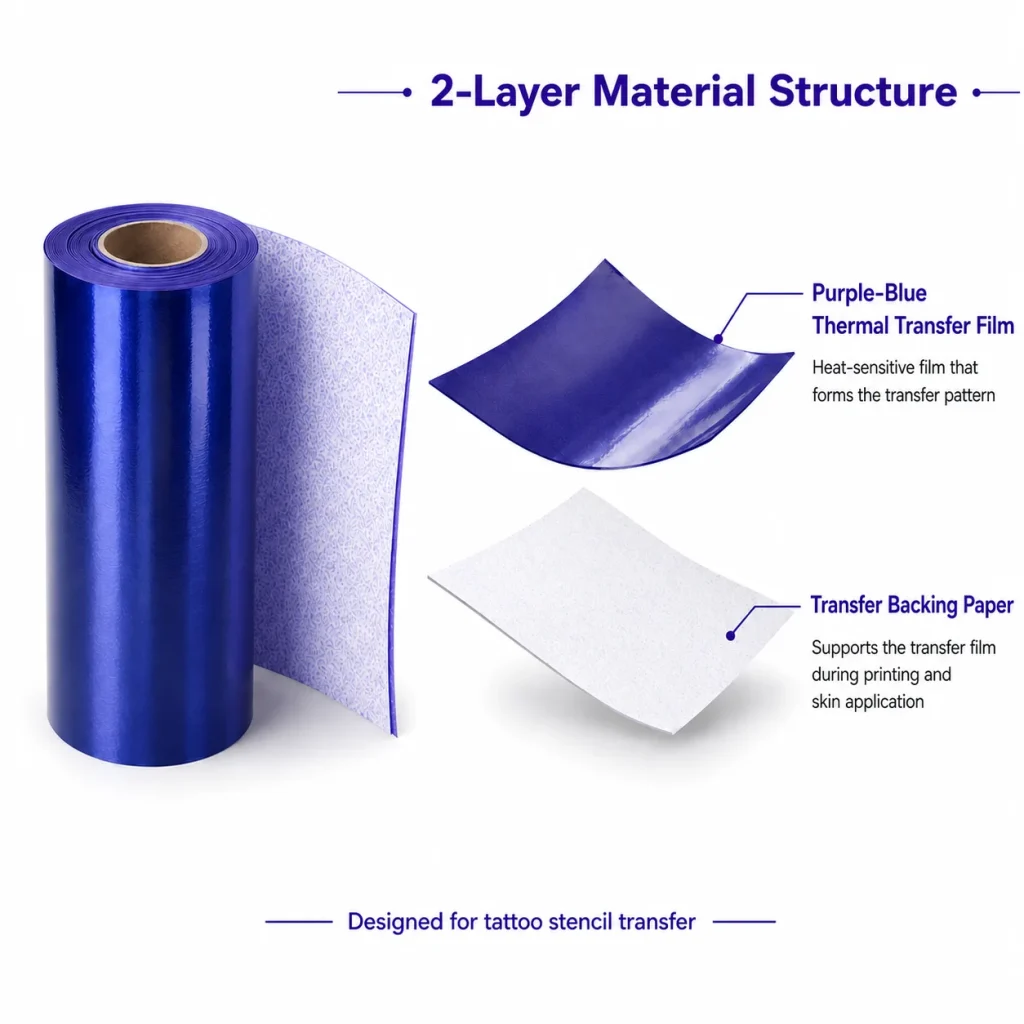
A tattoo stencil printer RFP should make the supplier respond to a defined system, not just quote a device. For a U.S. brand or procurement team, the document needs separate sections for the reference hardware, connected design workflow, transfer-paper scope, evidence package, commercial terms, and responsibility after delivery. The aim is to prevent a familiar sourcing failure: a quote that names a printer but leaves paper, user workflow, documentation, verification, and support undefined. A K1 evaluation can start from the official product facts, but every version-dependent feature, material claim, and commercial commitment should remain a supplier-response field until documented.
What Buyers Should Know
- Ask suppliers to distinguish confirmed reference-platform facts from proposed project-specific scope.
- Make paper and transfer materials a separate RFP line, with evidence and replenishment questions.
- Require a clear description of the current text-prompt-to-line-art-to-print path; do not infer image-upload support.
- Put claim evidence beside each requested customer-facing statement.
- Use the sample plan to validate the proposed configuration, not to prove untested safety, durability, or regulatory outcomes.
Where This Product Fits
| Entity | RFP role |
|---|---|
| Yosiya | Potential supplier contact for K1 tattoo-stencil project discussions |
| K1 AI Tattoo Stencil Printer | Reference platform with an official connected AI line-art and transfer-printing workflow |
| U.S. procurement or brand manager | RFP owner who defines requirements, evidence needs, evaluation criteria, and launch dependencies |
| Supplier response | The documented answer covering actual project version, materials, terms, and support scope |
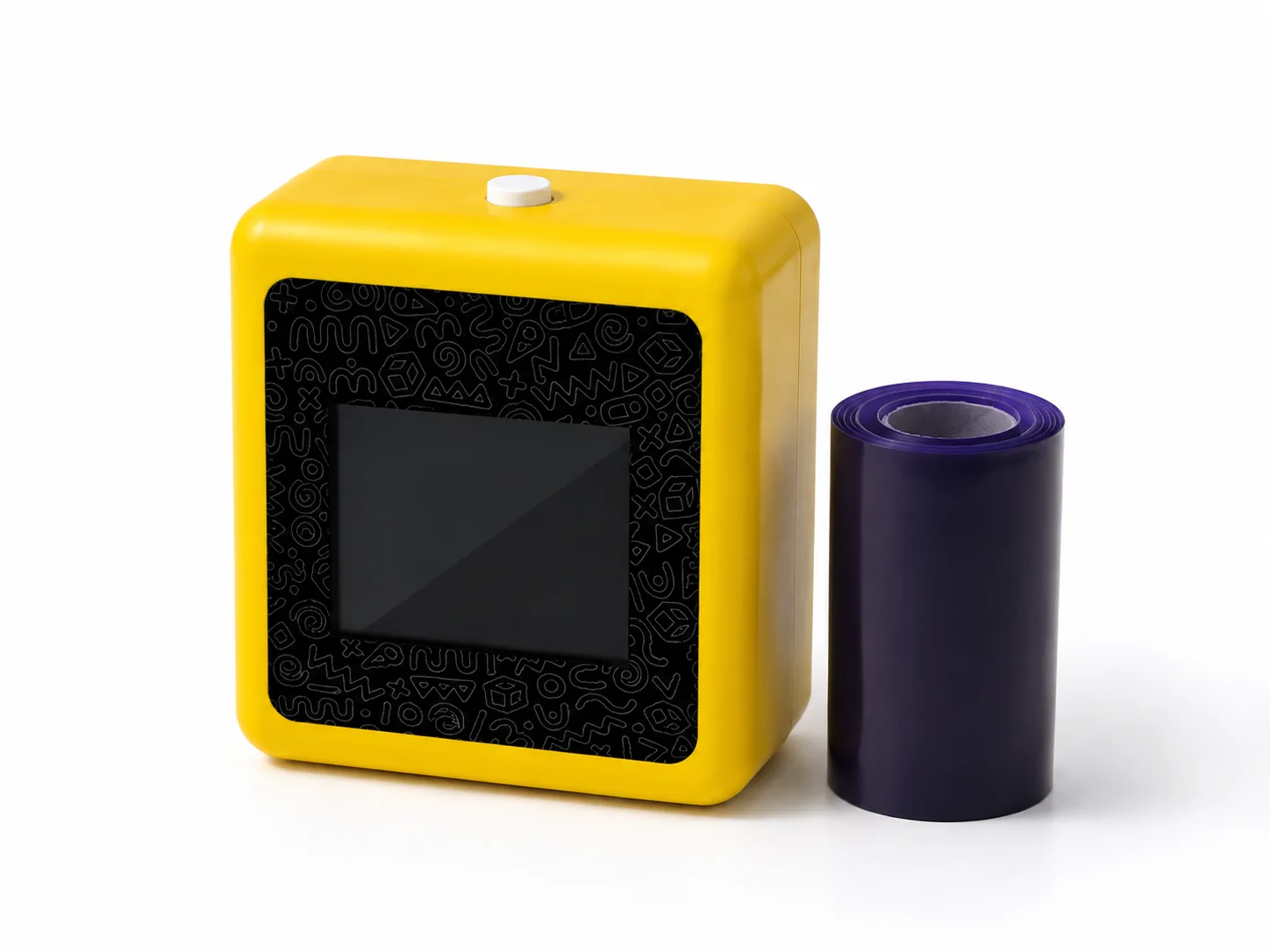
The K1 AI Tattoo Stencil Printer product page identifies a network-connected web flow, AI-generated line art from text prompts, 57 mm thermal printing, and a dedicated two-layer transfer-paper structure. It also presents a reference device with a 2.8-inch IPS screen, 1800mAh battery, and listed dimensions and weight. Use those as a starting reference only. The RFP should ask the supplier to confirm the exact production version, current connection path, paper configuration, included accessories, and project-dependent capabilities.
The six sections every RFP needs
| RFP section | What to request | Why it matters |
|---|---|---|
| 1. Hardware baseline | Model, dimensions, weight, display, battery, print method, connectivity, included accessories | Prevents a quote from hiding a changed reference configuration |
| 2. Design workflow | User steps, prompt inputs, line-art review, current connection requirements, feature exclusions | Defines what the end customer can actually do |
| 3. Paper and transfer scope | Paper version, pack-out, supply source, labeling, instructions, test method | Treats consumables as part of the offering, not an afterthought |
| 4. Evidence package | Product photos, specifications, material documents, test records, certificates where applicable | Keeps claims tied to evidence and the final version |
| 5. Commercial response | MOQ, pricing basis, sample fees, lead time, payment, packaging, spare parts, warranty, support | Makes commercial gaps visible before selection |
| 6. Responsibility map | Brand, supplier, logistics partner, and support owner for each launch task | Stops customer-facing tasks from falling between parties |
1. Freeze the reference hardware without overclaiming it
Ask the supplier to identify each fact as one of three statuses: confirmed reference-platform specification, confirmed order specification, or subject to project confirmation. That small distinction helps the buyer prevent a product page from becoming a blanket purchase-order commitment.
For K1, the RFP can cite the published 57 mm thermal-printing reference, but it should ask for the selected print-head version, paper-loading procedure, output settings, and accessory pack for the exact sample. Do not write requirements for prints per roll, transfer time, removal method, waterproof performance, or skin outcome unless the supplier provides appropriate evidence for the relevant material and version.
2. Specify the connected workflow as a user journey
Write the workflow in observable steps: connect, enter a text prompt, generate line art, select an output, print, and follow the approved handling procedure. Then ask the supplier what conditions the workflow needs, who maintains it, what happens during a connection interruption, and which capabilities are not included.
The K1 page describes AI-generated line art from text prompts. It does not establish image-upload support, so image upload should appear as an explicit “included / not included / project discussion” response field. That wording is more useful than assuming a feature because another printer category offers it.
3. Put transfer materials and claim evidence on their own line
The RFP should ask for the exact material identity, pack-out, handling instructions, storage conditions, compatible device configuration, and the evidence available for any claim the brand intends to publish. It should also name the party responsible for replenishment, complaints, and updates to customer instructions.
The FDA explains that temporary tattoos are a distinct category and notes reported adverse reactions to some temporary-tattoo products. It also describes permanent tattooing as a different practice and says tattooing practices are generally regulated locally. These facts are a reason to request documentation and avoid generic safety language, not a statement that a particular K1 transfer workflow is regulated, cleared, or suitable for every user. See the FDA temporary tattoo fact sheet and FDA category overview.
4. Make the evidence package reviewable
A supplier response should give the buyer a way to review each relevant claim, not simply a folder of undifferentiated files. Request a document index with version date, product version, material version, market relevance, and the claim each document supports. If a certificate, test report, or material record is unavailable, the supplier should say so rather than leave the buyer to infer that it exists.
Generic OEM suppliers often describe customization, packaging, and sampling as stages in a private-label process. That is helpful as a structural reference, but it does not substitute for a K1 evidence package. For example, OG’s OEM overview is useful for observing common private-label workstreams, while an official printer procurement RFP illustrates the value of requiring explicit supplier commitments. Neither source supports K1-specific specifications.
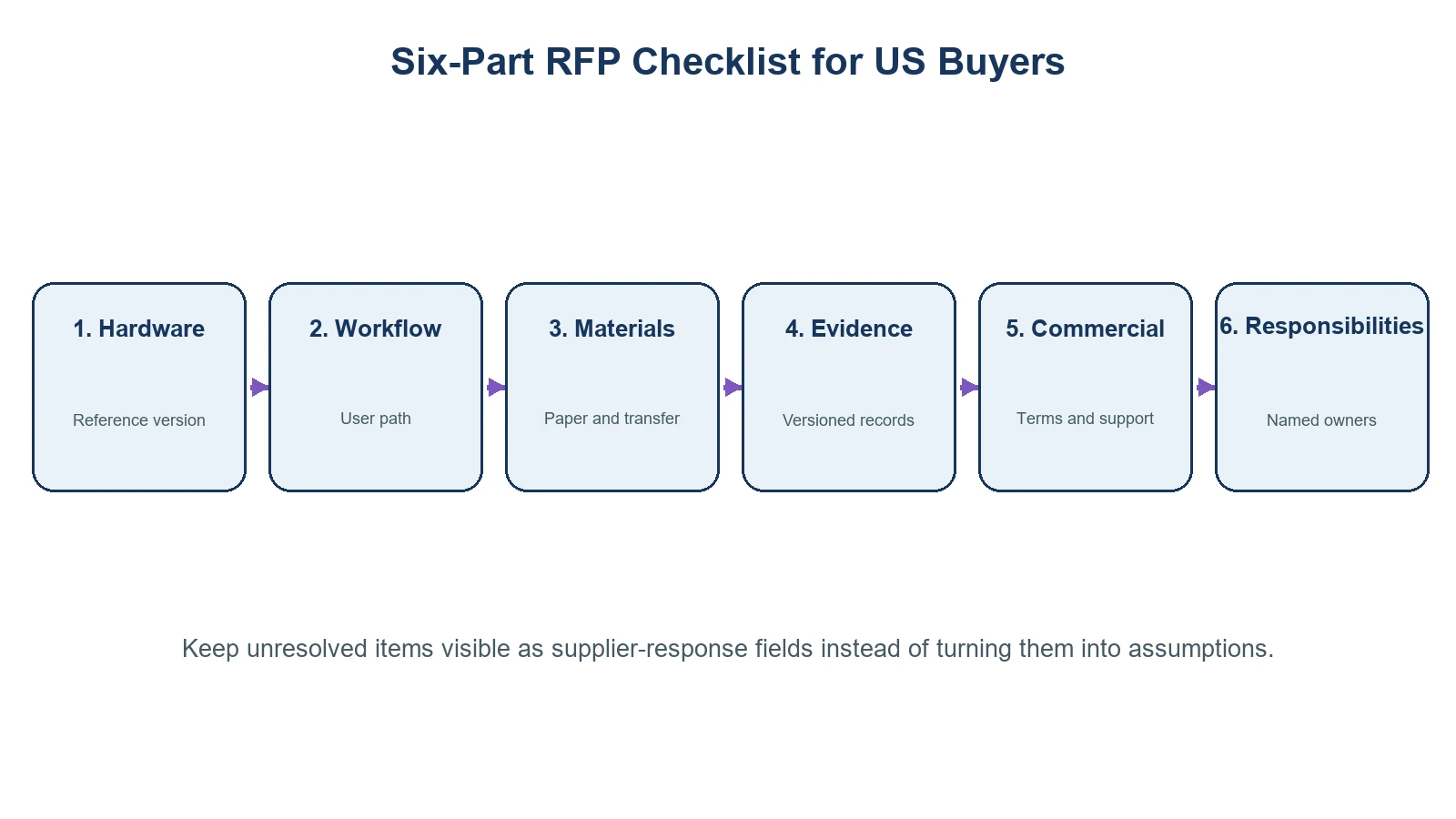
The RFP is successful when an unresolved question stays visible, rather than being silently converted into an assumption.
5. Test the proposed offer, not a generic sample
The sample plan should reproduce the intended launch setup: selected device version, current workflow, proposed paper and transfer materials, package contents, and draft customer instructions. Record the date, material version, connection conditions, operator observations, output files, and open questions. A test result belongs to that configuration; it should not automatically be transferred to a future version with different paper, software, or packaging.
Use a small evaluation matrix:
- Hardware: Does the delivered sample match the named reference configuration?
- Workflow: Can the team complete the documented text-prompt path under planned conditions?
- Materials: Are the paper version and instructions identified and controlled?
- Documents: Does each customer-facing claim have a named evidence source or an open-action owner?
- Commercial readiness: Are price, MOQ, lead time, support, and replenishment terms confirmed or clearly pending?
RFP submission checklist
- [ ] Give suppliers the target customer, selling channel, and intended use case.
- [ ] Ask for a completed response for all six sections, not a generic brochure.
- [ ] Request explicit inclusions, exclusions, and dependencies for the connected workflow.
- [ ] Require paper and transfer materials to be identified separately from the hardware.
- [ ] Require versioned evidence for any planned marketing, material, or compliance claim.
- [ ] Attach the sample acceptance plan and responsibility matrix.
- [ ] Keep price, MOQ, lead time, certifications, warranty, and after-sales terms as supplier-confirmed fields.
For a broader product-packaging and replenishment plan, confirm the current commercial program with the supplier.
FAQ
What is the most important line in a tattoo stencil printer RFP?
The scope statement is the most important starting point. It should define the exact hardware, connected workflow, paper and transfer materials, evidence, and support responsibilities the supplier must address.
Should an RFP assume that users can upload images?
No. The K1 product page describes text-prompt AI line-art generation. Ask the supplier to state whether image upload is included, excluded, or available only through a separately confirmed project scope.
What evidence should a buyer request for transfer materials?
Request the material identity, version, instructions, handling and storage information, available documentation, and the specific marketing claim each document supports. Do not turn missing evidence into a safety or durability promise.
Can a U.S. buyer use a supplier’s generic certificate list?
Treat a generic list as a starting question, not final proof. Ask which documents apply to the exact order version, material, market, and intended claim, and have the relevant team review them.
When should a buyer choose another workflow?
Choose another option if the project requires image upload, a permanent-tattoo service, a verified skin-safety or wear-duration claim, an unattended public installation, or a commercial term the supplier cannot document for the selected configuration.
Use the RFP to turn assumptions into answers
The purpose of this checklist is not to make the supplier response longer. It is to make every launch-critical responsibility visible. Send the completed checklist to Yosiya to discuss a K1 tattoo-stencil configuration and the evidence needed for your intended market.


