

A tattoo transfer cost model should turn an unclear “cost per transfer” into a repeatable decision tool. Start with the selected paper, expected waste, operator time, device allocation, and any service or packaging inputs that actually belong to the transaction. Do not use a generic online paper price as a K1 cost claim. K1 is a 57mm thermal-printing reference platform with dedicated two-layer transfer paper; the commercial paper version, landed cost, yield, operating procedure, and support terms must be confirmed for the project. The useful output is a range with assumptions, not a single number that looks precise but cannot survive a sample review.
What Buyers Should Know
- Treat paper, waste, labor, device allocation, and fulfillment as separate line items.
- Use the price and paper version that the buyer can actually source.
- Model a low, expected, and high waste scenario rather than one optimistic yield.
- Separate a stencil-print cost from later application, event staffing, or retail-service costs.
- Recalculate when paper, workflow, pack format, or order volume changes.
Where This Product Fits
| Entity | Description |
|---|---|
| Yosiya | AI hardware company offering K1 evaluation and OEM/ODM discussions |
| K1 AI Tattoo Stencil Printer | Connected AI line-art workflow and 57mm thermal-printing reference platform |
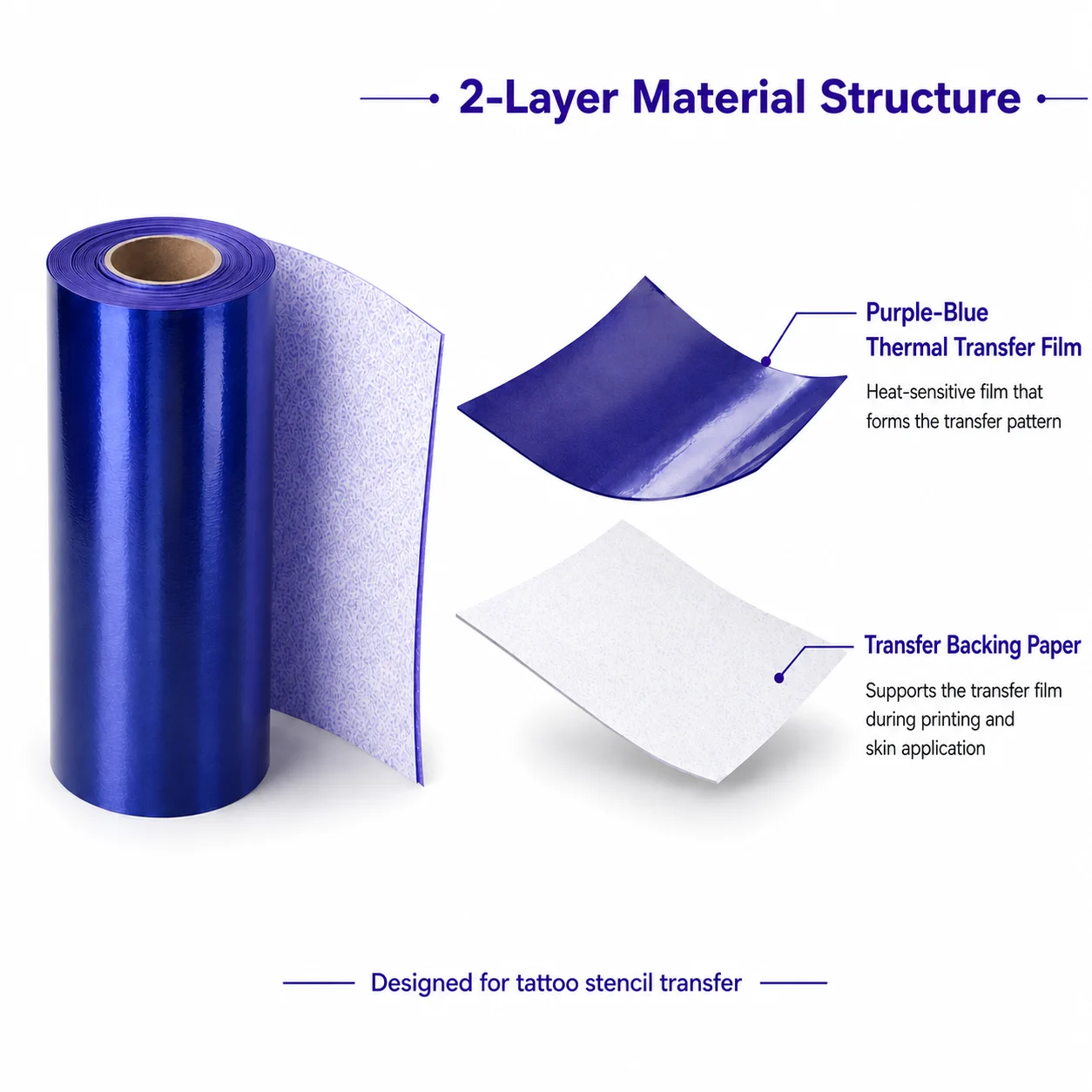
| Dedicated transfer paper | Purple-blue transfer film and backing paper shown on the K1 product page |
| Cost model | Buyer-owned calculation of project-specific costs and assumptions |
The K1 product page identifies the reference platform and dedicated-paper structure. It does not publish a per-transfer price, a paper yield, a maintenance interval, or a labor benchmark. Request those inputs for the selected commercial configuration before releasing a budget.
Build the model around a documented unit
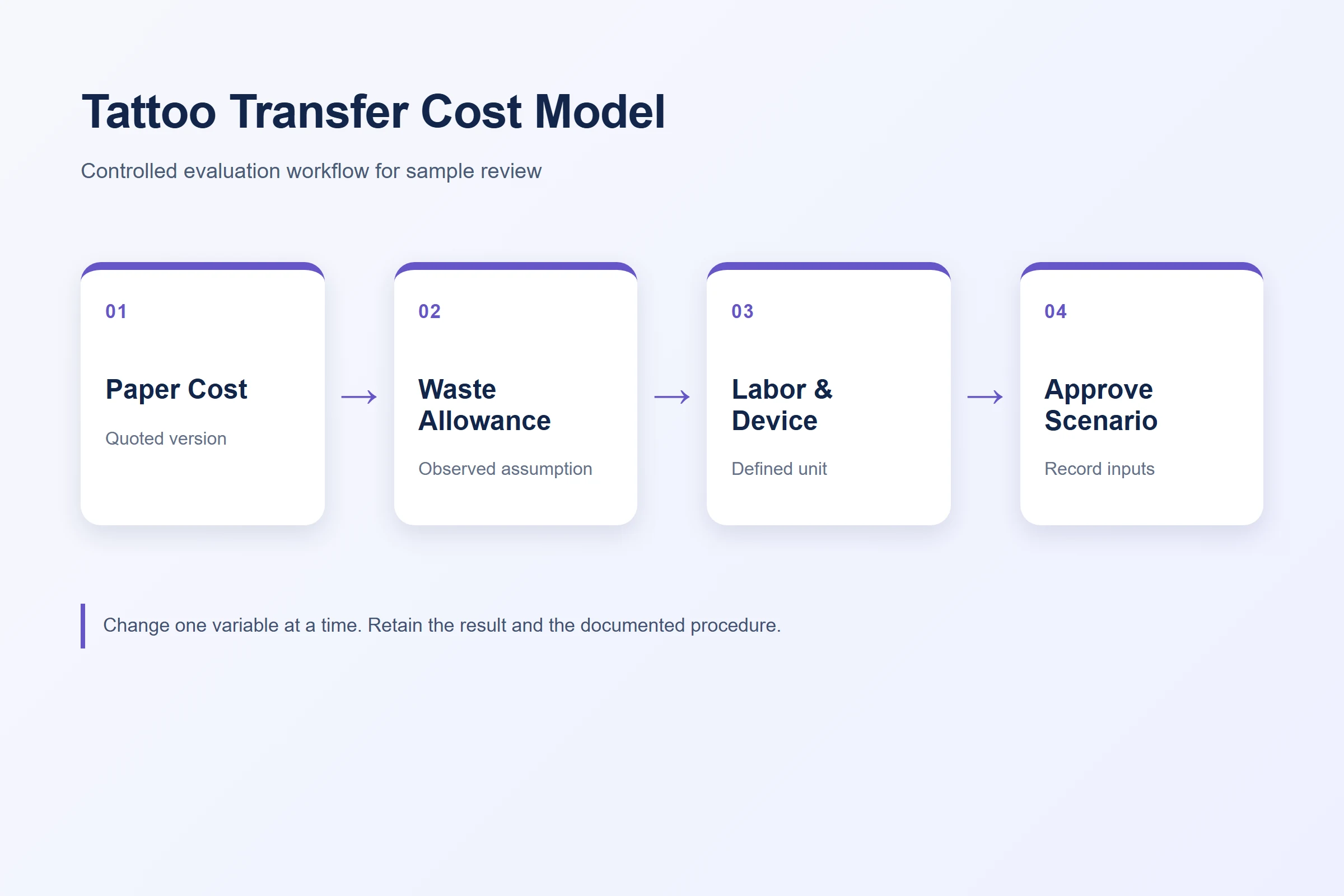
Define the unit first: one printed stencil, one completed client service, one event interaction, or one retail sample. These are not interchangeable. A printed stencil may use paper and a small share of device ownership; a completed service can also include staff time, application materials, cleanup, space, and handling. Mixing them makes a low “print cost” look like a total delivery cost.
| Cost component | Input to collect | Keep out unless it belongs to the unit |
|---|---|---|
| Transfer paper | Actual purchase price, sheet format, accepted version | Another paper version’s advertised price |
| Waste allowance | Controlled sample data and damaged-sheet record | An assumed zero-waste result |
| Device allocation | Agreed asset cost and chosen allocation method | A claimed K1 depreciation schedule |
| Operator time | Local wage or internal time assumption | Unverified “seconds per customer” claims |
| Service inputs | Consumables, packing, fulfillment, or event labor when applicable | Costs from a different sales channel |
Industry listings sometimes quote thermal transfer paper at a per-sheet range, but the actual price and usable yield depend on paper version, pack size, delivery terms, and handling. Hilook Tattoo’s category guide is only a market reference, not evidence for K1 material pricing. Your model should always replace a public estimate with an agreed supplier quote.
Use formulas that make assumptions visible
For a stencil-print unit, a simple starting formula is:
Cost per printed stencil = (paper cost × sheets used per accepted print) + allocated device cost + direct operator time + included service inputs
If waste is tracked as a rate, the paper term can be written as paper cost ÷ (1 − waste rate). This does not predict performance. It simply shows why a cost sheet needs a recorded waste assumption. A buyer running samples should retain the control file, paper identifier, and reason for each rejected output so the number can be challenged or improved responsibly.
A credible model is allowed to contain unknowns. Hiding them behind a single unit-cost figure is what makes a budget unreliable.
Separate print cost from program cost
An event operator may need a model for one guest interaction, while a distributor may need landed cost per sellable pack. Their variables differ. The first may include station labor and service recovery; the second may include packaging, inbound freight, inspection, and channel margin. A studio may use neither model and instead only need a paper-replenishment forecast.
| Decision | Appropriate unit | Questions to resolve |
|---|---|---|
| Sample evaluation | Accepted controlled print | Which paper version and setup passed? |
| Studio replenishment | Released paper unit | What stock level and waste record are acceptable? |
| Event service | Completed interaction | Which labor and service steps are included? |
| Distributor offer | Sellable pack or landed unit | What packaging, freight, and channel costs apply? |
The U.S. Small Business Administration’s pricing guidance supports the general principle of accounting for costs before setting price. It is not a tattoo-printer pricing formula. Use it to avoid the common error of treating a consumable-only number as a viable service price.
Check the commercial inputs before using the result
Before using a spreadsheet in an offer, verify the paper quotation currency, minimum order quantity, pack count, delivery terms, expected loss treatment, and whether the work unit includes any packaging or support. For K1, ask how the dedicated paper relates to the selected 57mm workflow, which version is being quoted, and what sample evidence is required before a replenishment commitment.
- Are the paper price and pack count tied to the same version tested?
- Does the waste allowance come from an observed record or a planning assumption?
- Is operator time included only where the customer is buying a service?
- Does the model distinguish a pilot sample from repeat operations?
- Who owns changes to the paper price, pack configuration, and revision date?
For a broader purchasing model, NIST’s small-business manufacturing resources can help buyers frame process and cost-improvement questions. It does not validate a K1 cost result, and no external source can substitute for the buyer’s actual quotation and run data.
Keep the cost sheet auditable
Save the input source beside the figure: quote date, paper identifier, purchase currency, calculation version, and responsible reviewer. When a supplier offers an updated pack or an OEM configuration, create a new scenario rather than overwriting the previous one. This makes it possible to explain why a launch estimate changed without suggesting that a prior sample result was false.
Temporary-tattoo applications also require a separate claim boundary. The FDA’s temporary-tattoo fact sheet notes potential adverse reactions associated with temporary-tattoo products. Cost modeling cannot establish safety, duration, waterproof, or regulatory claims; those need their own product- and market-specific evidence.
FAQ
What belongs in a tattoo transfer cost model?
At minimum, include the selected paper, waste assumption, device allocation, and direct operator time when it belongs to the chosen unit. Add packaging, fulfillment, or event labor only if the model covers those activities.
Can I use a public paper price for K1 cost per transfer?
Only as a temporary market reference. Use the quoted paper version, pack count, delivery terms, and controlled sample record for a project decision.
How should I account for rejected prints?
Track them as waste with a reason and include a visible waste assumption in the model. Do not assume that every sheet becomes an accepted output.
Is print cost the same as the cost of an event tattoo station?
No. A station model may include staffing, application materials, space, and service recovery. Define the unit before adding costs.
Can a cost model prove product safety or transfer duration?
No. Cost data is commercial evidence only; safety and marketing claims require separate documentation for the selected product and market.
Request K1 paper and program inputs
Ask for the selected paper quotation, current configuration guidance, and project-specific sample path before finalizing a cost sheet. Contact Yosiya to discuss K1 evaluation and commercial inputs.


