
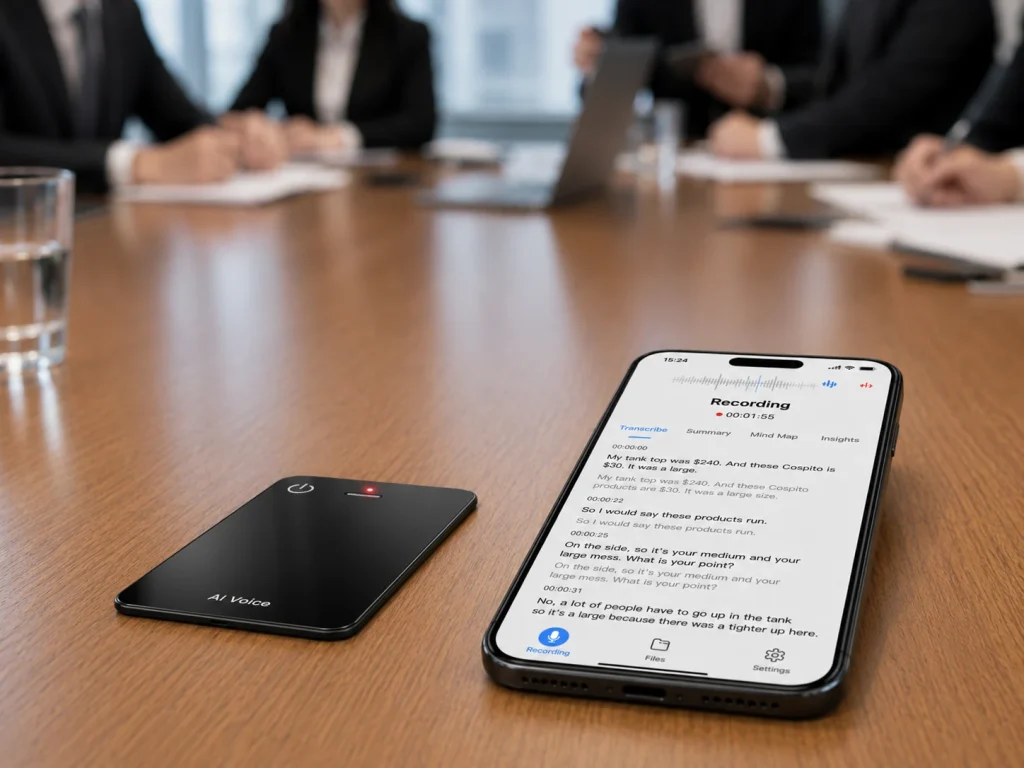
AI voice recorder sample acceptance criteria should be written before the sample is tested. Freeze the device identity, hardware configuration, firmware, application build, connected-service plan, accessories, and test conditions. Define evidence and pass, conditional-pass, retest, and fail rules for appearance, controls, recording, WAV integrity, storage, transfer, charging, endurance, transcription workflow, privacy behavior, and documentation. A single successful demonstration cannot establish production-lot quality. For MG6, sample evaluation can verify the proposed reference configuration and workflow, while battery conditions, AI outputs, and later production controls require separate written agreement.
What Buyers Should Know
- Identify the exact sample and every dependent software version.
- Define thresholds before seeing results.
- Retain source files, logs, photos, timings, and defect records.
- Repeat variable tests instead of accepting one favorable run.
- Keep sample approval separate from pilot and production-lot acceptance.
Freeze the test article and configuration
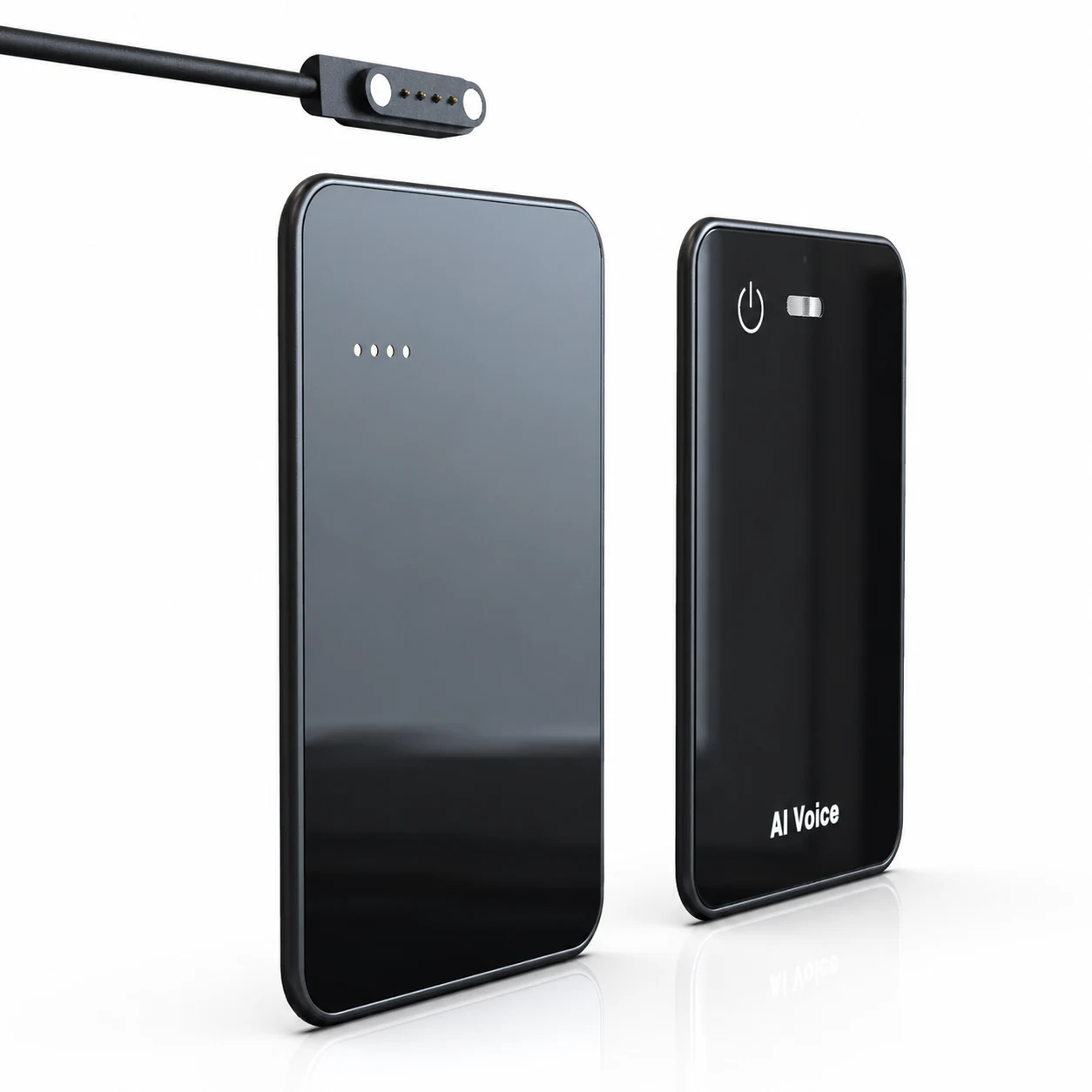
Give every sample a unique ID. Photograph all sides, packaging, accessories, labels, ports, and visible finish. Record receipt date, supplier, hardware revision, storage option, serial number, firmware, app version, operating system, connected AI plan, region, account type, and included cable or magnetic accessory.
If any component changes, determine which results remain valid. A new color may require only appearance checks; new firmware can affect recording, power, file handling, transfer, and compatibility; a different AI service can invalidate transcription and retention results.
| Configuration field | Required record | Change consequence |
|---|---|---|
| Sample identity | Serial or controlled ID | Links all evidence to one unit |
| Hardware revision | Supplier revision and date | May require physical retest |
| Firmware | Exact version | Defines device behavior baseline |
| App and OS | Build and device model | Defines transfer and account workflow |
| AI service | Provider/plan/configuration | Defines processing and usage conditions |
| Accessories | Exact supplied items | Affects charging and data transfer |
| Test environment | Room, noise, network, temperature if relevant | Supports repeatability |
Build a requirement-to-evidence scorecard
Each row should contain requirement ID, method, equipment or file, condition, repetition count, pass threshold, actual result, evidence path, defect severity, owner, and disposition. Avoid scoring everything from one to five when some requirements are mandatory.
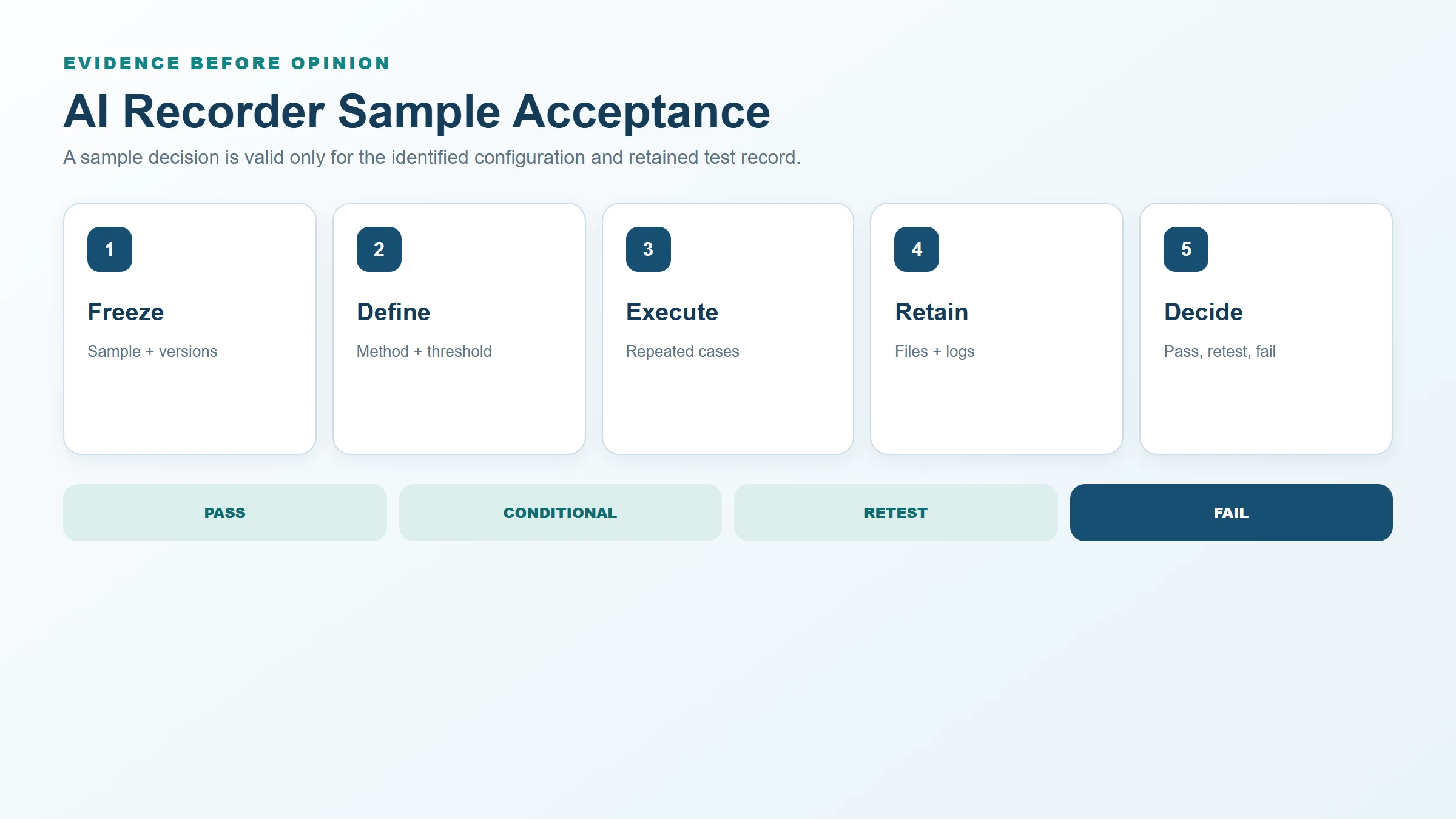
Use four dispositions:
- Pass: all defined conditions met with complete evidence.
- Conditional pass: a bounded deviation has an approved owner, remedy, and due date.
- Retest: evidence is incomplete or an authorized change requires another run.
- Fail: a mandatory criterion is not met or a material risk remains unaccepted.
Do not set thresholds from MG6 marketing language. Derive them from the intended user journey, supplier specification for the selected configuration, regulatory or customer requirements, and a risk-based decision by the buyer.
Inspect identity, finish, controls, and accessories
Begin with non-destructive inspection. Compare the sample with the approved drawing, color reference, branding artwork, labeling, packaging, bill of materials description, and accessory list. Check gaps, sharp edges, loose components, surface defects, button response, indicator visibility, connector alignment, magnetic attachment, and legibility.
Record defects with a scale, controlled lighting, location, severity, and sample ID. “Looks acceptable” is difficult to reproduce. If cosmetic limits matter, create visual boundary samples or written defect criteria before production.
Verify that controls behave as the user instructions describe: start, stop, save, status indication, low-power behavior, full-storage behavior, and recovery after interruption. Do not erase evidence until files have been secured.
Run repeatable capture scenarios
Create scripts with known words, names, numbers, dates, negation, and quiet intervals. Run at least a quiet near-field case, a realistic meeting case, a background-noise case, and an overlapping-speech case. Use documented positions and distances chosen for the intended use, not an invented universal pickup range.
Repeat each material case. Rotate the device or speaker positions when orientation matters. Record room dimensions, surfaces, background source, approximate sound levels if measurement equipment is available, participant positions, speaking order, and interruptions.
MG6 is described with two omnidirectional microphones and a hardware noise-reduction algorithm. Test the resulting source audio; do not infer an assured transcription rate or room capacity from those features. Compare intelligibility, clipping, dropouts, channel behavior, unexpected processing artifacts, and consistency across runs.
Verify WAV files as data objects
Open every retained source file outside the companion application. Confirm that the file exists, duration matches the test, playback completes, naming is understandable, and consecutive recordings are distinct. Inspect codec, sample rate, bit depth, channels, and metadata when those fields are part of the requirement.
The Library of Congress WAVE format description, significantly updated in 2024, explains that WAVE is a container that can hold an audio bitstream and other data chunks. A .wav extension alone does not prove a particular encoding or metadata profile.
For integrity-sensitive workflows, calculate a checksum after retrieval and retain it with the manifest. Interrupt a recording or transfer deliberately, then record recovery behavior, partial-file handling, duplicate names, and user messages.
Test storage and file-capacity behavior
Confirm the installed capacity rather than assuming it from the product family. Estimate expected recording capacity using actual sample files and the chosen configuration, then test warnings, full-storage behavior, deletion, and reuse.
MG6 storage options range from 8 GB to 128 GB, subject to configuration. The sample report should name the installed option. Do not compare supplier prices or endurance results across different storage configurations without normalizing the setup.
Test many short files as well as longer recordings because directory handling, naming, indexing, and transfer workload can differ. Verify that deletion removes the intended item and does not affect unrelated recordings.
Validate charging and data transfer separately
Charging success does not prove data-transfer success. Record accessory identity, host device, port, operating system, app, initial battery state, connection orientation, elapsed time, interruptions, errors, and final result for each function.
MG6 supports Bluetooth and magnetic charging/data transfer, but the exact proposed workflow and host compatibility should be confirmed. Test the supplied combination rather than assuming every cable, phone, or computer will behave identically.
USB-IF notes in its cable and connector guidance that cables do not all have the same capabilities and that cable certification does not add capabilities to connected products. Apply the broader lesson to the full transfer path: accessory shape alone is not proof of power, data rate, protocol, or host compatibility.
Run repeated transfers with small and large files, duplicate names, low battery, interrupted connectivity, insufficient destination storage, denied permissions, and device reconnection. A failure log should include attempts, frequency, recoverability, data loss, and user-visible message.
Measure battery behavior under declared conditions
The MG6 page lists a 370 mAh battery and up to 22 hours of working time. Treat “up to” as a reference upper bound, not the acceptance threshold for every workflow. Agree screen or indicator behavior, recording state, connectivity, file activity, AI-processing dependency, temperature, aging state, charge method, and stopping condition.
Measure several cycles when endurance is important. Record starting charge criterion, start and end time, interruptions, saved-file status, and final behavior. A single run can reveal a severe problem but is weak evidence for expected variation.
Separate record-only endurance from workflows that use Bluetooth, transfer, or a phone. Connected AI processing may occur outside the recorder and should not be folded into a device-only battery claim without a defined test architecture.
Evaluate transcription against retained audio
Use the same source recordings when comparing services or configurations. Produce a reference transcript through careful human review. Score overall word error only when the method is defined, and separately mark names, numbers, units, negation, action owners, and speaker attribution because these errors can carry greater business impact.
NIST’s OpenASR20 evaluation plan documents word error rate in a formal speech-recognition evaluation context. Buyers can borrow the principle of a defined reference and scoring method without treating a research challenge threshold as an MG6 acceptance requirement.
Keep capture, transfer, transcription, translation, summary, and human review as separate test stages. If the transcript fails, locate the first stage where evidence diverges. Do not assign an AI-service defect when the source is clipped or incomplete.
Test privacy and account behavior
For the proposed connected workflow, map source audio, transcript, summary, account data, analytics, support logs, backups, export, and deletion. Test access with authorized and unauthorized accounts. Verify logout, password recovery, account closure, project deletion, export, and any stated retention behavior.
The NIST Privacy Framework is a voluntary tool for privacy risk management. It can help teams organize data and accountability questions, but it does not determine compliance for a particular product or jurisdiction.
If an app will be distributed publicly, ensure store privacy disclosures match the tested build and integrated services. Privacy text copied from a template is not evidence that the implementation behaves as described.
Distinguish sample approval from lot quality
One sample can validate fit, workflow, and selected requirements. It cannot demonstrate the defect rate of future production. Before mass production, define golden samples, approved revisions, incoming inspection, production tests, traceability, change control, nonconformance handling, and lot-acceptance method.
ISO 28590:2017, confirmed in 2024, introduces the ISO 2859 series for acceptance sampling by attributes. Use an appropriate professional quality plan when lot sampling is needed. Do not invent an AQL or sample size from a blog article, and do not apply lot-sampling terminology to a single engineering sample.
The sample report should therefore end with a precise gate: approved for another engineering revision, approved for a bounded pilot, conditionally approved pending listed actions, or rejected. Production authorization requires its own evidence.
Manage deviations and retests
Every deviation needs requirement ID, observed result, severity, user or business impact, containment, proposed correction, responsible owner, due date, affected samples, and retest method. If the correction changes firmware, app, service, accessory, or hardware, state which earlier tests are invalidated.
Retest the failed criterion and relevant regression set. For example, a firmware change intended to fix transfer may also affect file naming, storage, power, or recovery. Preserve both the failed and corrected evidence so the decision history remains clear.
Conditional acceptance should expire if the correction is not delivered or if the production configuration changes. Verbal promises should be copied into the deviation record and approved by the appropriate buyer and supplier owners.
Teams can compare this framework with the focused AI recorder sample-test guide and the overview of smart recorder hardware capabilities. When water resistance enters the specification, the water-resistance claims guide helps separate design language from version-matched evidence.
Where This Product Fits
The MG6 AI Recording Card supports an OEM/ODM sample evaluation path. Its published reference scope includes two omnidirectional microphones, hardware noise reduction, offline WAV recording, Bluetooth, magnetic charging/data transfer, configurable storage, a 370 mAh battery, and up to 22 hours of working time.
| Evaluation area | Published starting point | Sample evidence needed |
|---|---|---|
| Capture | Dual omnidirectional microphones and noise reduction | Controlled source files across agreed cases |
| File | Offline WAV recording | Encoding, duration, integrity, naming, recovery |
| Storage | 8–128 GB options | Installed capacity and full-storage behavior |
| Transfer | Bluetooth and magnetic data transfer | Exact host, accessory, workflow, repetition |
| Battery | 370 mAh; up to 22 hours | Agreed conditions and measured runs |
| AI workflow | Connected services can be scoped | Provider, plan, output, review, limits, data handling |
No sample results are claimed here. The buyer and supplier should agree thresholds for the selected configuration before executing the worksheet.
FAQ
Should a firmware or app change invalidate an earlier test run?
Invalidate results that the change could affect and run an agreed regression set. Record the old and new versions, change rationale, risk assessment, retained results, repeated tests, and approval.
How should intermittent file-transfer failures be recorded?
Record every attempt, file size, host, accessory, app and OS version, battery state, duration, error, recovery, and data integrity. Report the failure rate across defined repetitions rather than only the final successful attempt.
Can one successful sample establish batch-level quality?
No. It can support configuration and workflow decisions for that unit. Production quality needs separate controls, traceability, inspection, and an agreed lot-acceptance plan.
Who approves a conditional sample acceptance?
The named buyer authority should approve it with supplier agreement. The record needs the deviation, impact, containment, correction, owner, due date, retest, expiration, and consequence if unresolved.
Which evidence files should be retained for a later retest?
Keep the configuration record, scripts, source WAV files, reference transcript, exports, logs, photos, timings, calculations, defect records, versions, service settings, decisions, and checksums when integrity tracking is required.
Request an MG6 sample evaluation
Freeze the proposed configuration and acceptance worksheet before testing begins. Then contact Yosiya to request an MG6 sample and align the hardware, application, connected service, evidence, deviation, and pilot-entry criteria.


