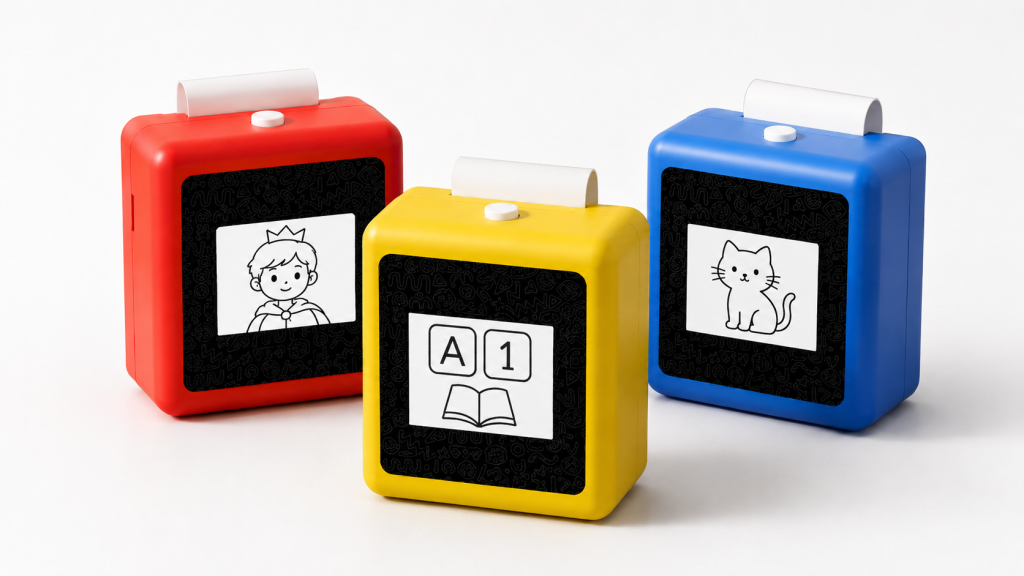
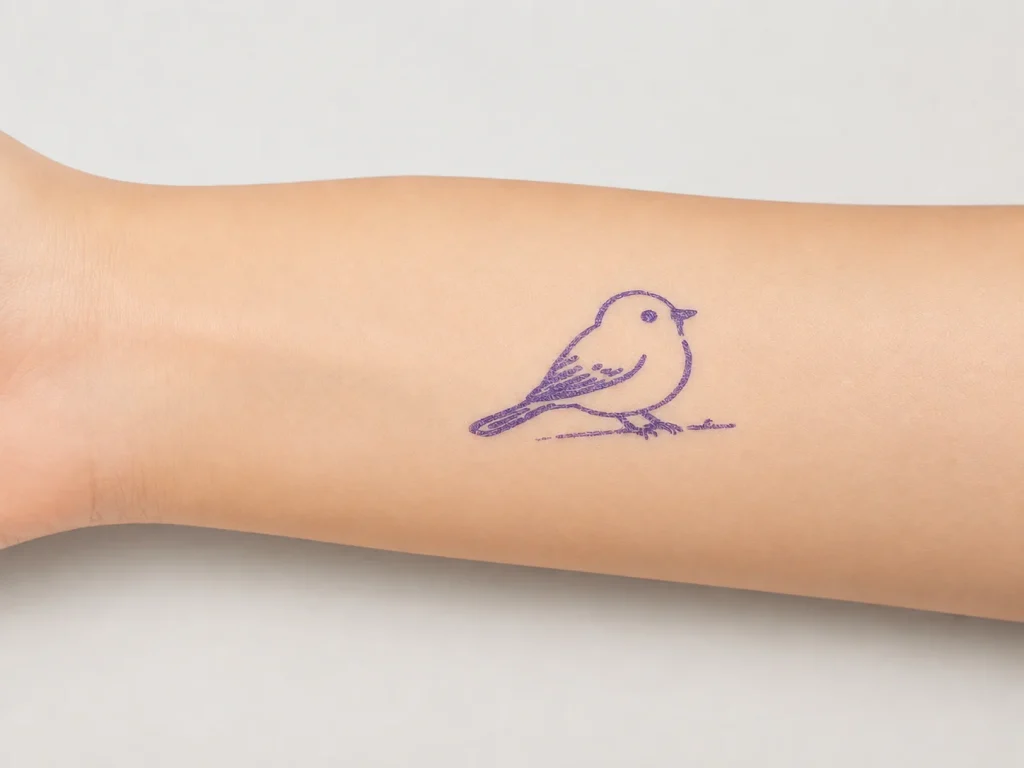
A custom tattoo printer OEM project is not a request to place a logo on a finished consumer device. For a brand entering the temporary-tattoo category, it is a sourcing program that must align hardware, connected AI workflow, transfer paper, packaging, market documentation, quality checks, and after-sales responsibilities. The K1 AI Tattoo Stencil Printer can be evaluated as a reference platform for that discussion: it combines connected AI line-art generation, 57mm thermal printing, and dedicated temporary-tattoo transfer paper. Before a brand requests a quotation, it should define what is standard, what needs customization, and what evidence is required before the product is represented to a channel or end customer.
What Buyers Should Know
- Private label is a project scope, not a universal feature list. Confirm branding, packaging, paper, software behavior, documentation, support, and market requirements separately.
- Test the complete user journey during sample review: network connection, prompt handling, line-art output, print readability, paper workflow, and user instructions.
- Define written acceptance criteria before discussing a pilot or production order; do not rely on feature names or informal demonstrations.
- Do not claim MOQ, lead time, certification, paper yield, compatibility, safety, or after-sales terms until they are documented for the selected version and market.
Where This Product Fits
| Entity | Role in the OEM evaluation |
|---|---|
| Brand | Yosiya |
| Reference platform | K1 AI Tattoo Stencil Printer |
| Category | Connected AI line-art, 57mm thermal-print, temporary-transfer solution |
| Potential buyer | Event-equipment brand, promotional-product business, entertainment operator, or private-label project team |
| Commercial path | Requirements brief → sample review → configuration and documentation review → pilot discussion → production planning |
K1 should be assessed as a configurable temporary-tattoo printing solution, not as a promise that every customization or commercial term is available by default. The product page identifies a connected AI line-art flow, thermal printing, dedicated transfer paper, and OEM/private-label discussion. The actual scope must be confirmed for the quoted configuration.
Start with a written OEM requirements brief
Many sourcing discussions begin with a logo request and only later reveal different expectations about paper supply, AI behavior, packaging language, client support, or documentation. A concise brief avoids that drift.
| Requirement area | Define in the brand brief | Confirm with the supplier |
|---|---|---|
| Target customer | Event operator, agency, rental business, promotion channel, or another defined user | Whether the selected configuration fits that workflow |
| Product promise | Temporary design-and-transfer workflow; approved use language | Exact functions demonstrated in sample and documentation |
| Brand presentation | Logo location, color direction, packaging language, manual and quick-start needs | Feasibility, artwork files, labeling scope, and implementation path |
| AI experience | Prompt boundaries, language needs, output review, connectivity expectations | Current AI flow, project-specific configuration, support ownership |
| Paper and consumables | Intended paper version, packaging concept, replenishment model | Paper specification, instructions, supply terms, and documentation |
| Quality and support | Acceptance criteria, defect-handling path, channel support needs | Inspection process, service scope, replacements, and after-sales terms |
The result does not need to be a long contract at the first call. It should be clear enough that a supplier can say which items are standard, which require engineering or commercial evaluation, and which cannot be promised yet.
Separate standard hardware from the configured project
The phrase “AI tattoo printer” can hide several different layers of work. The hardware can be stable while the connected design flow, language scope, packaging, paper choice, and end-market documentation differ by project.
- Standard product scope. Identify the currently confirmed design flow, 57mm thermal-print output, and temporary-transfer paper workflow.
- Sample scope. Test the device configuration actually offered for evaluation, including network connection and user instructions.
- Brand scope. Review logo, color, packaging, manuals, labels, and any client-facing materials required for the selected market.
- Service scope. Confirm who owns software behavior, support contact, paper replenishment, replacement handling, and escalations after launch.
- Production scope. Agree on acceptance criteria, inspection records, configuration control, shipment plan, and any project-specific commercial terms.
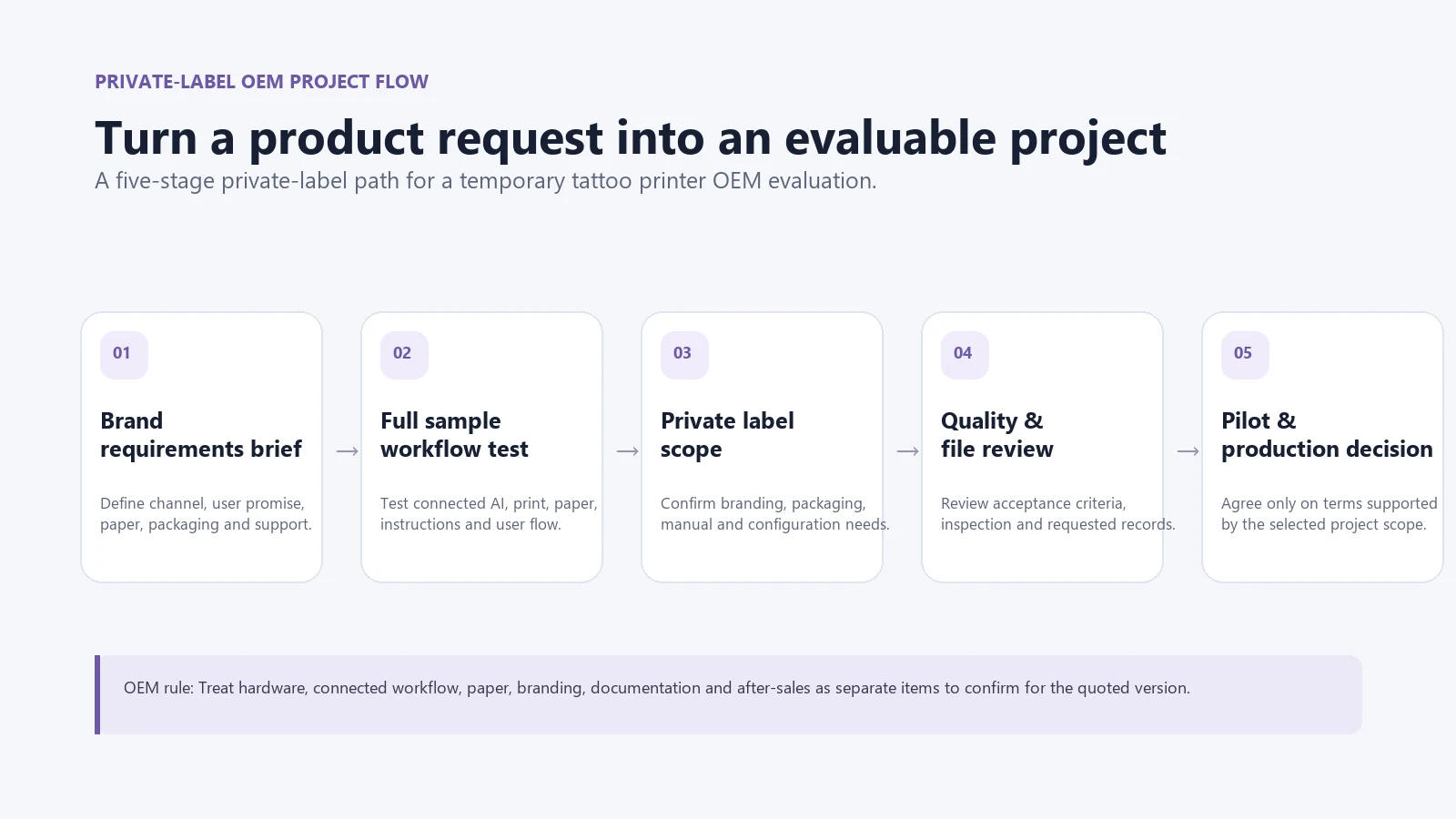
This separation is especially important for connected products. A buyer should not assume that a feature seen in a general product discussion is included in the version being quoted. The evaluation request should name the exact workflow the brand needs to demonstrate.
Create acceptance criteria before a pilot order
An OEM project gets more reliable when the buyer converts preferences into observable checks. ISO’s quality-assurance guidance describes the value of defined requirements, inspection, monitoring, and corrective action. Use those principles to make the sample review concrete.
| Acceptance area | Example of a useful written check |
|---|---|
| User workflow | The agreed sample can connect, accept the defined prompt flow, generate line art, print, and follow the documented transfer process. |
| Print and paper | The sample uses the specified paper version and the buyer receives the relevant loading and operating instructions. |
| Brand assets | Logo, packaging, manual, labels, and language requirements are marked as standard, custom, or pending. |
| Documentation | The supplier identifies which configuration-specific material, test, inspection, or compliance documents can be reviewed. |
| Quality handoff | The parties define sample feedback, corrective-action ownership, pilot acceptance, and version changes. |
| Commercial handoff | MOQ, lead time, spare parts, paper replenishment, warranty, and after-sales obligations are confirmed only in the project agreement. |
ISO/CASCO notes that conformity assessment can combine testing, inspection, evaluation, and supporting documentation. A supplier declaration is one input, not a replacement for reviewing the evidence relevant to your version and market. See ISO/CASCO’s conformity-attestation guidance.
Plan paper supply as part of the private-label offer
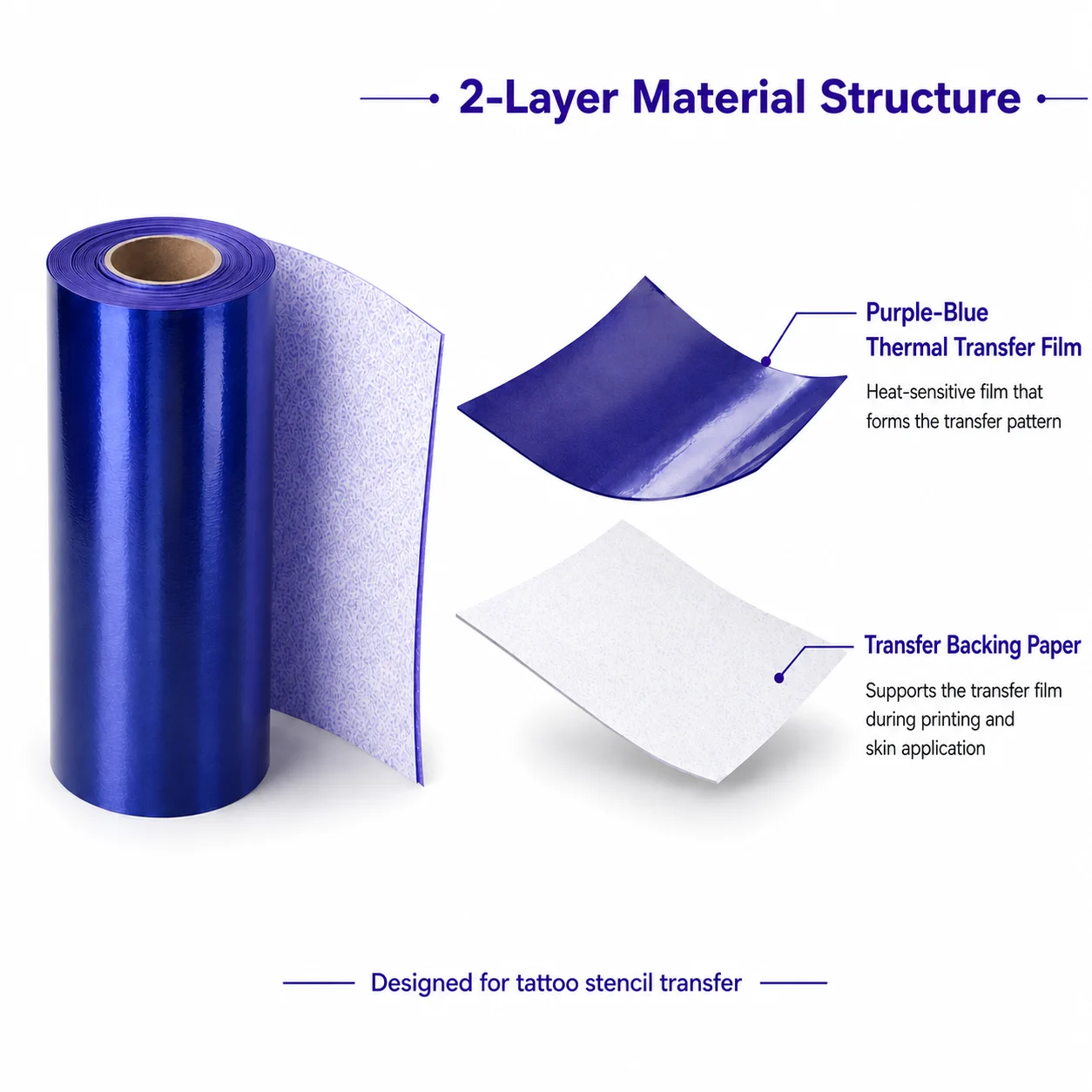
For a temporary-tattoo printer, paper is part of the customer experience, not an afterthought. A brand should decide how the selected transfer paper will be packaged, instructed, replenished, and described in its channel materials.
Ask the supplier to clarify:
- Which dedicated transfer-paper version matches the proposed workflow.
- What instructions, material information, and test records are available for that version.
- How paper packaging, labeling, and replenishment can be handled for the target channel.
- Which numbers still require project confirmation, including roll dimensions, print yield, order quantity, price, and lead time.
Avoid calling third-party paper compatible unless it has been tested and confirmed for the intended configuration. Avoid safety or skin-contact claims unless the relevant documentation and target-market review support them.
Define the responsibility map before launch
A private-label buyer needs more than a product carton. It needs a clear handoff between brand, supplier, logistics partner, and customer-support owner.
| Party | Typical responsibility to clarify |
|---|---|
| Brand | Channel positioning, customer claims, packaging approval, sales materials, and local-market review |
| Supplier | Quoted configuration, sample availability, manufacturing information, agreed inspections, and agreed service scope |
| Logistics partner | Shipment handling, document requirements, and carrier confirmation where applicable |
| Support owner | User guidance, issue intake, software or workflow escalation, replacement process, and paper replenishment path |
If the project includes battery-powered hardware, transport requirements should be verified before fulfillment planning. IATA’s lithium-battery guidance provides a general reference; final packaging, documentation, and carrier requirements depend on the actual shipment.
Common private-label mistakes to avoid
- Treating a sample demonstration as proof of every future configuration.
- Approving packaging before the product scope, paper version, and customer instructions are settled.
- Publishing certification, safety, or performance language without version-specific evidence.
- Leaving cloud or connected-workflow support ownership undefined.
- Adding commercial numbers to a sales deck before MOQ, lead time, supply, and after-sales terms are agreed.
- Waiting until after a pilot to decide who handles feedback, defects, returns, and paper replenishment.
For a formal solution-level checklist, see Tattoo Stencil Printing Solution: A B2B Evaluation Checklist. For a buyer-facing explanation of the temporary-tattoo printer category, see Temporary Tattoo Printer for Businesses: Beyond DIY Kits.
A practical next step
Prepare a one-page requirements brief and ask for a sample evaluation against it. The document should list the target channel, connected AI workflow to be tested, paper version, branding scope, documentation requests, acceptance checks, and unanswered commercial questions. Then discuss a pilot or production path only after the sample and requirements align.
Explore the K1 AI Tattoo Stencil Printer to review the current reference scope and begin an OEM/private-label evaluation.
FAQ
What does custom tattoo printer OEM mean?
It means evaluating a supplier relationship for a branded temporary-tattoo printing product, including the hardware, connected design workflow, paper supply, packaging, documentation, quality checks, and after-sales scope. It is more than adding a logo to a device.
Can I private-label an AI temporary tattoo printer?
Private-label options should be discussed against the selected project. Confirm which branding, packaging, paper, software, documentation, and support elements are included or configurable before making a market promise.
What should I test in an OEM sample?
Test the connected design flow, line-art output, 57mm print, selected paper workflow, user instructions, brand-asset scope, documentation requests, and any acceptance criteria relevant to your target channel.
How should I evaluate tattoo transfer paper for a private-label project?
Confirm the dedicated paper version, instructions, available documentation, packaging approach, and replenishment path. Treat yield, cost, compatibility, order quantity, and lead time as project-specific details until confirmed.
What should be agreed before a pilot or production order?
Agree on the quoted configuration, sample acceptance criteria, design and packaging scope, documentation review, inspection approach, service responsibilities, supply path, and commercial terms relevant to the target market.