
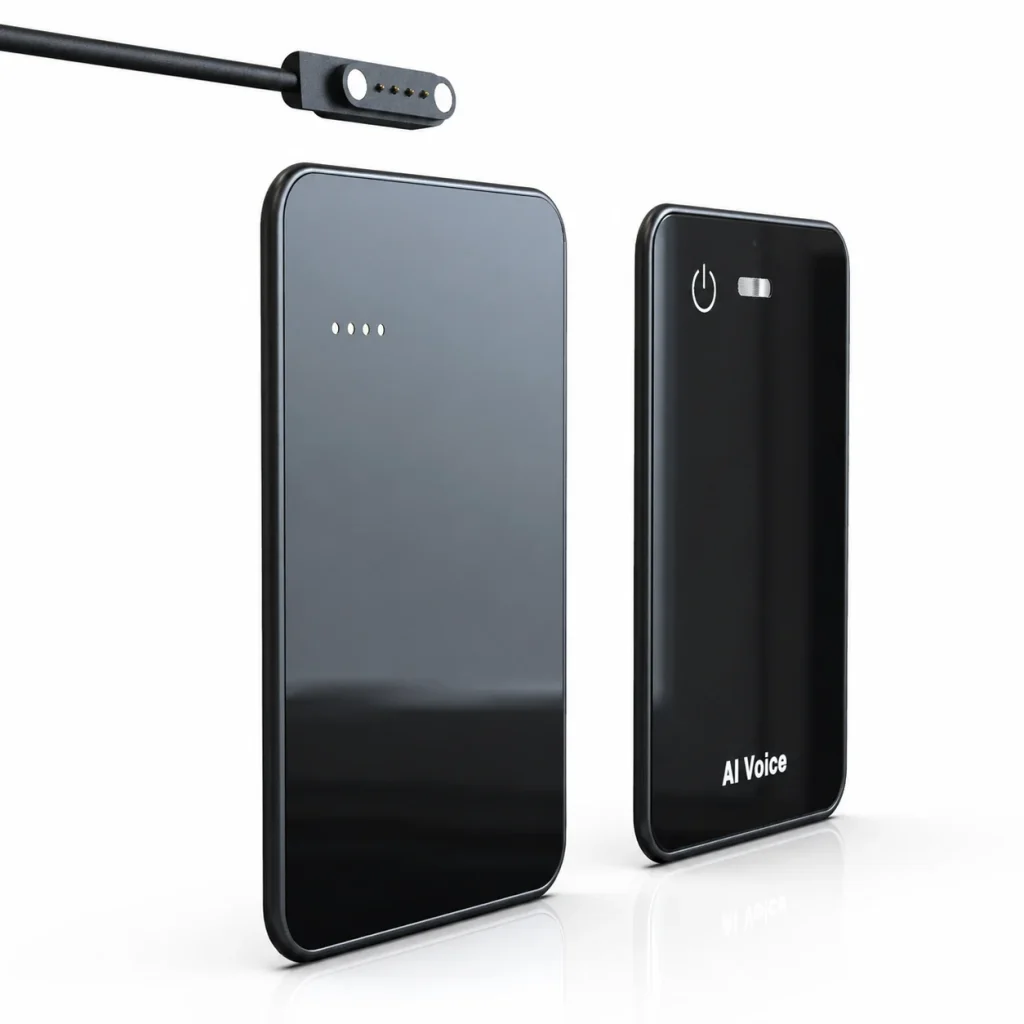
A Plaud Note alternative means something different to a hardware brand than it does to an individual buyer. A user may want another recorder with a different form factor or subscription. A brand may need its own product identity, storage range, packaging, application scope, service responsibility, certification plan, and production controls. Those are three separate routes: buy a retail device for internal use, resell an authorized finished product, or develop a private-label/OEM recorder. The right choice depends on who owns the customer relationship and how much product responsibility the organization is prepared to carry—not on which specification table has the most checkmarks.
What Buyers Should Know
- A consumer alternative list does not answer private-label, packaging, support, and ownership questions.
- Retail purchase, authorized resale, and OEM development have different rights and responsibilities.
- Hardware, app, AI service, data handling, certification, and after-sales scope should be written separately.
- A configurable reference platform is not permission to assume every option is included in every order.
- Compare samples and commercial documents, not unsupported claims about accuracy or compatibility.
Where This Product Fits
| Entity | Commercial role |
|---|---|
| Plaud Note | Plaud-branded retail card-style recorder with an established app and AI membership workflow |
| Yosiya MG6 | Card-style AI recording reference platform for OEM/ODM and private-label evaluation |
| Brand or channel buyer | Owns product positioning, approved claims, support route, and target-market launch |
| AI service | Supplies project-selected transcription and other connected functions |
Plaud’s official Note and NotePin comparison describes Plaud Note as a card-sized device for meetings and phone calls. The MG6 product page describes a 2.6mm card-sized OEM/ODM reference platform with offline WAV recording, configurable storage, and connected AI meeting services. These sources establish different commercial models; they do not imply a partnership, compatibility, or authorization between the brands.
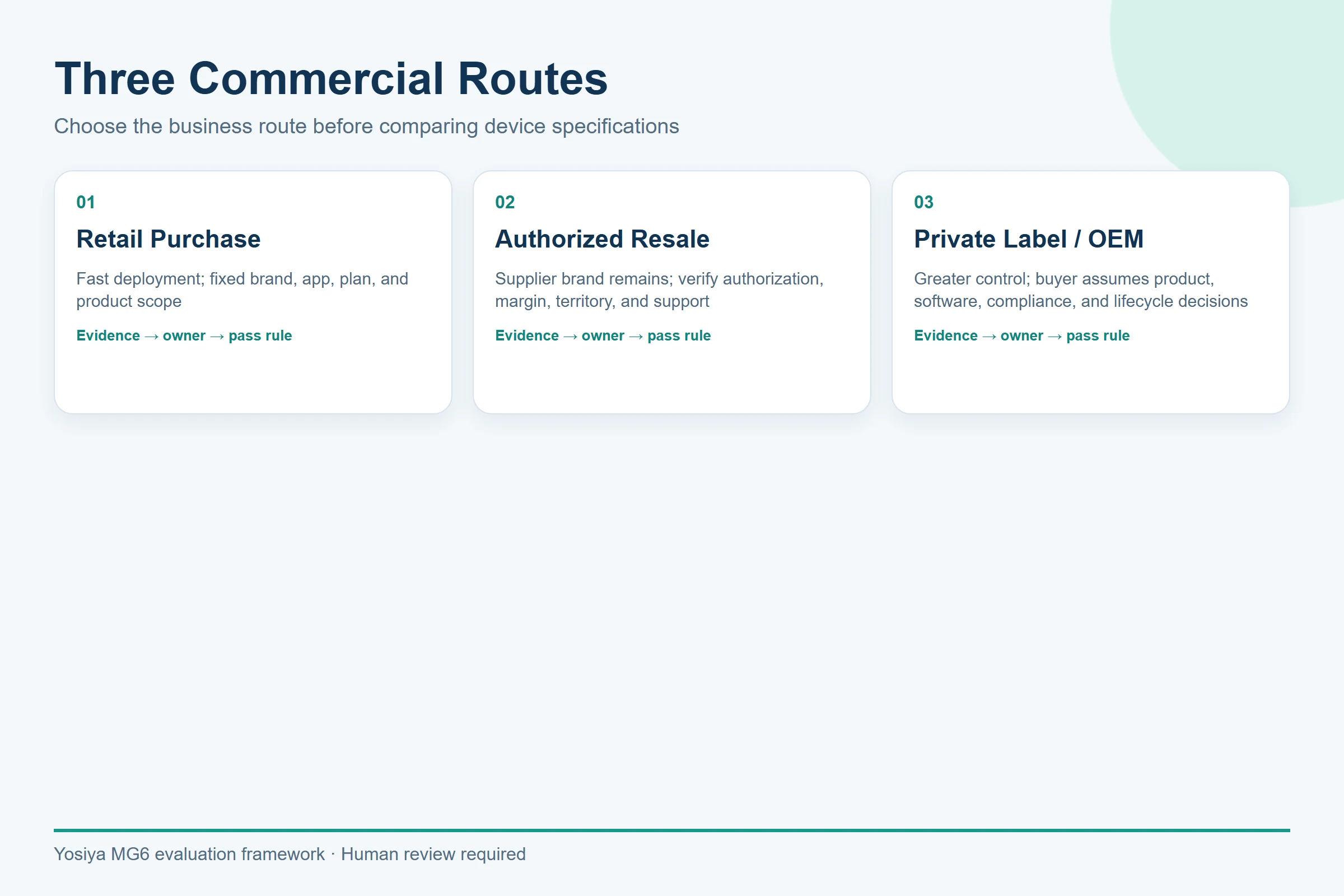
Define Which “Alternative” You Need
If the route itself is still unresolved, use the Plaud Note vs OEM build-or-buy framework before comparing supplier specifications. If the requirement is primarily physical form factor, compare Plaud Note, NotePin, and a card-style OEM platform separately from the commercial-route decision.
| Route | Suitable fit | Main advantage | Main limitation |
|---|---|---|---|
| Retail purchase | Teams needing finished devices now | Fastest deployment and known ecosystem | Little control over brand, hardware, packaging, or roadmap |
| Authorized resale | Channels that secure written commercial rights | Faster market entry with an existing product | Brand and commercial terms remain supplier-controlled |
| Private label / OEM | Brands building their own recorder SKU | Control over selected product and channel elements | Requires specification, testing, documentation, support, and production work |
Do not treat resale as automatic. The absence of public OEM information on a retail page does not prove that a company never offers commercial partnerships. Ask the brand directly and obtain written terms.
Map Hardware, Software, AI, and Data Ownership
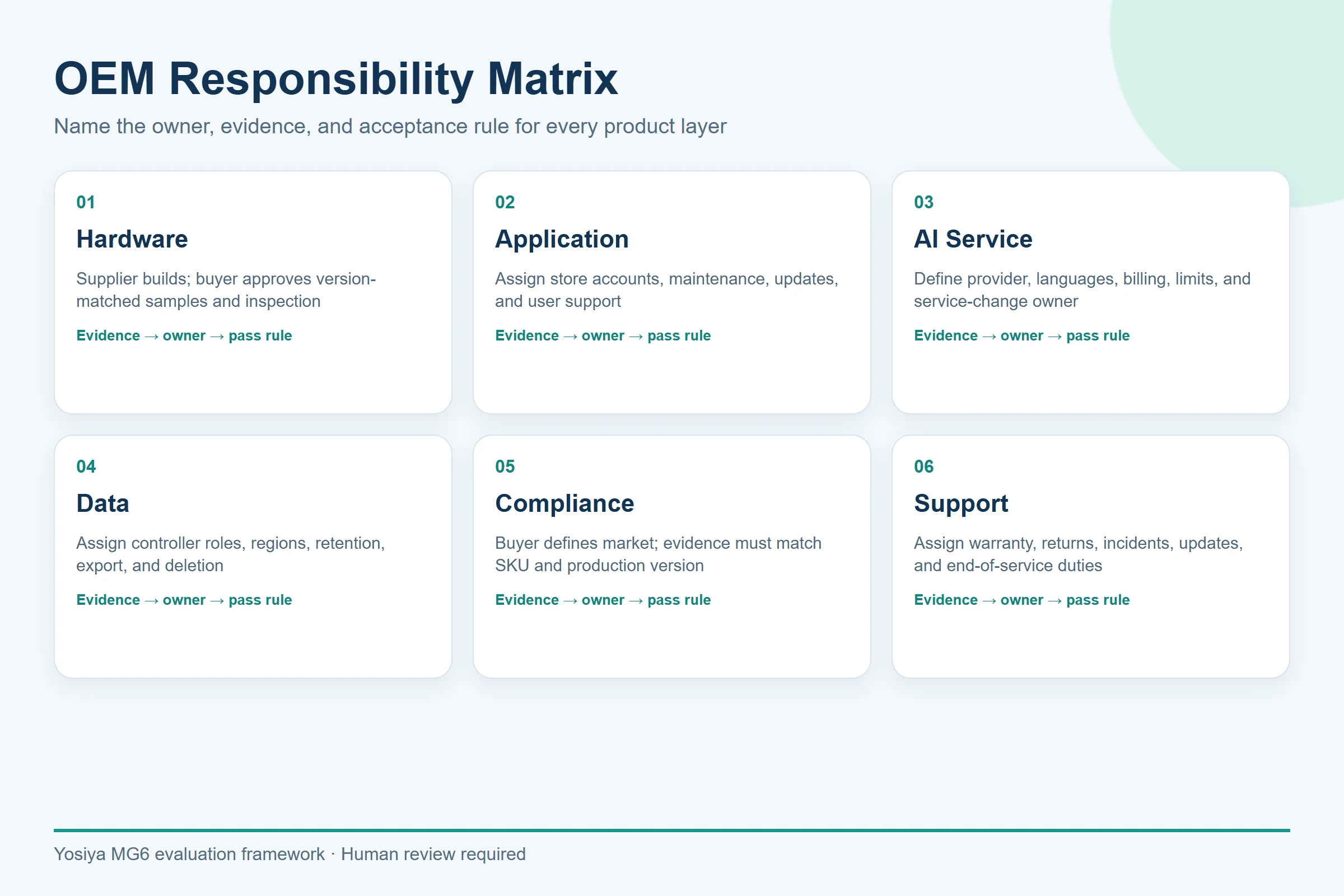
This is where many sourcing conversations become too vague. “Custom app” can mean a changed logo, a configured interface, a separate app build, or a completely different software responsibility. “AI included” can mean a trial allowance, a recurring service, a third-party account, or a project-specific commercial arrangement.
Create a responsibility matrix covering:
- Device design, firmware, storage, accessories, and quality inspection.
- App identity, store accounts, releases, compatibility, and maintenance.
- AI provider, languages, usage allowance, pricing, and service continuity.
- Audio, transcript, account, retention, deletion, and subprocessor rules.
- Packaging, manuals, privacy wording, certifications, warranty, and support.
NIST’s meeting-privacy guidance emphasizes minimizing unnecessary recording and protecting stored recordings. For an OEM product, these controls need to be translated into an actual device-to-service data-flow design. A hardware sample alone cannot prove the connected-service policy.
Compare OEM Product Architectures
Private label and OEM describe a commercial route, not one fixed product architecture. A brand can source a simpler traditional recorder, evaluate a connected AI platform, or commission a more extensively developed system.
| OEM product scope | Suitable use | Main advantage | Main limitation to manage |
|---|---|---|---|
| Traditional white-label recorder | Local audio capture and channels that do not require an integrated AI service | Simpler software responsibility and lower connected-service dependency | Transcription, summaries, and searchable follow-up require a separate workflow |
| Connected AI recorder platform | Brands building an audio-to-AI product and service | Hardware, local files, app scope, and connected AI can be planned as one system | More decisions about accounts, recurring service, data handling, updates, and support |
| Custom-developed recorder system | Strategic programs requiring deeper differentiation | Greater control over selected hardware, software, and product experience | Highest engineering, validation, schedule, documentation, and lifecycle responsibility |
Traditional recorders are not inherently inferior. They can be the more appropriate choice when reliable local capture and ordinary file handling matter more than an integrated AI workflow. Buyers who need a clearer category model can review what makes a voice recorder meaningfully smart before defining the OEM scope.
Evaluate MG6 as a Reference Platform
The MG6 reference configuration includes two omnidirectional microphones, a hardware noise-reduction algorithm, offline WAV capture, Bluetooth, magnetic charging and file transfer, 8GB to 128GB storage options, and connected AI services. Logo, color, packaging, storage, and selected software requirements can be discussed by project.
Those facts should remain conditional. The selected storage SKU, application scope, AI plan, language coverage, data handling, target-market documents, MOQ, and production schedule must be confirmed in the quotation and specification. Hardware noise reduction is not “AI noise cancellation,” and offline recording is not offline transcription.
The sourcing process should also distinguish conformity evidence. ISO/CASCO’s explanation of attestations of conformity helps buyers understand why a supplier statement, test report, inspection result, management-system certificate, and product certification are not interchangeable.
Use a Sample-to-Launch Gate
- Freeze the intended customer, channel, use cases, and price position.
- Define the hardware, app, AI, data, packaging, and support responsibility matrix.
- Test source audio, controls, battery, storage, transfer, and connected functions.
- Review branding, manuals, privacy language, and claims.
- Confirm target-market documents against the selected model and configuration.
- Approve pilot inspection criteria and change control.
- Launch only after after-sales ownership and recurring service costs are documented.
The existing AI voice recorder OEM sourcing checklist provides a deeper sample-to-production framework. Buyers should use it with the project quotation rather than relying on a generic competitor list.
Questions for the Supplier Review
- Which components and functions belong to the standard sample?
- Which changes require engineering work, new tooling, or a higher quantity?
- Who owns and maintains the app listing and user accounts?
- Which AI provider, languages, allowances, and recurring charges apply?
- Can original audio be exported as ordinary files?
- Which model-specific test and compliance documents are available?
- Who handles warranty, updates, customer support, and service discontinuation?
- What changes between sample, pilot, and mass production?
FAQ
What counts as a Plaud Note alternative?
For an individual, it may be another hardware recorder, wearable, phone app, or meeting tool. For a brand, it may instead be a private-label/OEM platform that supports a distinct product and channel strategy.
Can a brand private-label an AI voice recorder?
Yes, when a supplier offers a documented private-label or OEM scope. For MG6, selected logo, color, packaging, storage, and software requirements can be discussed, but availability and terms depend on project review.
What can be customized on MG6?
The confirmed discussion scope includes branding, color, packaging, storage, accessories, and selected software requirements. Do not assume every change is standard; confirm quantity, engineering, schedule, and document impacts.
Who owns the app and AI service in an OEM project?
There is no universal answer. The quotation and responsibility matrix should identify app accounts, releases, provider contracts, AI allowances, data obligations, support, and continuity for the selected project.
How should a brand test an AI recorder sample?
Freeze the configuration, run repeatable recording and transfer tests, review original audio, validate connected outputs, document failures, and convert approved results into pilot and production acceptance criteria.
Choose the Commercial Route Before the Device
A useful Plaud Note alternative for a brand is not simply another object with similar dimensions. It is a commercial path that matches the brand’s control, speed, investment, software, compliance, and support capacity. To assess MG6 as an OEM/ODM reference platform, request an MG6 OEM/ODM project review, including a sample, responsibility matrix, and project quotation.
Plaud and Plaud Note are trademarks of their respective owner. Yosiya is not presented as affiliated with, authorized by, or compatible with Plaud.


