
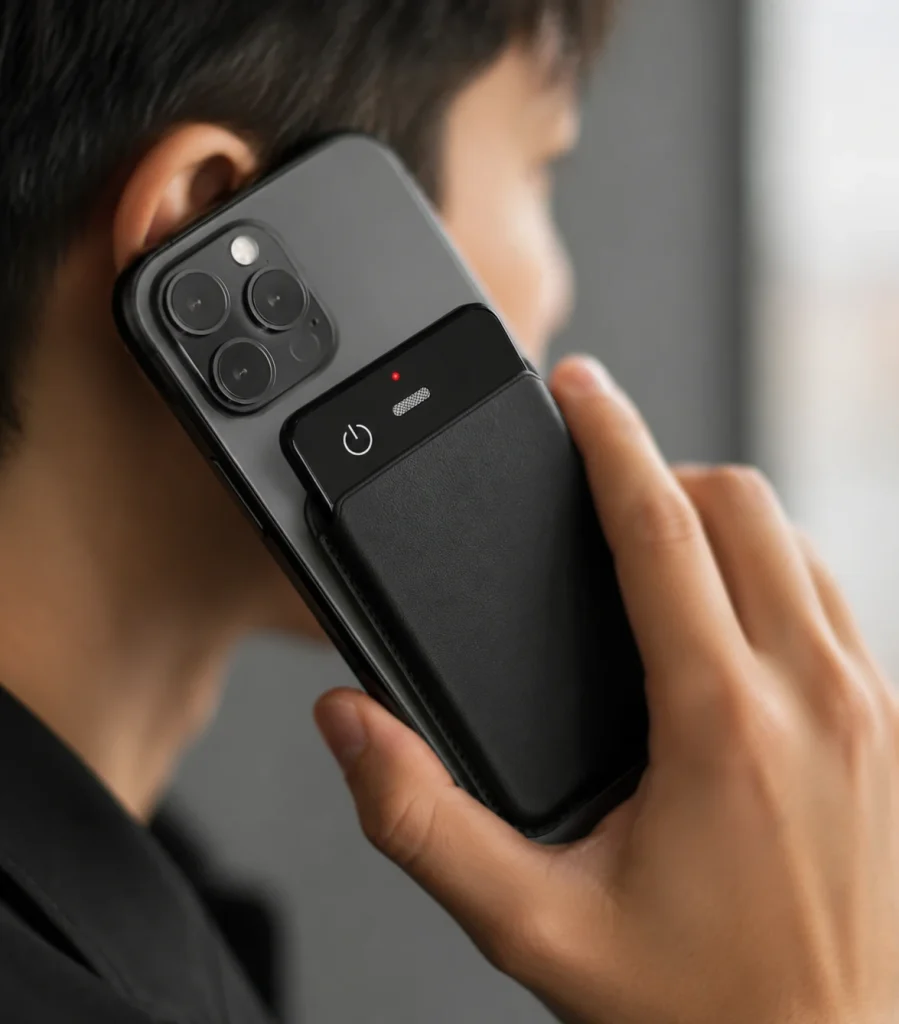
Plaud Note and Plaud NotePin are designed for different recording habits. Plaud Note is a slim card-style device for meetings and phone calls, while NotePin is a small wearable for hands-free, in-person capture and does not support phone-call recording. A third option is an OEM card-style platform such as MG6 for brands that need local WAV capture, configurable storage, packaging, and selected software scope. This is therefore a workflow and form-factor comparison—not a claim that three equivalent retail products are sold under the same commercial model. The practical choice depends on where conversations happen, whether phone calls matter, how the device should be carried, who owns the software workflow, and whether the buyer is equipping users or developing a branded product.
What Buyers Should Know
Use the workflow and commercial model as the first filters. Phone-call support, wearable placement, local-file handling, and private-label responsibility matter more than superficial similarity.
Where This Product Fits
| Decision factor | Plaud Note | Plaud NotePin | MG6 card-style OEM platform |
|---|---|---|---|
| Primary form | Slim card-style retail device | Small wearable retail device | Slim card-style OEM/ODM reference platform |
| Main workflow | Meetings and phone calls | Hands-free in-person conversations | Local WAV capture, phone magnetic workflow, and project-selected connected AI |
| Phone-call recording | Supported in Plaud’s dual-mode workflow | Not supported | Start MG6 recording and attach through the magnetic card sleeve; test selected phone/case conditions |
| Wearable | No, card-style | Yes, with wearing accessories | Not a confirmed wearable product |
| Storage model | Published retail configuration | Published retail configuration | 8GB, 16GB, 32GB, 64GB, or 128GB project options |
| Battery reference | Confirm current published specification | Confirm current published specification | 370mAh; up to 22 hours under applicable conditions |
| Enclosure and body | Confirm current published protection claims | Confirm current published protection claims | 2.6mm full-bonded reference body designed for IP68 water resistance; verify version-matched evidence |
| Commercial model | Plaud retail ecosystem | Plaud retail ecosystem | Private label and OEM/ODM project evaluation |
Plaud’s official comparison is the primary source for its product distinction. It states that Note supports meetings and phone calls, while NotePin is wearable and optimized for in-person recording. Plaud also states in its NotePin recording instructions that NotePin does not support phone-call recording.
Choose Plaud Note for Calls and Table Meetings
For a detailed retail-versus-OEM comparison rather than a form-factor comparison, use the MG6 vs Plaud Note buyer guide. Keep that commercial decision separate from whether a wearable or card-style device fits the recording job.
Plaud Note fits a user who wants a finished card-style product for a mix of meetings and phone calls and accepts Plaud’s app, membership, account, and file workflow. Its magnetic setup and vibration-conduction sensor are part of Plaud’s published call-recording design.
Before purchase, confirm current product version, plan allowances, export behavior, supported languages, privacy terms, and device compatibility on Plaud’s official pages. These details can change and should not be copied from an old comparison article.
Treat phone-call recording as a workflow to verify, not a label alone. Check how the device attaches to the selected phone and case, how recording starts and stops, whether the user receives clear feedback, where the original audio appears, and which notices or consent steps apply. Run this check with the actual phone models that will be used; magnetic placement and operating steps should not be assumed to behave identically across every setup.
Plaud Note may be less suitable when hands-free wearable access is a non-negotiable requirement. A card can be placed on a table or attached in a supported phone workflow, but that is different from wearing a recorder during a moving conversation. Buyers should decide whether phone-call support or wearable placement is the harder requirement before comparing secondary features.
Choose NotePin for Wearable In-Person Capture
NotePin fits users who want hands-free access during walk-and-talks, field visits, interviews, and other face-to-face conversations. The official NotePin page describes magnetic pin and clip options and positions the device around wearable capture.
Wearability changes microphone position and social visibility. It does not remove the need for notice and permission. Test clothing noise, movement, speaker distance, battery, start/stop feedback, and transfer in the intended activity.
Before purchase, reproduce the activity rather than testing only in a quiet room. A clip on a jacket, a pendant position, and placement near a moving collar can create different source audio. Confirm that participants can recognize when recording is active and that the wearer can operate the device without repeatedly touching it and adding handling noise.
NotePin is not the direct answer when approved phone-call recording is essential, because Plaud’s documentation excludes that workflow. It can still fit walk-and-talk interviews, site visits, field notes, or other hands-free in-person use. The decision should be based on the dominant conversation type, not on an assumption that the smaller device is automatically more versatile.
Evaluate MG6 for a Branded Card-Style Project
MG6 is not a retail substitute presented as a Plaud product. It is a Yosiya reference platform for private-label and OEM/ODM evaluation. The official MG6 page confirms:
- 54 × 85 × 2.6mm card-style reference dimensions.
- Two omnidirectional microphones and a hardware noise-reduction algorithm.
- Offline WAV recording and storage options from 8GB to 128GB.
- Bluetooth and magnetic charging/data transfer.
- A 370mAh battery and up to 22 hours of working time under applicable conditions.
- A 2.6mm seamless full-bonded reference body designed for IP68 water resistance.
- Connected transcription, real-time translation, summaries, and mind maps under the selected service scope.
- A magnetic card-sleeve workflow for attaching MG6 to the back of a compatible phone during approved phone recording.
MG6 should not be called wearable. Its phone-recording performance, compatibility, battery result, AI languages, accuracy, service plan, and certification package require project-specific confirmation. The IP68 wording also needs discipline: buyers should obtain version-matched test documentation and confirm the supported depth, duration, configuration, and marketing language before making a production claim.
Brands that have not yet decided between retail purchase, resale, white-label sourcing, and private-label development should first compare the available Plaud Note alternative routes. MG6 belongs in this comparison only after an OEM/ODM project is a plausible route. It is a reference platform to sample and qualify, not evidence that every configuration, app scope, or document package is already approved.
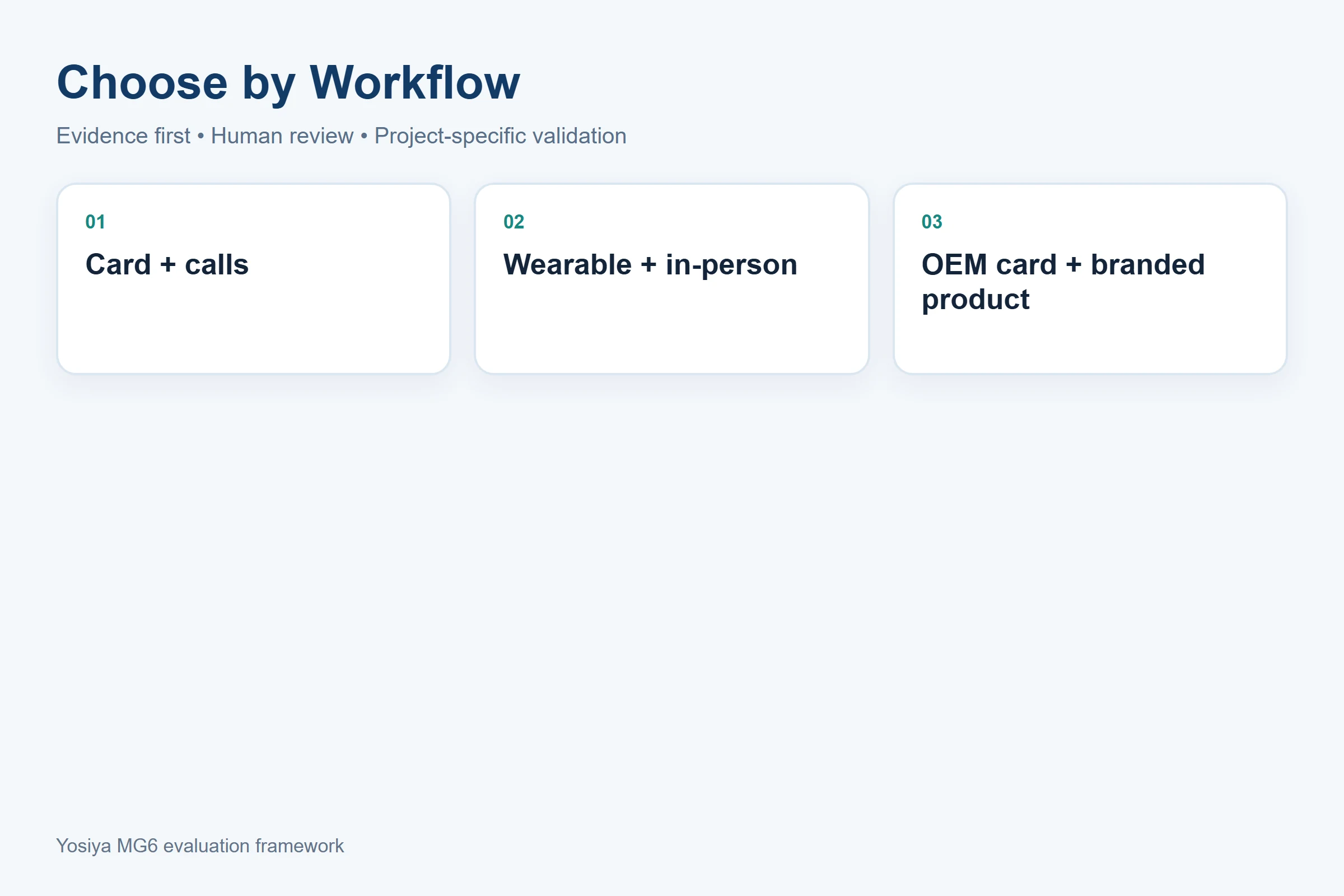
Compare Workflows Before Specifications
Ask these questions in order:
- Are most conversations phone calls, seated meetings, or mobile face-to-face interactions?
- Does the user want a card on a table/phone or a wearable device?
- Is the buyer purchasing finished devices or developing a branded product?
- Must original audio remain available as ordinary local files?
- Which application, AI plan, languages, data handling, and export rules are acceptable?
- How will notice, consent, access, retention, and deletion be managed?
Readers who need a broader explanation of local capture, hardware processing, connected services, and software dependencies can review what makes a smart voice recorder hardware platform. That distinction matters here because offline WAV recording does not mean offline transcription, and a hardware noise-reduction algorithm is not the same claim as AI noise cancellation.
NIST’s meeting-privacy guidance recommends recording only when necessary and protecting stored recordings. The guidance is not product-specific, but it reinforces why every option needs an operating policy, not only a feature list.
Run a Matched Sample Test
Do not infer audio quality or transcription accuracy from microphone count, weight, or form factor. Shure’s microphone fundamentals show why placement and directionality affect source capture.
Use the same speakers, room, vocabulary, distance, and task for every device. Test:
- A seated meeting with overlapping speakers.
- A walking conversation with clothing and handling movement.
- An approved phone call where the device supports it.
- File transfer and original-audio access.
- AI output for names, numbers, decisions, and specialist vocabulary.
- Battery and storage across the actual workday.
Record the device version, firmware, application version, account plan, accessories, network state, and test date. Without that configuration record, later comparisons can mix different conditions and produce a confident-looking but unreliable conclusion.
Use acceptance criteria tied to the task. Names, numbers, commitments, source-audio intelligibility, transfer completion, and correction effort are more useful than a single undocumented “accuracy” score. Keep the raw audio, original AI output, corrected output, test notes, and configuration record together so reviewers can trace every conclusion.
The AI voice recorder sample-testing guide provides a fuller evidence chain for sample identification, repeatable scenarios, task-based AI review, battery observation, and production acceptance criteria. Apply the same method to every candidate rather than giving one device a quiet-room test and another a moving field test.
FAQ
What is the main difference between Plaud Note and NotePin?
Plaud Note is a card-style device for meetings and phone calls. NotePin is a wearable device for hands-free, in-person capture and does not support phone-call recording, according to Plaud’s official documentation.
That difference can become an early decision gate. If approved phone-call recording is essential, NotePin does not meet the stated workflow. If hands-free placement during moving, face-to-face conversations is essential, test NotePin in the exact wearing position instead of assuming a card-style device provides the same interaction.
Which Plaud device records phone calls?
Plaud Note supports Plaud’s phone-call recording workflow. NotePin does not include the VCS call-recording design and is documented for in-person recording.
Buyers should still confirm the current Plaud product version, supported phone setup, attachment method, operating instructions, plan terms, and local consent requirements. “Supports calls” does not establish identical performance or compatibility for every phone and case. Use a disclosed test call with representative devices before wider deployment.
Which option is wearable?
Plaud NotePin is wearable with pin, clip, and related accessories. Plaud Note and MG6 are card-style devices; MG6 should not be described as a confirmed wearable product.
Wearable does not mean placement-independent. Test the intended accessory, clothing material, movement, speaker distance, start/stop feedback, and visibility to participants. A wearable can improve access while also introducing clothing noise or a less stable microphone position, so the activity must be reproduced realistically.
Which option fits private-label development?
MG6 is positioned for private-label and OEM/ODM evaluation. Plaud’s public pages describe its branded retail products; do not infer Plaud’s resale or OEM policy from those pages.
An MG6 sample is only the beginning of that evaluation. The buyer should freeze the configuration, define app and AI responsibilities, inspect version-matched compliance evidence, test representative workflows, and allocate warranty and update duties. Exact MOQ, customization, schedule, pricing, and documentation must be confirmed in writing for the selected project.
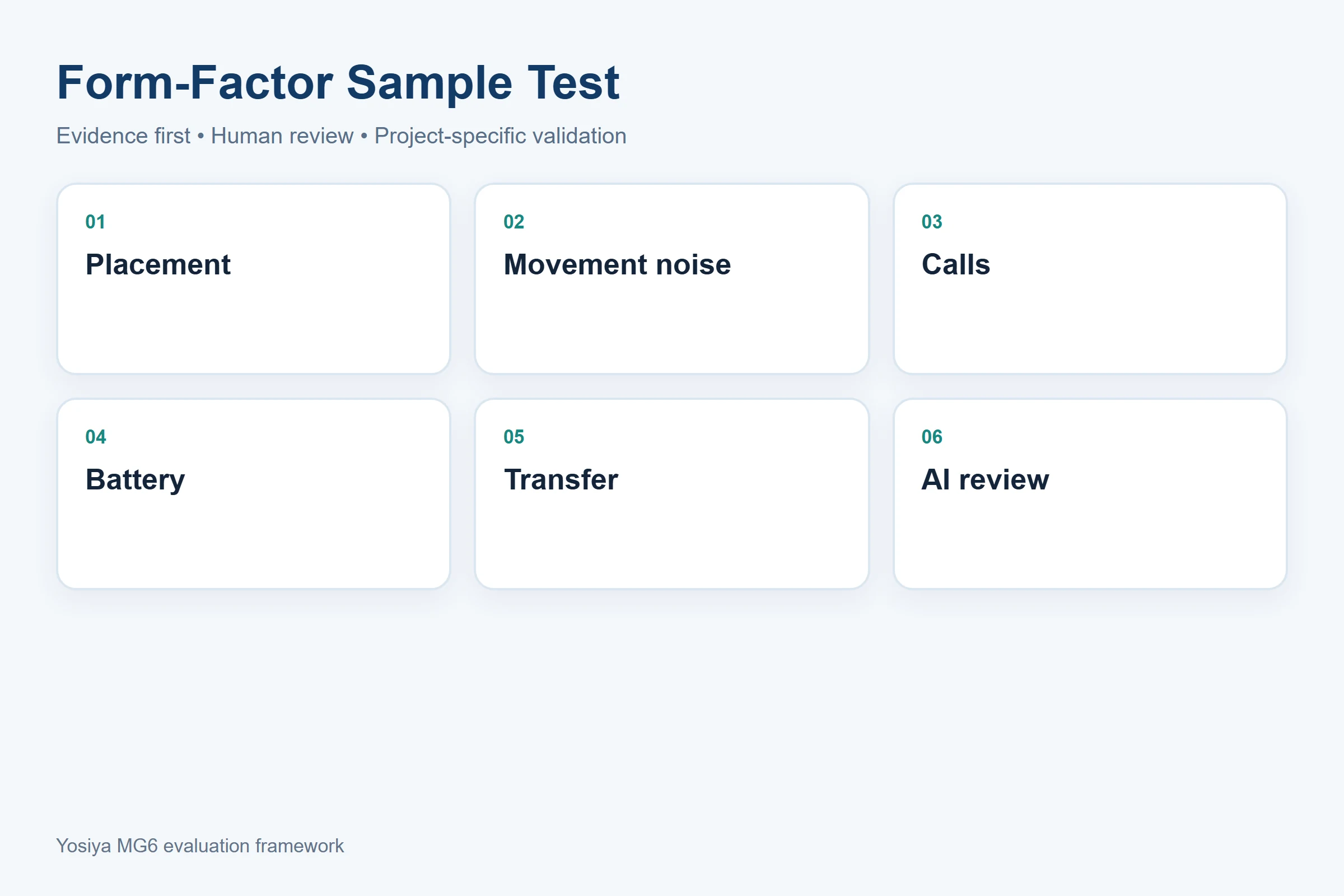
What should buyers test before choosing a form factor?
Test placement, movement noise, start/stop interaction, phone-call workflow where applicable, battery, storage, transfer, source-audio usability, AI review effort, and consent visibility in representative scenarios.
Use the same speakers, vocabulary, room, distance, phone setup, accessories, network state, and review rubric for each applicable candidate. Record device, firmware, app, account plan, configuration, and test date. Preserve raw audio and corrected AI output so the decision can be audited rather than relying on memory or a polished summary.
Pick the Recording Habit, Then the Device
There is no universal winner between a call-focused card, a wearable recorder, and an OEM card-style platform. Match the form factor and commercial model to the actual workflow. Buyers developing a branded card-style recorder can request an MG6 sample and project review; individual buyers should verify current Plaud specifications and plan terms directly with Plaud.
Plaud and its product names are trademarks of their respective owner. Yosiya is not presented as affiliated with or authorized by Plaud.


