
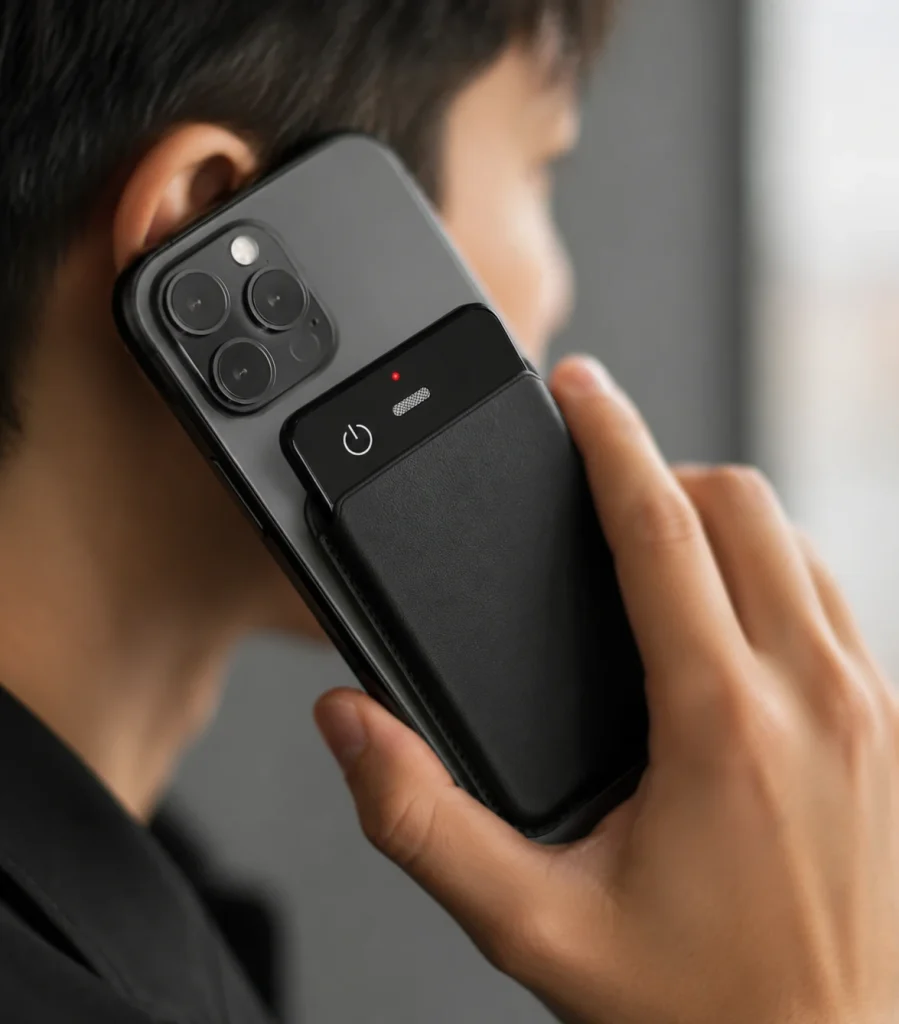
A private label voice recorder launch should begin with a frozen use case, a controlled product configuration, and a claim-to-evidence file. Before inventory is committed, the brand should approve packaging, instructions, connected AI terms, support ownership, compliance evidence, pilot results, replacement handling, and replenishment triggers. MG6 can serve as a card-sized OEM/ODM recording platform, but branding, storage, packaging, selected software, AI-service scope, quantity, and schedule must be confirmed for the project. A launch date should follow acceptance evidence rather than drive unfinished claims into market.
What Buyers Should Know
- Define the buyer and recording workflow before selecting messages or packaging.
- Freeze a reference configuration that sales, quality, and support can identify.
- Link every customer-facing claim to evidence for that exact configuration.
- Separate offline recording from connected transcription, translation, and summaries.
- Run a controlled pilot before placing broad channel inventory.
- Keep version and lot traceability after the first replenishment.
Start with one launch hypothesis
Write a one-page hypothesis: who will buy, what they record, where they use it, how files move, which AI outputs matter, who pays for connected service, and what outcome justifies the purchase. A marketplace listing for individual professionals requires different instructions and support from an enterprise program distributed through resellers.
Avoid a generic promise that the device is for every meeting. Name the primary environment, such as interviews, client visits, lectures, or internal meetings, and identify excluded uses. This gives the sample test, claims file, packaging, support scripts, and launch metrics a common reference.
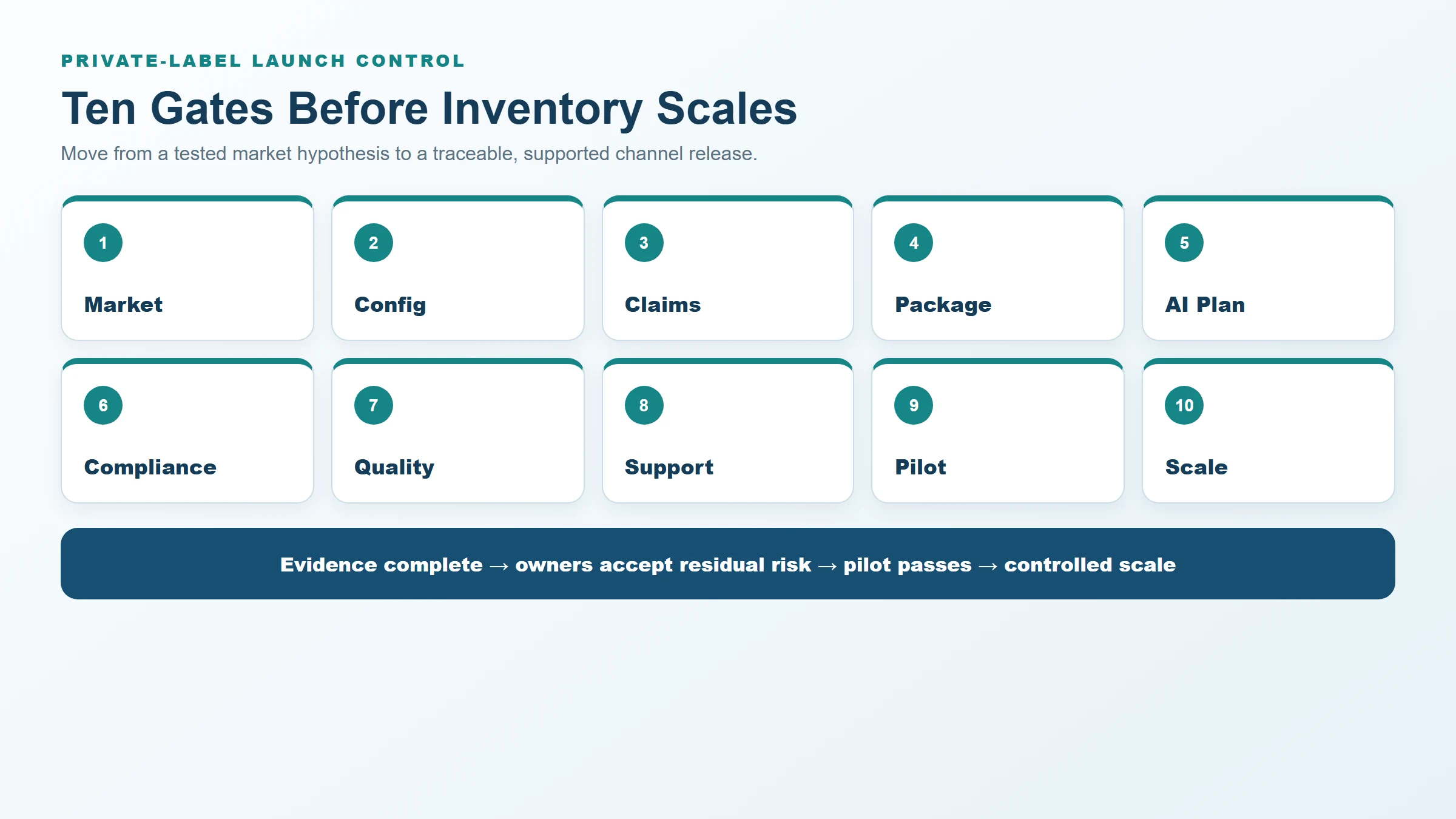
| Launch gate | Decision to define | Evidence before release |
|---|---|---|
| Target account | Buyer, user, use case, channel, and expected environment | Approved segment brief and exclusions |
| Product configuration | Recorder, storage, accessories, finish, packaging, and selected software | Frozen sample and signed configuration record |
| Claims | Recording, transfer, connected AI, compatibility, privacy, and service statements | Claim-to-evidence file with owner and review date |
| Brand assets | Logo, colors, labels, manual, inserts, and digital listings | Approved artwork files and physical proof |
| AI service | Provider, account, region, languages, limits, retention, billing, and support | Project-specific service schedule and acceptance results |
| Compliance | Market, importer, radio, labeling, battery, packaging, and channel requirements | Applicable evidence reviewed by a qualified owner |
| Quality | Golden sample, inspection plan, test limits, defects, and change control | Accepted criteria and inspection records |
| Support | Setup, troubleshooting, escalation, replacement, warranty, and data questions | Published help content and trained support matrix |
| Inventory | Pilot quantity, lead time, replenishment, spares, and version traceability | Approved launch and reorder plan |
| Measurement | Activation, return reason, support contact, AI use, review, and reorder signals | Dashboard definitions and review cadence |
Freeze the sellable configuration
A model name alone is not a configuration. Record the hardware revision, capacity, finish, accessories, cable or charging arrangement, packaging version, firmware, application build, supported mobile systems, connected-service plan, and intended sales territory. Photograph and retain the approved sample.
Use a configuration-change form after freeze. It should state the requested change, affected inventory, claims, artwork, instructions, testing, cost, schedule, approver, and effective lot. This prevents a component, app, or package update from silently invalidating launch evidence.
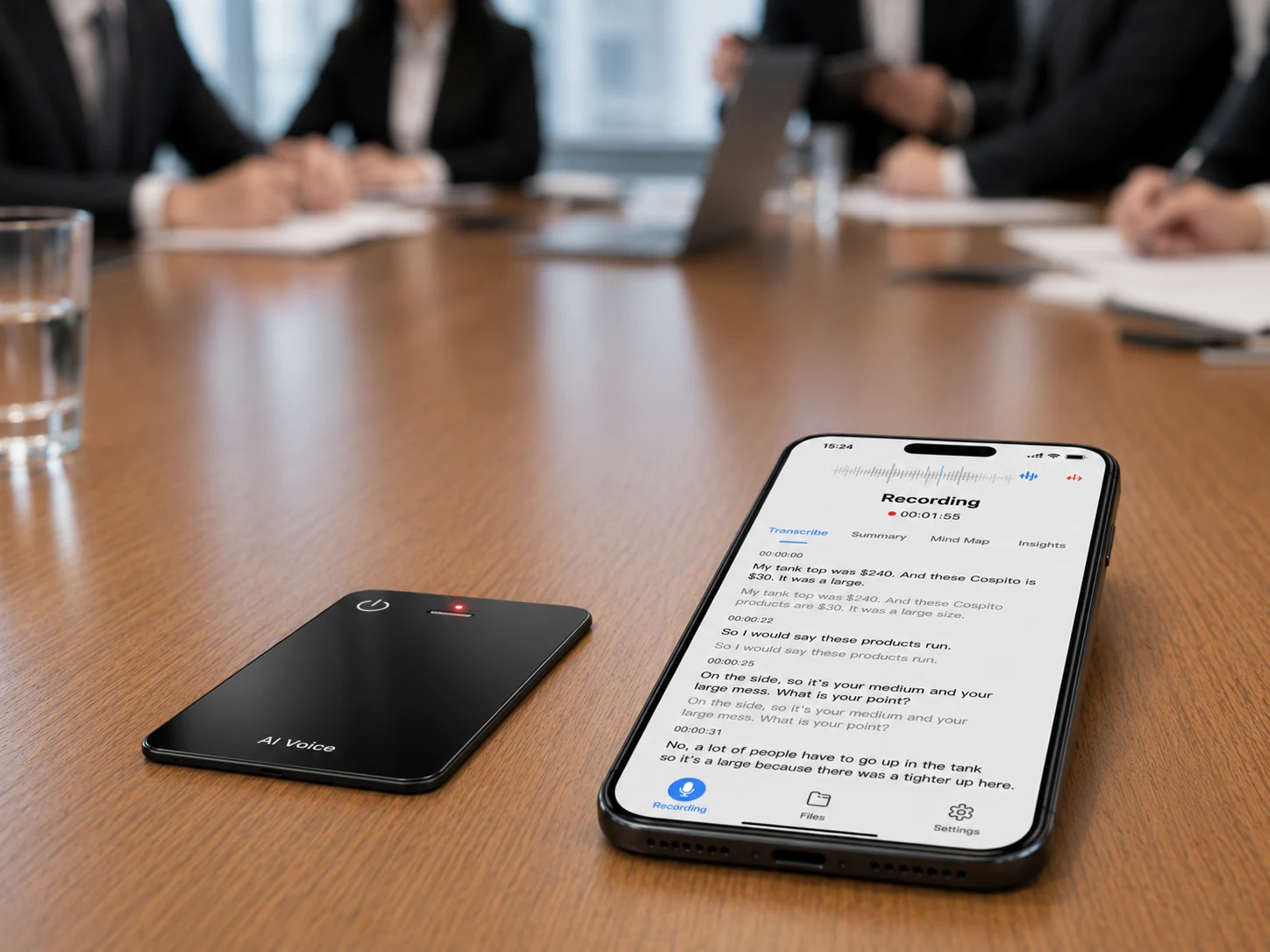
The MG6 AI Recording Card provides a starting platform for offline WAV capture. Connected transcription, translation, summaries, and mind maps can be discussed according to project scope. Branding, packaging, storage, and selected software requirements can also be evaluated. These are scope inputs, not evidence that every option is included in every order.
Build a claim-to-evidence file
List each statement planned for the box, manual, product page, advertisement, sales deck, marketplace field, comparison chart, and support article. For every claim, record its precise wording, implied meaning, test method, result, sample version, limitation, evidence owner, approval date, and review trigger.
The FTC’s Advertising FAQ for Small Business explains that advertisers need a reasonable basis for objective claims before an ad runs. Apply that discipline to battery, range, accuracy, language, privacy, compatibility, and AI-output claims. A supplier specification can start the review; the brand still needs evidence suitable for the wording and the marketed configuration.
Keep offline and connected claims separate. “Records WAV files without a network” does not establish offline transcription or translation. A language count does not establish accuracy for a buyer’s accents, terminology, code switching, room noise, or translation direction. Use conditional wording until a controlled test supports the narrower promise.
Complete packaging after the workflow is stable
Packaging should explain what is in the box, initial charging, recording controls, status indications, file access, app or account requirements, connected-service conditions, privacy choices, support route, warranty access, and safe disposal or handling where applicable. The quick-start sequence should be tested by people who did not help design it.
Review physical proofs, not only screen files. Check logo size, colors, barcodes, labels, required marks, serial or lot traceability, readable type, translations, insert order, accessory fit, and scan behavior. Confirm that marketplace images match the shipped contents and that any “included” service is actually provisioned.
Do not make a domestic-origin claim from brand ownership or U.S. fulfillment. The FTC’s Made in USA guidance describes the standard and qualification issues for U.S.-origin claims. Use the actual supply-chain facts and qualified review for any origin statement.
Close compliance gates before consumer marketing
Create a market applicability register for the exact configuration and territory. Assign an owner for radio, product safety, battery transport, environmental, labeling, privacy, accessibility, warranty, and marketplace requirements. Record why each item applies or does not apply and link the supporting evidence.
The FCC’s equipment authorization overview explains the authorization framework for radiofrequency devices. If the sellable configuration contains regulated radio functions, the responsible parties should confirm the applicable authorization, labeling, user information, and marketing timing before import or distribution. This article does not establish which procedure applies to a particular MG6 configuration.
The CPSC’s Regulatory Robot can help businesses identify possible U.S. consumer-product requirements, while a qualified compliance owner must make the project decision. Store reports, certificates, declarations, lab records, label artwork, and the exact sample or lot they cover in one indexed launch file.
Define the connected AI plan
The AI plan should name the service operator, account owner, regions, supported workflows, languages, limits, billing unit, retention, deletion, export, monitoring, incident route, service-change process, and end-user disclosures. It should also describe what continues to work when a phone, account, or network is unavailable.
Run acceptance audio that represents the target environment. Preserve the source WAV, reference transcript, expected terminology, service version, output, reviewer notes, and pass rule. Test account creation, consent, upload failure, quota, poor network, deletion, export, cancellation, and support escalation. Do not let a successful scripted demo substitute for lifecycle evidence.
App disclosures must match behavior. Apple’s App Privacy Details guidance describes information developers provide about app data practices, including third-party partners. If an app is part of the launch, assign a party to keep store declarations, privacy notice, SDK inventory, and actual data flows aligned.
Decide support and warranty ownership
Customers need one clear first contact even when hardware, app, AI service, logistics, and channel operations have different owners. Build a matrix for setup, charging, recording, file recovery, pairing, login, quota, transcription quality, billing, deletion, defect, loss, and replacement. Define severity, evidence requested, response target, escalation, decision authority, and closure record.
If a written consumer warranty is offered, review the FTC’s Businessperson’s Guide to Federal Warranty Law. It explains disclosure and pre-sale availability concepts and distinguishes warranties from separately sold service contracts. Draft terms for the actual channel and obtain appropriate legal review rather than copying a competitor’s page.
Support should be trained before inventory arrives. Give agents known-good units, current instructions, version lookup steps, safe troubleshooting boundaries, privacy scripts, escalation contacts, and replacement criteria. Feed reason codes back into packaging, quality, application, and purchasing decisions.
Use a pilot order as an operating test
The pilot should validate more than whether units turn on. Select users and channels that represent the launch. Trace receipt, unboxing, charging, setup, recording, transfer, connected processing, support, return, replacement, and data closure. Include poor network, low power, full storage, incorrect account, and interrupted transfer cases where relevant.
Define sample size and pass rules from risk and intended volume; do not invent a universal number. Track defects, confusion, support contacts, AI-output review, return intent, packaging damage, activation, and time to resolution. Every exception needs a disposition: accept with rationale, correct and retest, narrow the claim, change the workflow, or stop the gate.
Brand teams can use the AI voice-recorder OEM sourcing checklist to organize supplier evidence and the AI recorder sample-test guide to build the pilot. The AI voice recorder total-cost guide keeps service, support, returns, and channel costs visible before launch approval.
Where This Product Fits
MG6 fits brands that want a compact physical capture layer with offline WAV recording and a project-scoped path to connected AI functions. It is especially relevant when the brand needs to discuss logo, packaging, storage, selected software, and channel presentation with an OEM/ODM partner.
| MG6 starting point | Brand decision still required |
|---|---|
| Card-sized recording platform | Target segment and approved use cases |
| Offline WAV capture | File handling, retention, and user instructions |
| Connected AI functions can be scoped | Provider, plan, languages, limits, privacy, and support |
| OEM/ODM discussion | Artwork, packaging, quantity, schedule, quality, and change control |
No public information establishes a fixed MG6 launch date, MOQ, certification package, app-release commitment, or included AI allowance. Request current documents and quotations for the configuration and market under review.
Approve launch readiness
Hold a cross-functional gate with brand, product, quality, compliance, operations, support, channel, and supplier owners. Review the signed configuration, claim file, artwork, regulatory register, acceptance results, service schedule, support runbook, warranty access, inventory plan, change-control route, and rollback plan.
A launch can proceed when critical evidence is complete, residual risks have named owners, customer-facing materials match behavior, and the team can identify every shipped version. Schedule post-launch reviews at defined volume or time thresholds. Use returns, support, reviews, AI failures, and replenishment data to decide whether to scale, correct, or pause.
FAQ
What can be customized for a private-label MG6 project?
Branding, packaging, storage, selected software requirements, and connected AI scope can be discussed. The exact feasibility, cost, quantity, evidence, and schedule require project evaluation and written confirmation.
When should packaging artwork be finalized?
Finalize it after the sellable configuration, workflow, claims, service conditions, labels, instructions, and warranty access are stable. Approve both source artwork and a physical proof.
Who should own end-user support?
Give customers one first contact, then allocate hardware, app, AI, billing, privacy, and replacement escalations in a written matrix. Train every owner against the accepted configuration.
How should a brand explain AI usage?
State which functions require connection, account, plan, or third-party processing; explain limits, retention, and user controls; and describe generated output with evidence-based accuracy boundaries.
Which documents should be ready before launch?
Prepare the configuration record, claims file, artwork approvals, applicability register, test reports, service schedule, privacy materials, support matrix, warranty access, inspection plan, inventory traceability, and change-control process.
Plan an MG6 private-label launch
Bring the target account, configuration, claims, packaging, AI-service, support, and pilot requirements to Yosiya’s contact team for a project-specific MG6 evaluation and quotation.


