
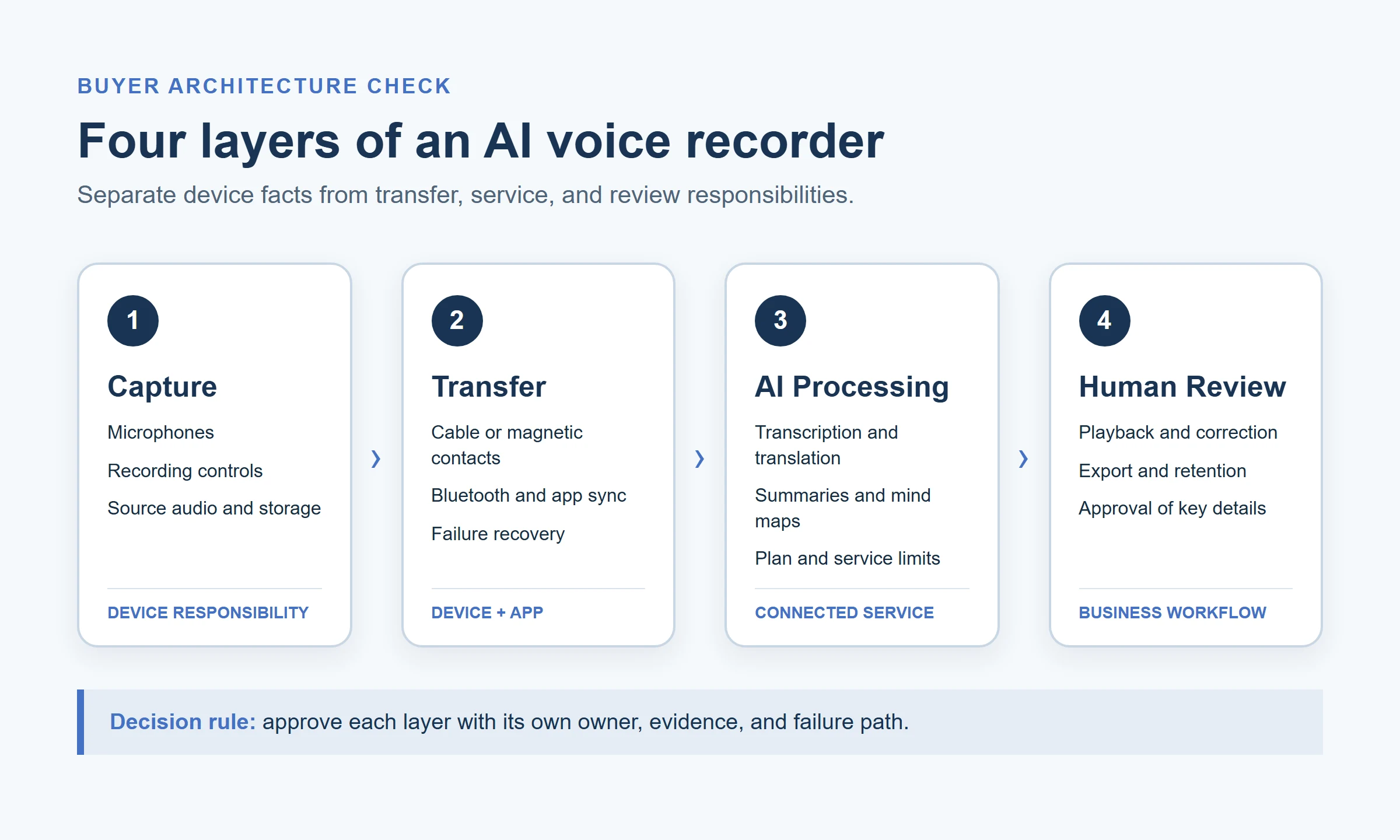
An AI voice recorder is easier to evaluate when you treat it as four connected layers rather than one feature: audio capture, file transfer, AI processing, and human review. The right architecture for a business depends on which functions must keep working without a phone or network, who controls the source recording, where transcription happens, and what users can export if the service changes. For an OEM product team, this separation also prevents hardware specifications from being mixed with app or subscription promises. A dedicated recorder can own the capture layer while connected services handle transcription, translation, summaries, or other outputs.
What Buyers Should Know
Product pages often compress an entire recording workflow into a phrase such as “AI meeting recorder.” That description is convenient, but it does not tell a buyer where the audio is stored, what requires connectivity, or which company controls each stage.
The four-layer model gives a product team a clearer starting point:
- Capture: microphones, recording controls, source audio, storage, and recording conditions.
- Transfer: cable, magnetic contacts, Bluetooth, app sync, file recovery, and failure handling.
- AI processing: speech recognition, translation, summaries, mind maps, and service allowances.
- Review: playback, corrections, exports, access controls, retention, and approval of consequential details.
This model complements the broader guide to what an AI voice recorder is. Here, the focus is the architecture a brand or business buyer should verify before approving a device and its connected workflow.
Layer 1: Local audio capture and source-file ownership
The capture layer determines what exists before any AI system becomes involved. Buyers should confirm the microphone configuration, recording format, local storage behavior, recording indicator, stop control, and the conditions used for sample tests.
WAV is a container rather than a complete description of audio quality. The MDN guide to media container formats explains that WAVE files commonly contain linear PCM audio, while the actual encoding details still matter. The Library of Congress audio guidance also treats format characteristics and metadata as important considerations for long-term audio management. Neither source establishes the encoding settings of a specific recorder, so an OEM buyer should request an actual sample file and inspect it.
For a hardware review, ask practical questions:
- Does recording continue when the phone is unavailable?
- Is the original file stored on the recorder, in the app, or in both places?
- Can a user copy the source audio without first purchasing an AI plan?
- Does the sample file preserve its date, duration, and other required metadata?
- What happens if storage fills up or power is interrupted?
This is also where buyers should distinguish offline recording from offline AI transcription. A recorder can capture a local WAV file while still requiring a connected service to turn that file into text.
Layer 2: Transfer, sync, and failure recovery
Transfer is the bridge between a usable recording and the services that process it. It deserves its own evaluation because a good capture can still become difficult to use when files are trapped in an app, sync is unreliable, or the recovery path is unclear.
Check every supported route separately. A magnetic cable may handle charging and file transfer. Bluetooth may support pairing or app communication. A mobile workflow may introduce compatibility, permissions, account, or background-sync requirements. Buyers should ask the supplier to label each route rather than treating “Bluetooth connected” as a complete workflow description.
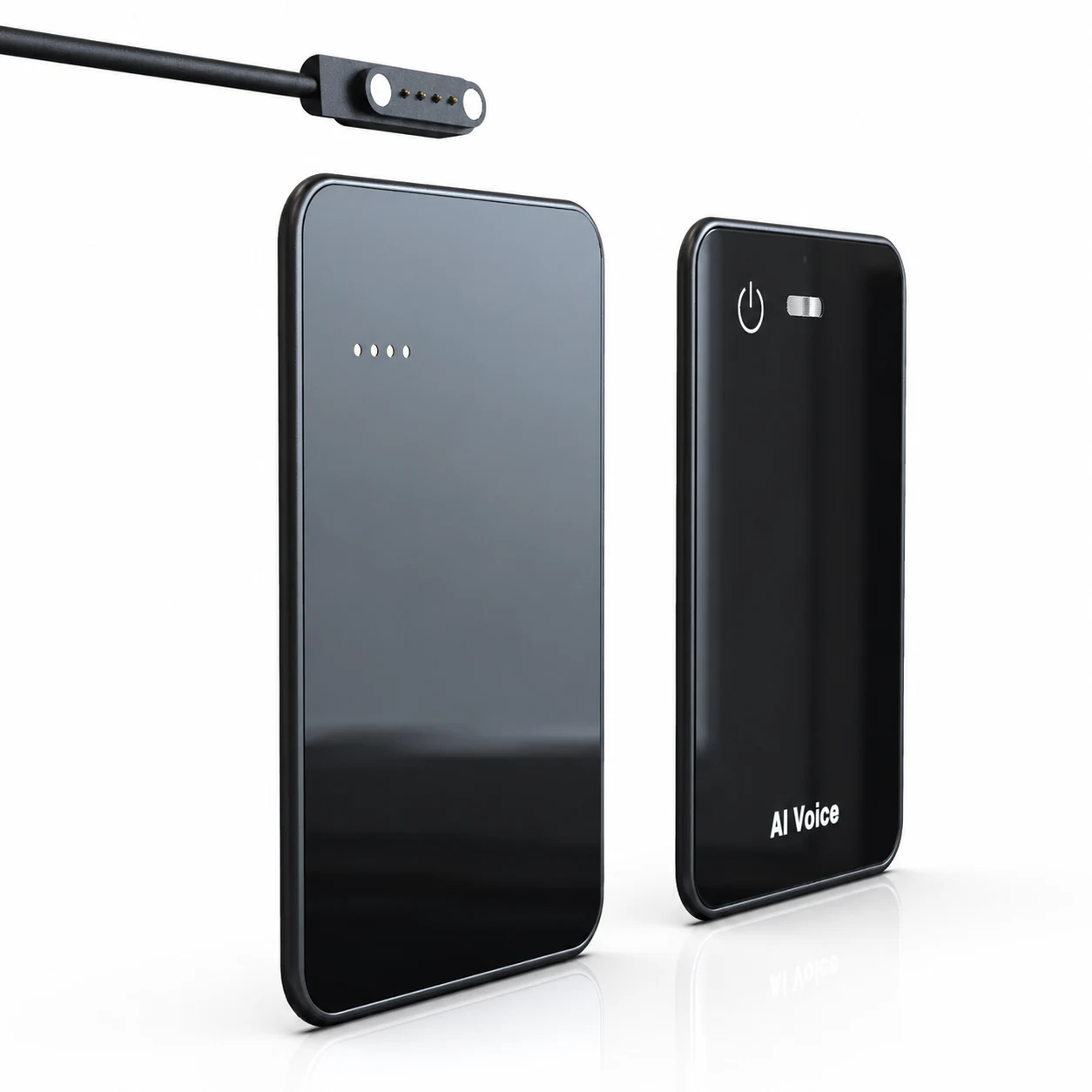
A useful transfer test begins with one known recording. Copy it through each supported route, compare the resulting file with the original, record transfer time, and deliberately interrupt one attempt. The team should know whether the transfer resumes, restarts, duplicates the file, or requires manual recovery.
The broader smart voice recorder hardware capabilities guide can help teams decide which device-level controls belong in a product specification. The architecture document should then name the owner of pairing, permissions, updates, error messages, and customer support.
A transfer feature is not complete until the buyer knows how a failed transfer is detected and recovered.
Layer 3: Connected transcription and AI outputs
Speech recognition converts audio into text, while later AI steps can organize that text into summaries, decisions, or action items. These functions may use different models, service plans, or processing modes.
The AWS speech-to-text overview describes common speech-recognition uses and limitations, including the importance of clear input audio. The IBM speech-to-text overview distinguishes synchronous, asynchronous, and streaming recognition patterns. Input format, microphone distance, background noise, echo, clipping, and overlapping speakers should therefore be included in a buyer’s test conditions.
These sources explain general processing principles. They do not prove how accurately a particular MG6 configuration will transcribe a meeting. That requires a defined service, representative recordings, reference transcripts, and documented test conditions.
For each connected feature, the supplier response should identify:
| AI function | What the buyer should confirm | Why it affects the architecture |
|---|---|---|
| Transcription | Processing location, supported languages, usage allowance, and export format | Determines connectivity, cost, and text availability |
| Speaker handling | Whether labels can be corrected and retained in exports | Affects multi-speaker review |
| Translation | Supported language pairs and whether translation is live or post-recording | Changes latency and service dependency |
| Summaries | Templates, editable outputs, and links back to source audio | Affects traceability |
| Mind maps or structured notes | Export options and what happens when the service plan changes | Affects reuse outside the app |
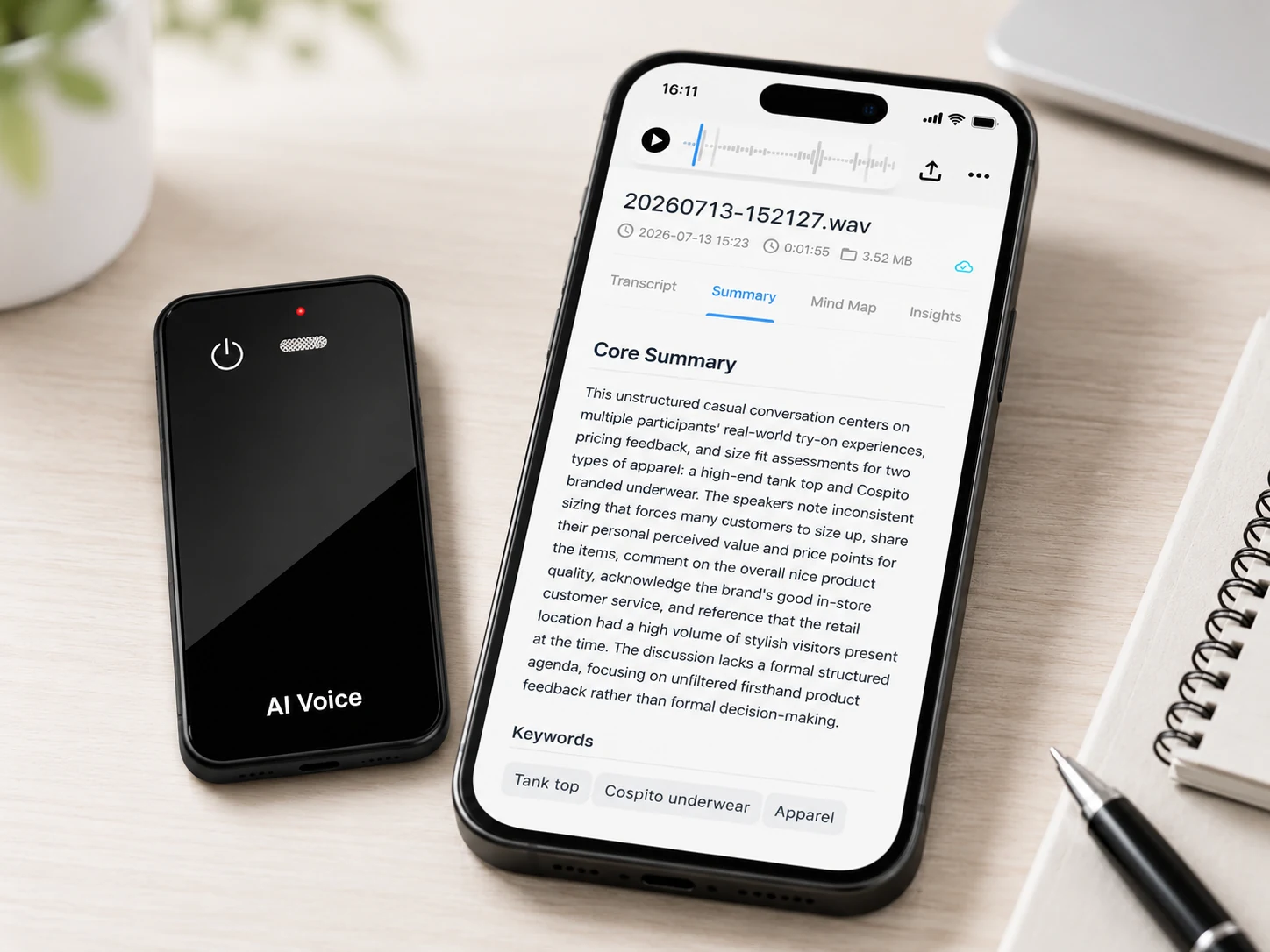
A polished demonstration can hide these dependencies. Product managers should test the exact project version instead of assuming that every function shown in an app belongs to the hardware specification.
Layer 4: Human review, export, and retention
AI output should be treated as a draft when names, numbers, commitments, quotations, or regulated information matter. The NIST Generative AI Profile addresses risks such as confabulation and the need to evaluate and manage generated outputs. It is voluntary guidance, not a certification of a recorder or AI service.
The review layer should make it easy to move from generated text back to the source audio. A buyer can ask whether timestamps survive export, whether speaker labels can be corrected, and whether reviewers can locate the audio behind an important statement. If a summary becomes an official meeting record, the approval step should have a named owner.
Export and retention also need plain answers. A subscription may affect AI processing without affecting access to local recordings, but that distinction must be confirmed. The product team should document what remains available after a plan expires, how users export their files, and how deletion works across the recorder, phone, app, service, and backups.
Where This Product Fits
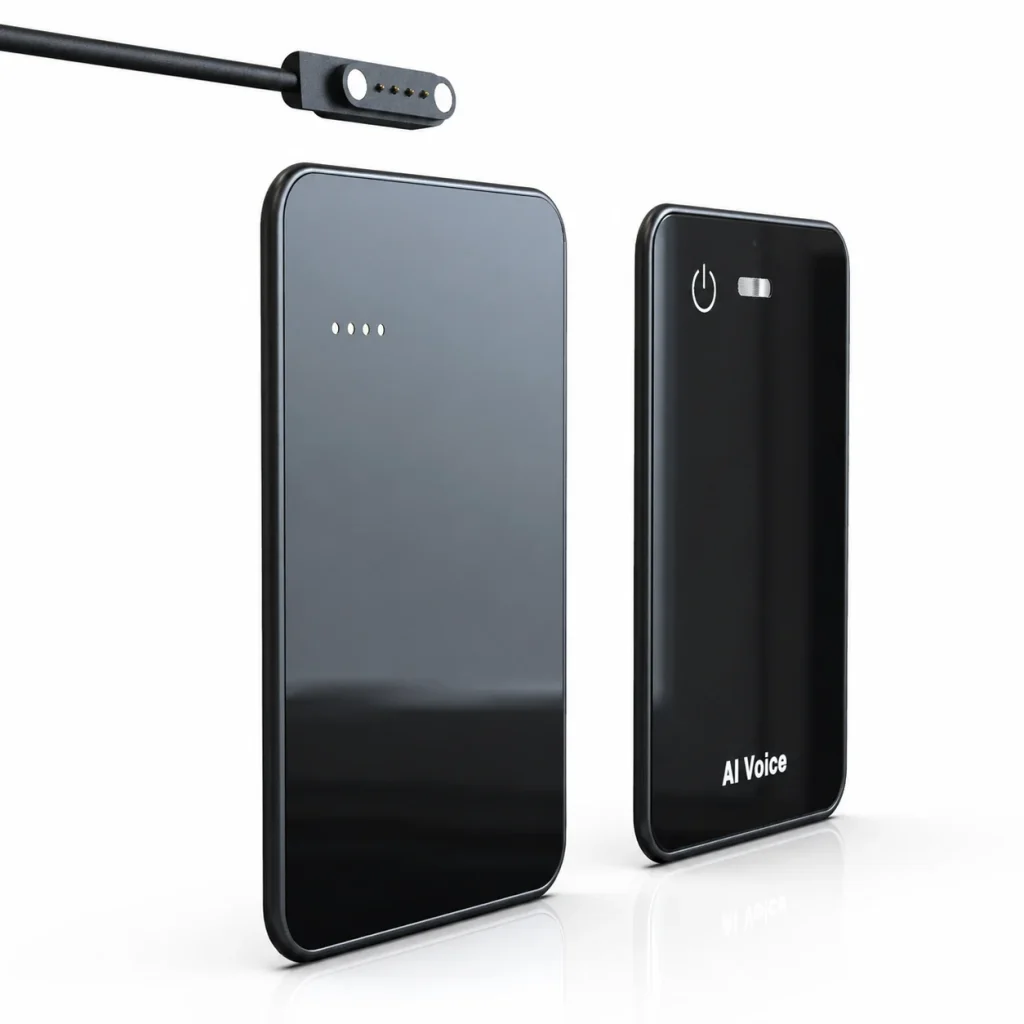
MG6 AI Recording Card is a card-sized OEM/ODM voice recorder reference platform. The current product information separates its hardware recording scope from its connected AI services.
| Architecture layer | Confirmed MG6 reference scope | Items to confirm for the project |
|---|---|---|
| Capture | Two omnidirectional microphones, hardware noise reduction algorithm, offline WAV recording, and selectable storage | Recording test conditions, exact file encoding, standard storage SKU, and evidence for performance claims |
| Transfer | Bluetooth plus magnetic charging and file data transfer | Phone compatibility, app flow, permissions, interruption recovery, and selected cable bundle |
| AI processing | When connected, supported services can provide transcription, real-time translation, summaries, and mind maps | Service provider, language coverage, processing location, plan allowance, and feature availability |
| Review | Source audio can begin as a local recording | Transcript correction, timestamps, speaker handling, export formats, retention, deletion, and account access |
The reference device is listed at 54 × 85 × 2.6 mm with a 55 g net weight. It is described as using a hardware noise reduction algorithm; this should not be rewritten as AI noise cancellation. It supports offline WAV recording, but that does not establish offline transcription. Water-resistance wording and applicable certification documents must be confirmed against the selected production version and target market before they are used in external claims.
An architecture checklist for product teams
Before a sample or private-label project moves forward, assign an owner and evidence type to each question:
- Which functions work with no phone, account, or active network?
- Where is the first complete source recording stored?
- Which transfer routes support user-accessible files?
- How are interrupted transfers detected and recovered?
- Which company provides transcription and later AI outputs?
- Which languages, plan allowances, exports, and processing locations apply?
- Can a reviewer trace text, summaries, and action items back to audio?
- What remains accessible after cancellation, a model change, or an app update?
- Which specifications are fixed, and which depend on the OEM configuration?
- Which performance or protection claims require version-matched test documents?
The checklist prevents a common sourcing problem: approving an attractive hardware sample before the app, AI service, file access, and support responsibilities are clear. It also gives engineering, product, legal, and sales teams one architecture to discuss.
FAQ
Which MG6 functions can continue without a phone or network?
The confirmed MG6 reference scope supports offline WAV recording. Connected transcription, real-time translation, summaries, and mind maps require the selected connected service. Buyers should confirm file access and the exact app flow for their project version.
Does local recording mean the transcription also runs locally?
No. Local recording describes where the source audio is captured and stored. Transcription describes a later processing step that may run through a connected service. The supplier should document both locations separately.
Who should control the source WAV file?
The answer depends on the organization’s workflow, but the architecture should identify who can copy, retain, export, and delete the original audio. Test those controls with the exact sample and service configuration before deployment.
What should happen if the AI service plan changes?
The buyer should know which recordings and exports remain accessible, which features stop, and whether content can move to another approved workflow. Put these answers in the product and service requirements instead of relying on a sales demonstration.
What evidence should an OEM buyer request before approving the architecture?
Request the reference hardware specification, representative WAV files, a data-flow description, app and AI-service scope, export examples, plan terms, test conditions, and version-matched certification documents. Keep conditional items out of launch claims until the supporting evidence is available.
Build the product around explicit boundaries
A useful AI voice recorder architecture tells the buyer what the device can capture by itself, how files move, which services create AI outputs, and how people review and retain the result. Those boundaries matter more than a long list of features because they determine whether the workflow remains usable when connectivity, subscriptions, apps, or project requirements change.
Yosiya offers MG6 for private-label and OEM/ODM project evaluation. Review the confirmed hardware scope, then contact Yosiya to request the MG6 solution dossier and define the transfer, AI-service, review, and documentation requirements for your target market.


